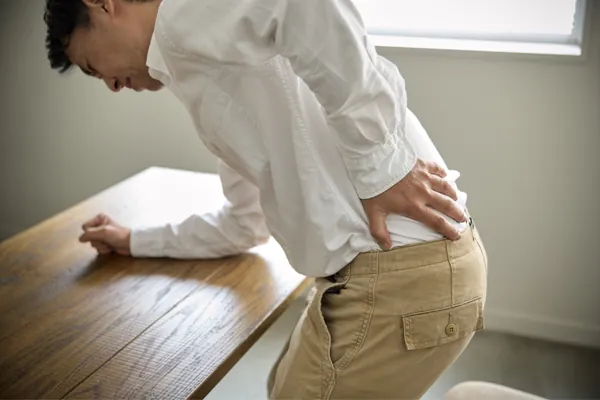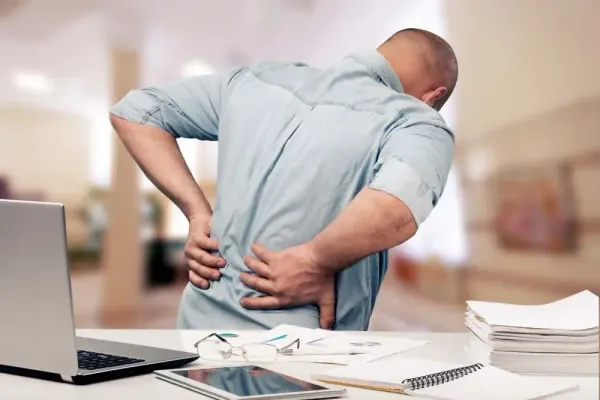
A sudden jolt of sharp pain in your lower back when you bend over or sit down can stop you in your tracks. While it’s tempting to dismiss it as a pulled muscle, sharp lower back pain can signal several different conditions — some minor, some requiring professional attention.
Why Sharp Lower Back Pain Shouldn’t Be Ignored
Sharp pain is your body’s alarm system indicating that something is being stressed, compressed, or irritated beyond its tolerance. When this occurs specifically with bending or sitting, it often points to specific structural issues that, if left untreated, can worsen over time.
The lower back is particularly vulnerable during these movements because bending forward increases intradiscal pressure significantly — research shows disc pressure rises by up to 150% when bending compared to standing upright. Sitting, particularly with poor posture, increases disc pressure by approximately 40% compared to standing. These mechanical forces explain why bending and sitting are the two most common triggers for lower back pain episodes.
Anatomy of the Lower Back: What’s at Risk
Understanding the structures involved helps explain why different types of pain feel different. The lumbar spine consists of five vertebrae (L1–L5) separated by shock-absorbing intervertebral discs. Each vertebral segment also contains paired facet joints that guide spinal motion, and the spinal canal houses the spinal cord and branching nerve roots that travel to the legs.
Surrounding these bony structures are multiple layers of muscles — the deep multifidus muscles that stabilize individual segments, the larger erector spinae that control trunk extension, and the core muscles (transverse abdominis and obliques) that provide circumferential support. Ligaments connect the vertebrae and limit excessive motion. Any of these structures can be the source of sharp pain when stressed during bending or sitting.
Common Causes of Sharp Pain in the Lower Back When Bending
Muscle Strain and Back Spasms
Overstretching or tearing muscle fibers — from lifting incorrectly, twisting suddenly, or sustained poor posture — triggers protective muscle spasms that can produce sharp, intense pain with movement. The lumbar erector spinae and quadratus lumborum muscles are most commonly affected. Muscle strains typically produce localized pain that worsens with specific movements but improves with rest and gentle stretching. Trigger point injections can provide rapid relief for persistent muscle spasms that don’t respond to home care.
Herniated or Bulging Discs
Herniated or bulging discs occur when the cushioning material between vertebrae pushes outward, potentially pressing on nearby nerve roots. This compression can cause stabbing pain that intensifies with bending forward — which increases disc pressure — and may radiate into the buttocks or legs. The L4-L5 and L5-S1 discs are most commonly affected because they bear the greatest mechanical load. Epidural steroid injections can reduce inflammation around the compressed nerve root and provide significant pain relief while the disc heals.
Sciatica and Nerve Compression
Sciatica develops when the sciatic nerve is compressed, producing sharp lower back pain that shoots down through the buttock and leg. Bending and prolonged sitting often worsen sciatic symptoms because these positions increase pressure on the nerve. The pain typically follows a specific path — from the lower back through the buttock and down the back or side of the leg, sometimes reaching the foot. Nerve blocks can precisely target the affected nerve root to reduce pain and inflammation.
Facet Joint Syndrome
The facet joints are small paired joints at the back of each spinal segment that guide and limit motion. When these joints become arthritic, inflamed, or irritated, they produce sharp pain with certain movements — particularly extension (arching back) and twisting, but also with prolonged sitting that loads these joints unevenly. Facet-mediated pain is typically felt on one side of the lower back and doesn’t usually radiate below the knee. Radiofrequency ablation provides long-lasting relief for confirmed facet joint pain by interrupting the pain signals from the affected joints.
Sacroiliac Joint Dysfunction
The sacroiliac (SI) joints connect the base of the spine to the pelvis. Dysfunction in these joints produces sharp pain in the lower back and buttock area that can worsen with bending, transitioning from sitting to standing, or climbing stairs. SI joint pain is often confused with disc-related pain but typically doesn’t radiate below the knee. Joint injections can both diagnose and treat SI joint dysfunction.
Arthritis and Degenerative Spine Conditions
Spinal osteoarthritis causes gradual breakdown of the cartilage in facet joints and degeneration of the intervertebral discs. As protective cartilage wears away, bone-on-bone contact and inflammation produce pain that typically worsens with activity and eases with rest. Spinal stenosis — narrowing of the spinal canal — often develops alongside arthritis and can compress nerve roots, adding radiating leg pain to the picture.
Poor Posture and Sedentary Lifestyle
Hours of sitting with suboptimal spinal alignment gradually weakens supporting muscles and overloads spinal joints and discs. The hip flexors shorten, the glutes deactivate, and the lumbar spine loses its natural lordotic curve. This creates a cycle where prolonged sitting causes pain, pain discourages movement, and lack of movement worsens the underlying imbalance. Physical therapy addresses these postural imbalances through targeted strengthening and flexibility programs.
Sharp Lower Back Pain After Deadlifts
Deadlifts are one of the most effective strength exercises, but they also place the highest absolute loads on the lumbar spine — making them a frequent trigger for sharp lower back pain. The most common cause of sharp pain after deadlifts is rounding (flexing) the lumbar spine under load, which shifts forces from the hips and glutes onto the posterior disc wall and spinal ligaments. Other common deadlift-related back injuries include muscle strains from jerking the bar off the floor, disc herniations from repeated heavy loading with imperfect form, and facet joint irritation from hyperextending at the top of the movement.
If you experience sharp lower back pain during or after deadlifts, stop the exercise immediately. Apply ice for 15 to 20 minutes, and avoid heavy lifting for several days. Most deadlift-related muscle strains improve within two to six weeks with rest and gradual return to activity. However, if pain radiates into the legs or doesn’t improve within two weeks, you may have a disc injury that benefits from professional evaluation. Epidural steroid injections can reduce inflammation around a compressed nerve root, while physical therapy addresses the movement patterns that led to the injury. For more on safe lifting technique, see our guide to weight lifting mistakes that cause lower back pain.
Lower Back Pain on the Right Side Above the Buttocks
Sharp lower back pain that localizes to one side — particularly the right side above the buttocks — often points to specific structural causes. The most common include sacroiliac (SI) joint dysfunction, where the joint connecting the spine to the pelvis becomes inflamed or misaligned. SI joint pain typically worsens with transitioning from sitting to standing, climbing stairs, or standing on one leg. Facet joint irritation on one side of the spine produces localized pain that worsens with twisting or bending backward. A unilateral disc herniation can compress the nerve root on one side, causing pain that radiates from the lower back into the right buttock and potentially down the leg.
Piriformis syndrome is another common cause of right-sided pain above the buttocks. The piriformis muscle runs deep in the buttock, and when it becomes tight or spasmed, it can compress the sciatic nerve. This produces pain in the buttock that can mimic sciatica but originates from the muscle rather than the spine. Trigger point injections can provide rapid relief for piriformis-related pain, while joint injections can both diagnose and treat SI joint dysfunction.
If your right-sided lower back pain is accompanied by fever, changes in urination, or severe flank pain, kidney issues should be ruled out — particularly for right-sided pain, where the kidney and appendix may be involved.
When It’s Not the Spine: Kidney and Other Causes
In some cases, sharp lower back pain can originate from non-spinal structures. Kidney stones or infections typically produce pain in the flank area (to the side of the spine) that doesn’t change with spinal movement, often accompanied by urinary changes or fever. Abdominal aortic aneurysm can cause deep, constant back pain. These conditions require different evaluation and treatment.
Acute vs. Chronic Back Pain: Understanding the Timeline
Acute back pain — lasting less than six weeks — often results from a specific injury or strain and typically resolves with appropriate care. About 90% of acute lower back pain episodes improve significantly within 6 weeks.
Subacute pain lasts between 6 and 12 weeks and represents a critical window where appropriate treatment can prevent chronicity. This is often the best time to seek specialist evaluation if pain hasn’t resolved with conservative measures.
Chronic back pain persists beyond three months and may involve different underlying mechanisms — including central sensitization, where the nervous system amplifies pain signals even after the original injury has healed. Chronic pain often requires a multimodal treatment approach combining physical therapy, interventional procedures, and lifestyle modification.
When to Seek Medical Help
See a specialist if your pain lasts more than two to three weeks despite home care, radiates into your legs, is accompanied by numbness, tingling, or weakness, occurs after trauma, or is progressively worsening. These signs may indicate conditions that benefit from professional diagnosis and targeted treatment.
Seek immediate emergency care if you experience sudden loss of bladder or bowel control, progressive weakness in both legs, or numbness in the groin area — these symptoms may indicate cauda equina syndrome, a rare but serious condition requiring urgent surgical evaluation.
How to Relieve Lower Back Pain at Home
For mild to moderate pain, brief rest followed by gentle movement is generally more effective than prolonged bed rest. Apply ice for 15 to 20 minutes several times daily during the first 48 to 72 hours to reduce inflammation, then switch to heat to relax muscles and improve blood flow.
Gentle stretching and movement: Cat-cow stretches, pelvic tilts, and gentle knee-to-chest stretches can reduce muscle tension without aggravating most conditions. Avoid deep forward bends during the acute phase. Walking is one of the best activities for acute back pain — start with short distances and gradually increase.
Core strengthening: Once acute pain subsides, exercises like planks, dead bugs, and bird dogs develop the deep stabilizing muscles that protect the spine. These should be pain-free; stop any exercise that increases symptoms.
Ergonomic adjustments: If sitting triggers pain, ensure your chair supports your lumbar curve, your feet are flat on the floor, and your screen is at eye level. Take standing or walking breaks every 30 to 45 minutes.
Over-the-counter anti-inflammatory medications like ibuprofen or naproxen can provide temporary relief. Correcting posture — particularly during sitting — reduces ongoing strain.
Professional Treatment Options in NYC
When home care isn’t enough, several evidence-based treatments can target the specific source of your pain. Epidural steroid injections deliver anti-inflammatory medication directly to irritated nerve roots — highly effective for disc-related pain and sciatica. Nerve blocks can both diagnose and treat specific pain generators, including facet joints and sacroiliac joints. Trigger point injections release chronic muscle spasms that perpetuate pain cycles. Physical therapy addresses the underlying mechanical dysfunction through targeted strengthening, stretching, and movement retraining. For chronic facet joint pain, radiofrequency ablation provides relief lasting 6 to 12 months by interrupting pain nerve signals.
Long-Term Prevention
Regular physical activity, maintaining a healthy weight, using proper lifting technique, taking frequent movement breaks during prolonged sitting, and investing in an ergonomic workspace setup are all evidence-based strategies for preventing recurrent lower back pain. Consistent core strengthening — even 10 minutes daily — is one of the most effective long-term prevention measures supported by research.
Frequently Asked Questions
The most common causes are muscle strain, disc herniation, and facet joint irritation. Bending forward increases pressure on the lumbar discs by up to 150% compared to standing upright. If the disc is already weakened or bulging, this additional pressure can compress nearby nerves and produce sharp pain. Tight hamstrings and weak core muscles also force the lower back to flex more than it should during bending.
It depends on the cause. Muscle strains typically resolve within 2 to 6 weeks with conservative care. However, sharp pain that radiates into the legs, causes numbness or tingling, or is accompanied by weakness may indicate nerve compression from a herniated disc or spinal stenosis — conditions that benefit from early specialist evaluation.
For immediate relief, apply ice for 15 to 20 minutes several times daily during the first 48 to 72 hours, then switch to heat. Gentle movement is better than bed rest. Over-the-counter anti-inflammatory medications can reduce pain and swelling. For persistent pain, treatments like epidural steroid injections, nerve blocks, or physical therapy may be recommended.
Prolonged sitting increases lumbar disc pressure by approximately 40% compared to standing. Sitting also deactivates the glute muscles and shortens the hip flexors, shifting more load to the lumbar spine. Over time, this causes disc dehydration, muscle fatigue, and joint stiffness. An ergonomic chair, frequent movement breaks, and hip flexor stretches can help.
Gentle stretching is generally more effective than complete rest for most lower back pain. Focus on hip flexor stretches, gentle hamstring stretches, and cat-cow movements. Avoid deep forward bends or any stretch that increases pain. Brief rest periods are fine, but prolonged bed rest beyond one to two days can actually worsen back pain by causing muscle deconditioning.
See a specialist if pain persists beyond two to three weeks despite home care, if pain radiates into the buttocks or legs, if you experience numbness, tingling, or weakness in the legs, if pain follows a traumatic injury, or if you have difficulty controlling your bladder or bowels — which is a medical emergency requiring immediate attention.
The most common cause is rounding the lumbar spine under load, which shifts forces from the hips and glutes onto the posterior disc wall and spinal ligaments. Other causes include jerking the bar off the floor, using excessive weight, and hyperextending at the top of the lift. If pain persists beyond two weeks or radiates into the legs, see a pain management specialist.
Right-sided lower back pain above the buttocks is commonly caused by sacroiliac joint dysfunction, facet joint irritation, a unilateral disc herniation, or piriformis syndrome. SI joint pain worsens with transitions like sitting to standing or climbing stairs. Piriformis syndrome can mimic sciatica but originates from the muscle rather than the spine. If accompanied by fever or urinary changes, kidney issues should be ruled out.