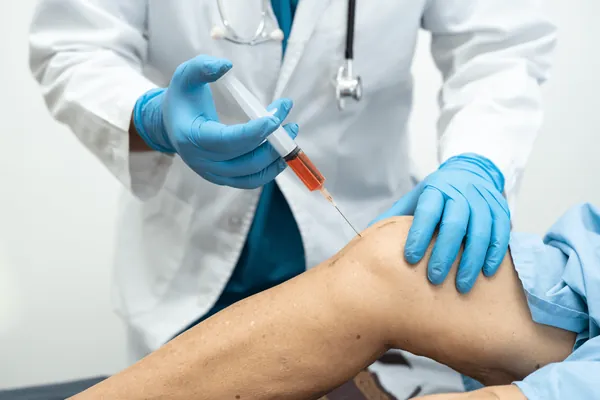
At Modal Pain Management in New York City, Dr. Alex Movshis specializes in non-surgical interventional pain management solutions, including advanced joint injections for patients suffering from joint pain, osteoarthritis, and degenerative joint conditions. Joint injections are highly effective for treating osteoarthritis and other degenerative joint conditions affecting the knees, hips, shoulders, ankles, and other joints throughout the body. These injections deliver medication directly into the affected joint to reduce inflammation, decrease pain, and improve mobility. Performed under ultrasound or fluoroscopic guidance for precision accuracy, joint injections are minimally invasive with minimal downtime, making them an excellent conservative treatment option before considering more invasive surgical interventions. For patients in NYC seeking effective pain relief without surgery, joint injections offer a proven solution that combines clinical efficacy with convenience and rapid recovery.
Types of Joint Injections
At our NYC practice, we offer several types of joint injection therapies tailored to each patient’s specific condition and treatment goals. Corticosteroid injections — commonly called a cortisone shot — are among the most commonly used options, delivering powerful anti-inflammatory medication directly into the joint space to rapidly reduce swelling, pain, and stiffness associated with arthritis (osteoarthritis) and inflammatory joint conditions. These injections work by suppressing the inflammatory response that damages joint structures and causes pain, providing relief that typically lasts several weeks to months depending on the severity of the condition and individual patient factors. Hyaluronic acid injections, also known as viscosupplementation, work through a different mechanism by improving joint lubrication and reducing friction between cartilage surfaces. This approach mimics the body’s natural joint fluid and may help protect remaining cartilage from further degradation while promoting more comfortable movement and function. For certain conditions, local anesthetic injections can be combined with other therapeutic agents to provide immediate pain relief and allow patients to participate more fully in rehabilitation therapy. Dr. Movshis may recommend one type of injection or a combination approach based on your diagnosis, joint condition, and individual treatment response.
Joints and Areas We Treat
Dr. Movshis at Modal Pain Management treats joint pain and osteoarthritis affecting virtually all major joints throughout the body. The knee is one of the most common areas we treat, as it bears significant weight and stress during daily activities, making it particularly vulnerable to arthritis and degenerative changes. Hip injections are increasingly popular for patients with hip arthritis or labral pathology, offering pain relief while preserving hip function and mobility essential for daily life. Shoulder injections address rotator cuff tendinitis, subacromial bursitis, and shoulder joint arthritis that limit arm function and cause significant disability. We also treat the sacroiliac joint, a common source of low back and buttock pain that is often overlooked as a pain generator, and facet joints in the spine that commonly develop arthritis and contribute to neck and back pain. Additional joints we treat include the ankle, foot, elbow, and wrist, so patients with pain in any joint location can be treated in one place.
How Joint Injections Work
Joint injections work through precise delivery of therapeutic medication into the joint space where it can directly target inflammation and provide localized pain relief. Using ultrasound or fluoroscopic guidance, Dr. Movshis carefully advances a needle into the exact center of the joint space while visualizing the procedure in real time to ensure accuracy and safety. This image-guided approach minimizes complications and maximizes therapeutic benefit by ensuring the medication reaches the precise location where it will have the greatest effect. Once the needle is positioned within the joint capsule, the therapeutic agent is slowly injected to allow it to disperse throughout the joint space and coat the joint surfaces. The procedure typically takes only five to ten minutes to complete, making it convenient for busy NYC patients. The combination of precise needle placement and therapeutic medication creates a powerful treatment that addresses both the inflammation and pain associated with joint conditions, allowing patients to resume more normal activities with reduced discomfort.
What to Expect
Patients seeking joint injection treatment at Modal Pain Management can expect a streamlined, professional experience designed for comfort and convenience. During your consultation, Dr. Movshis will evaluate your joint condition, review imaging if available, and discuss whether joint injections are appropriate for your specific diagnosis. On the day of the procedure, you’ll be positioned comfortably as the injection site is cleaned and prepared under sterile conditions. Using ultrasound or fluoroscopic guidance, the needle is carefully advanced into the joint while you remain awake and alert. Most patients report minimal discomfort during the procedure, with many experiencing only mild pressure sensations. After the injection, you rest briefly and go home the same day. The aftercare instructions cover the first day, steroid flares, exercise by joint, and when to judge the result.
Effectiveness and Benefits
Joint injections offer proven effectiveness for reducing pain and improving function in patients with osteoarthritis and other joint conditions. Clinical studies demonstrate that both corticosteroid and hyaluronic acid injections provide significant pain relief and functional improvement in most treated patients. The benefits extend beyond pain reduction—patients typically experience improved mobility, better sleep quality, reduced reliance on oral pain medications, and restoration of their ability to engage in meaningful activities like exercise, hobbies, and family time. For many patients, joint injections delay or eliminate the need for surgical intervention such as joint replacement. The minimally invasive nature of the procedure means there’s no surgical scarring, extended recovery period, or risk of surgical complications, allowing patients to maintain their normal lifestyle while receiving treatment.
Treatment Planning and Follow-Up
Treatment planning at Modal Pain Management is individualized based on your specific condition, pain severity, and treatment goals. Cortisone usually shows its effect within the first one to two weeks, while gel injections build over about two months, and how long relief lasts varies by joint, diagnosis, and injection type. Many patients achieve optimal results with a series of 2 to 3 injections spaced several weeks apart, allowing time between treatments to assess response and plan subsequent care. Once optimal relief is achieved, maintenance injections can be given periodically as needed to sustain pain control and functional improvement. Dr. Movshis works with each patient to develop a long-term management strategy combining injections with physical therapy, activity modification, and other interventions to maximize outcomes and maintain quality of life.
References
- Kolasinski SL, Neogi T, Hochberg MC, et al. 2019 American College of Rheumatology/Arthritis Foundation Guideline for the Management of Osteoarthritis of the Hand, Hip, and Knee. Arthritis Rheumatol. 2020;72(2):220–233. doi:10.1002/art.41142 · PubMed
- Bannuru RR, Osani MC, Vaysbrot EE, et al. OARSI guidelines for the non-surgical management of knee, hip, and polyarticular osteoarthritis. Osteoarthritis Cartilage. 2019;27(11):1578–1589. doi:10.1016/j.joca.2019.06.011 · PubMed
- Jüni P, Hari R, Rutjes AW, et al. Intra-articular corticosteroid for knee osteoarthritis. Cochrane Database Syst Rev. 2015;2015(10):CD005328. doi:10.1002/14651858.CD005328.pub3 · PubMed
- Rutjes AW, Jüni P, da Costa BR, Trelle S, Nüesch E, Reichenbach S. Viscosupplementation for osteoarthritis of the knee: a systematic review and meta-analysis. Ann Intern Med. 2012;157(3):180–91. doi:10.7326/0003-4819-157-3-201208070-00473 · PubMed
- Sibbitt WL Jr, Peisajovich A, Michael AA, et al. Does sonographic needle guidance affect the clinical outcome of intraarticular injections? J Rheumatol. 2009;36(9):1892–902. doi:10.3899/jrheum.090013 · PubMed
- Aly AR, Rajasekaran S, Ashworth N. Ultrasound-guided shoulder girdle injections are more accurate and more effective than landmark-guided injections: a systematic review and meta-analysis. Br J Sports Med. 2015;49(16):1042–9. doi:10.1136/bjsports-2014-093573 · PubMed
- Coombes BK, Bisset L, Vicenzino B. Efficacy and safety of corticosteroid injections and other injections for management of tendinopathy: a systematic review of randomised controlled trials. Lancet. 2010;376(9754):1751–67. doi:10.1016/S0140-6736(10)61160-9 · PubMed
- Cohen SP, Chen Y, Neufeld NJ. Sacroiliac joint pain: a comprehensive review of epidemiology, diagnosis and treatment. Expert Rev Neurother. 2013;13(1):99–116. doi:10.1586/ern.12.148 · PubMed
- Kompel AJ, Roemer FW, Murakami AM, Diaz LE, Crema MD, Guermazi A. Intra-articular Corticosteroid Injections in the Hip and Knee: Perhaps Not as Safe as We Thought? Radiology. 2019;293(3):656–663. doi:10.1148/radiol.2019190341 · PubMed