Complex regional pain syndrome (CRPS) is a real, recognized neurological and inflammatory condition — not pain that is “in your head” — and it deserves a specialist who takes it seriously and treats it early. At Modal Pain Management, on Floor 25 of 369 Lexington Avenue in Midtown Manhattan near Grand Central, Dr. Alex Movshis, MD — dual board-certified in anesthesiology and pain medicine, with fellowship training at the Icahn School of Medicine at Mount Sinai — evaluates and treats CRPS using the internationally accepted Budapest diagnostic criteria, image-guided, non-opioid sympathetic nerve blocks including the stellate ganglion block, and closely coordinated physical therapy with desensitization. Same-week appointments are available because, with CRPS, timing matters.
What Is Complex Regional Pain Syndrome?
CRPS is a chronic pain condition that usually develops in one arm, hand, leg, or foot after an injury, surgery, or period of immobilization. Its defining feature is pain that is disproportionate — deeper, longer-lasting, and more intense than the original event could explain — accompanied by visible changes in the limb itself: temperature, color, sweating, swelling, and eventually skin, hair, nail, and even bone changes. The National Institute of Neurological Disorders and Stroke (NINDS) describes it as ongoing pain that persists well after the injury has healed, driven by malfunction in both the peripheral and central nervous systems.
There are two types:
- CRPS Type I (formerly called reflex sympathetic dystrophy, or RSD) develops after an injury or illness that did not directly damage a nerve in the affected limb. This is by far the more common type.
- CRPS Type II (formerly called causalgia) follows a confirmed injury to a specific nerve — for example, a nerve damaged during surgery or by scar tissue. If your symptoms began after an operation, our page on post-surgical nerve pain may also be relevant.
Fracture is the most common trigger, 46% of cases in a Minnesota population study and 44% in a Dutch one (Sandroni et al., 2003 and de Mos et al., 2007), with wrist fractures a classic example. Sprains, crush injuries, burns, surgery, and prolonged casting or immobilization are other triggers. In a minority of cases no clear trigger is ever identified. What is going on biologically is a tangle of local inflammation, a hyper-reactive sympathetic (“fight-or-flight”) nervous system, and changes in how the spinal cord and brain process signals from the limb — which is why both nerve-targeted procedures and brain-and-body rehabilitation have roles in treatment (CRPS overview, StatPearls / NCBI).
CRPS is three to four times more common in women, is usually diagnosed in mid-life or later, and is uncommon enough — affecting an estimated 5 to 26 people per 100,000 per year (Sandroni et al., 2003 and de Mos et al., 2007) — that many generalists see only a handful of cases in a career. That is one reason diagnosis is so often delayed, and why evaluation by a pain specialist matters.
Signs and Symptoms of CRPS
CRPS rarely looks identical from person to person, but its features cluster into four recognizable groups:
- Sensory: burning, stabbing, or aching pain that is out of proportion to any injury. Light touch, clothing, a bedsheet, or a breeze can cause pain (allodynia), and normally painful stimuli hurt more than they should (hyperalgesia).
- Vasomotor (blood vessel): the limb feels warmer or cooler than the opposite side, and the skin turns red, blotchy, pale, blue, or purple — sometimes changing within the same day.
- Sudomotor and swelling: noticeable swelling of the hand or foot, and sweating that is heavier or lighter than the unaffected side.
- Motor and trophic: stiffness and reduced range of motion, weakness, tremor, or abnormal posturing of the hand or foot, and changes in hair growth, nail growth or texture, with thin, shiny, or fragile skin.
Symptoms usually stay in one limb but can spread. In a Dutch series of 72 patients whose CRPS spread to a second limb, the mirror-image limb was the most common destination, in 49% (van Rijn et al., 2011). Pain, sleep disruption, and the inability to use the limb normally frequently lead to anxiety and low mood. That is a consequence of the condition, not its cause, and good CRPS care acknowledges it without dismissing the physical disease.
When a Healed Injury Still Burns: Recognizing Post-Immobilization CRPS
A typical presentation: a patient in their 40s or 50s fractures a wrist or sprains an ankle, spends weeks in a cast or boot, and comes out of immobilization into pain that is worse than before — burning, with skin that is shiny, swollen, and a different color than the other side. Light touch from clothing is unbearable, so they stop using the limb, and the stiffness and swelling deepen. Imaging is unremarkable, and they are told to “give it time.” X-rays can look fine while the diagnosis is waiting in the physical exam.
The pattern points to CRPS. The diagnosis is clinical: disproportionate pain plus signs across the sensory, vasomotor, sudomotor, and motor categories of the Budapest criteria. Guidelines favor recognizing it early and starting coordinated care as soon as it is suspected — see the early warning signs of CRPS after a fracture or cast. When a sympathetic component is suspected, a diagnostic stellate ganglion block or lumbar sympathetic block can test it. If quieting the sympathetic supply clearly reduces the familiar pain, that pathway is likely involved and becomes a treatment target alongside therapy.
How CRPS Is Diagnosed: The Budapest Criteria
There is no blood test or scan that proves CRPS. The accepted international standard is the Budapest clinical criteria, validated in a 2010 study of 160 patients led by Dr. R. Norman Harden. The clinical criteria kept almost all the sensitivity of the older IASP definition (0.99 versus 1.00) while raising specificity from 0.41 to 0.68, which means fewer people wrongly labeled with CRPS (Harden et al., Pain, 2010). In plain language, the criteria require:
| Requirement | What it means for you |
|---|---|
| Continuing pain disproportionate to any inciting event | Your pain is worse or longer-lasting than the injury can explain. |
| Symptoms in at least 3 of 4 categories | You report symptoms across sensory, vasomotor, sudomotor/swelling, and motor/trophic groups. |
| Signs in at least 2 of 4 categories | The examiner can observe or measure findings — temperature or color asymmetry, swelling, allodynia, restricted movement — at the visit itself. |
| No other diagnosis explains it better | Nerve entrapment, infection, vascular disease, and other mimics must be considered and reasonably excluded. |
That last row is where a specialist earns their keep. Several treatable conditions imitate CRPS — a compressed peripheral nerve, for example, can produce burning pain and swelling in a hand or foot (see our page on peripheral nerve entrapment) — and each demands a different treatment. At your evaluation, Dr. Movshis performs a structured, category-by-category examination of both limbs, reviews your imaging and surgical records, and, when indicated, orders nerve conduction studies or additional imaging to rule out alternatives. In selected cases, a diagnostic sympathetic block adds information. If temporarily switching off the sympathetic supply to the limb relieves the pain, that supports a sympathetically maintained component and identifies a therapeutic target.
Why Early Treatment Matters
We want to be careful here, because fear is not a treatment plan — and many people with CRPS improve, some substantially, even when diagnosis comes late. But the guidelines point in one direction: start coordinated care early, because prolonged immobilization of the limb makes stiffness, bone loss, and central pain changes harder to reverse. The CRPS Practical Diagnostic and Treatment Guidelines, 5th Edition (Pain Medicine, 2022) emphasize prompt, coordinated, rehabilitation-centered care from the moment CRPS is suspected — not after every other possibility has been exhausted.
There is also an honesty obligation in the other direction. A 2023 Cochrane overview of 17 systematic reviews concluded that no treatment for CRPS is backed by high-certainty evidence (Ferraro et al., Cochrane Database of Systematic Reviews, 2023). Any clinic promising guaranteed relief from CRPS is telling you more about their marketing than about the science. What we can say accurately: a coordinated plan — diagnosis, targeted sympathetic blocks where they help, and graded rehabilitation working together — reflects the best available guidance.
CRPS Treatment Options at Modal Pain Management
Sympathetic nerve blocks — diagnostic and therapeutic
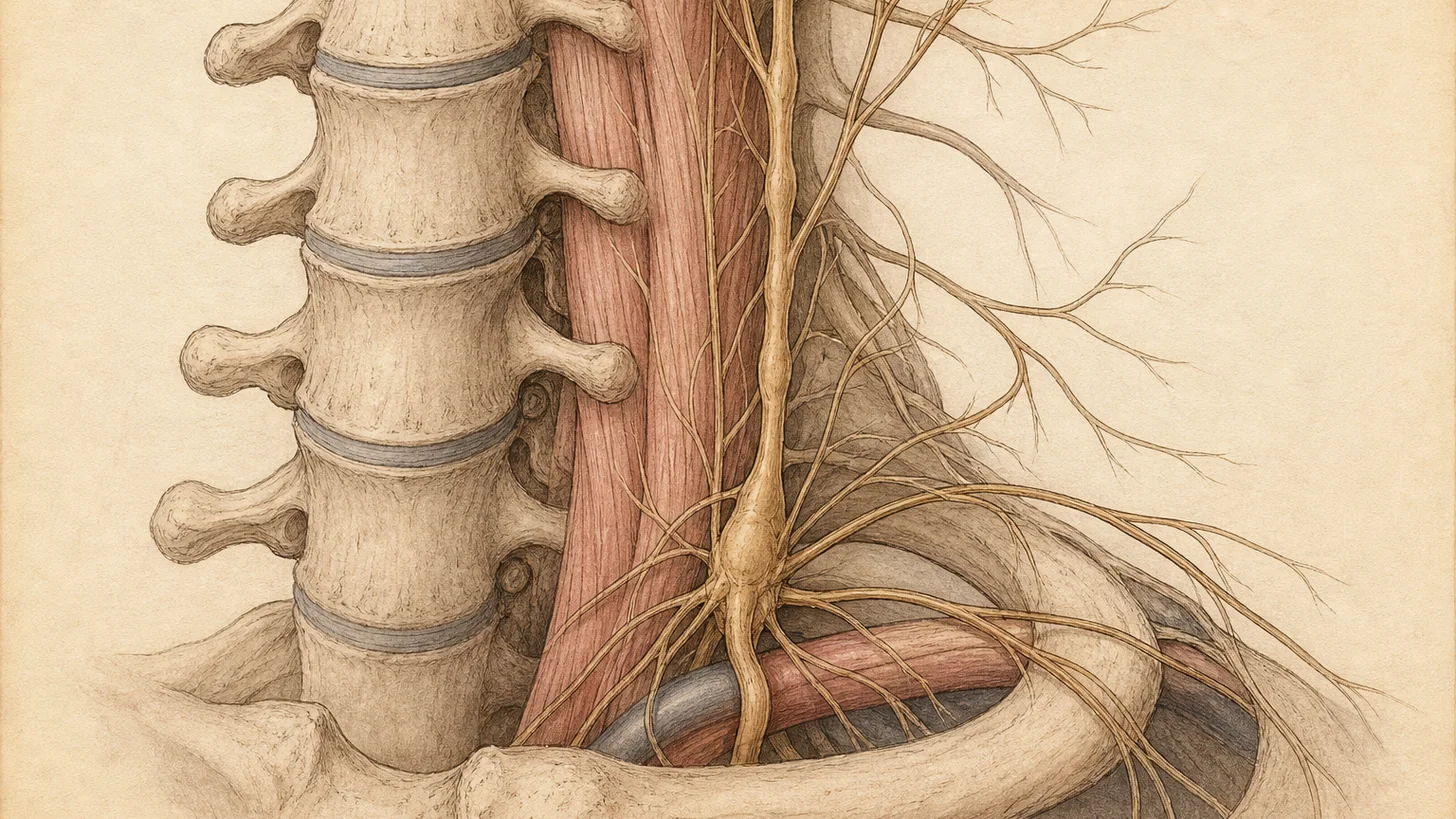
The sympathetic nervous system helps drive the color, temperature, sweating, and pain amplification of CRPS. An image-guided sympathetic block places local anesthetic next to the sympathetic chain serving the affected limb:
- For arm, hand, and shoulder CRPS, the target is the stellate ganglion at the base of the neck — the stellate ganglion block, performed by Dr. Movshis personally under ultrasound and fluoroscopic guidance. CRPS is one of the longest-established, insurance-recognized indications for this procedure.
- For leg, foot, and ankle CRPS, the analogous target is the lumbar sympathetic chain. Sympathetic nerve blocks follow the same principle: test whether the pathway is involved, then interrupt it.
The candid, evidence-based framing: the evidence is mixed. A 2024 meta-analysis of 12 randomized trials found that stellate ganglion blocks reduced pain intensity modestly compared with controls, with few side effects, and called for larger studies (Tian et al., 2024). The Cochrane overview found moderate-certainty evidence that lidocaine sympathetic blocks probably do not reduce pain more than placebo. The 5th-edition guidelines still include sympathetic blocks as a reasonable component of care. That is exactly why we use the first block as a test. A clear, meaningful response guides a planned short series. No response is equally valuable information and stops us from repeating a procedure that isn’t helping you. The injection itself takes a few minutes, and you are observed for 30 to 60 minutes afterward in our Midtown suite.
Coordinated physical therapy, desensitization, and graded motor imagery
Rehabilitation is the backbone of CRPS treatment — the procedures exist largely to make rehabilitation possible. A block that relieves pain but isn’t followed by movement work is an opportunity wasted. Dr. Movshis coordinates with Modal’s in-house physical therapists, on the same floor, on:
- Desensitization: graded exposure of the limb to textures, touch, and temperature to retrain an overprotective nervous system.
- Graded motor imagery (GMI) and mirror therapy: a staged program — limb recognition, imagined movement, then mirror-box movement — that targets the brain’s altered map of the limb. A small randomized controlled trial of 13 patients found GMI reduced pain in long-standing CRPS (Moseley, Pain, 2004). The Cochrane overview rated the certainty of the evidence for most rehabilitation approaches, like most CRPS treatments, as low or very low.
- Edema management, gentle range of motion, and gradual loading to reverse disuse without provoking flares.
On-site physical therapy under one roof lets us time therapy sessions to your block schedule — often within the relief window of a sympathetic block, when the limb tolerates the most progress.
Medication support and honest escalation
Medications are supporting players in CRPS, not the lead. Where appropriate, we coordinate short courses of anti-inflammatory treatment early on, neuropathic-pain agents (such as gabapentinoids or SNRIs), and topical options, always in service of the same goal: enough symptom control to participate in rehabilitation. Consistent with our practice’s non-opioid philosophy, Modal Pain does not prescribe opioids, and long-term opioids have no established role in this condition. For severe, refractory cases, guidelines support consideration of spinal cord or dorsal root ganglion stimulation, which requires referral to an implanting specialist. If your course points that way, we will say so plainly and help you get there rather than cycling you through procedures that have stopped working.
What to Expect During Your Visit
Your first appointment begins with time — a careful history of the injury or surgery that started this, a side-by-side examination of both limbs against the Budapest categories, and a review of any imaging, operative reports, or prior treatments. You will leave that visit knowing three things: whether your presentation meets the CRPS criteria, what else has been considered and excluded, and what the next step is.
If a sympathetic block is appropriate, we verify your insurance benefits first and schedule promptly — often the same week. On procedure day, the skin is cleansed and numbed. Under real-time ultrasound, with fluoroscopy to check the needle position, Dr. Movshis guides a fine needle to the target and injects local anesthetic. For a stellate ganglion block, a temporary drooping eyelid, stuffy nostril, and warm hand on the treated side are expected. They are signs the anesthetic reached the sympathetic nerves, and they wear off with the anesthetic. You are observed for 30 to 60 minutes. Someone must take you home, or you can take a car service such as Uber or a taxi, not the subway and not your own car. Before you leave, we discuss how to use the relief window: which therapy exercises to begin, and when.
Cost and Insurance for CRPS Treatment
Sympathetic blocks performed for CRPS are a guideline-supported indication and are generally covered by commercial PPO insurance plans, subject to your plan’s criteria and limits. We verify coverage before anything is scheduled, at no cost or obligation — you can start that process on our insurance verification page. For patients without qualifying coverage, transparent self-pay options are listed on our self-pay pricing page, and financing is available.
Two things to know up front, so nothing surprises you: Modal Pain Management accepts most commercial PPO plans, including Aetna, Anthem Blue Cross Blue Shield, Cigna, Empire Blue Cross Blue Shield, the Empire Plan, Oscar, Oxford, UMR and UnitedHealthcare, and does not accept Medicare, Medicaid, HMO plans, or workers’ compensation. And because CRPS care is a course of treatment rather than a single visit, we map out the anticipated plan (evaluation, possible block series, coordinated therapy) and its coverage before you commit to it.
Recovery and Long-Term Management
Recovery after a sympathetic block is quick — most patients resume light activity the next day. Recovery from CRPS is a longer arc, and we will not pretend otherwise. Some patients improve substantially and return to full function. Others improve partially and learn to manage flares. A minority have a stubborn course despite appropriate care. Our commitment is steady, honest management of that arc: blocks timed to support therapy, therapy progressed at a pace your nervous system can accept, regular reassessment against objective measures (temperature symmetry, swelling, range of motion, function), and candid conversations when the plan needs to change. Long-term self-management — stress regulation, sleep, pacing, and keeping the limb moving through flares rather than immobilizing it — is part of the program from day one.
References
- Harden NR, Bruehl S, Perez RSGM, et al. Validation of proposed diagnostic criteria (the “Budapest Criteria”) for Complex Regional Pain Syndrome. Pain. 2010;150(2):268–274. doi:10.1016/j.pain.2010.04.030 · PubMed
- Harden RN, McCabe CS, Goebel A, et al. Complex Regional Pain Syndrome: Practical Diagnostic and Treatment Guidelines, 5th Edition. Pain Med. 2022;23(Suppl 1):S1–S53. doi:10.1093/pm/pnac046 · PubMed
- Ferraro MC, Cashin AG, Wand BM, et al. Interventions for treating pain and disability in adults with complex regional pain syndrome- an overview of systematic reviews. Cochrane Database Syst Rev. 2023;6(6):CD009416. doi:10.1002/14651858.CD009416.pub3 · PubMed
- Moseley GL. Graded motor imagery is effective for long-standing complex regional pain syndrome: a randomised controlled trial. Pain. 2004;108(1-2):192–8. doi:10.1016/j.pain.2004.01.006 · PubMed
- Sandroni P, Benrud-Larson LM, McClelland RL, Low PA. Complex regional pain syndrome type I: incidence and prevalence in Olmsted county, a population-based study. Pain. 2003;103(1-2):199–207. doi:10.1016/s0304-3959(03)00065-4 · PubMed
- de Mos M, de Bruijn AG, Huygen FJ, Dieleman JP, Stricker BH, Sturkenboom MC. The incidence of complex regional pain syndrome: a population-based study. Pain. 2007;129(1-2):12–20. doi:10.1016/j.pain.2006.09.008 · PubMed
- van Rijn MA, Marinus J, Putter H, Bosselaar SR, Moseley GL, van Hilten JJ. Spreading of complex regional pain syndrome: not a random process. J Neural Transm (Vienna). 2011;118(9):1301–9. doi:10.1007/s00702-011-0601-1 · PubMed
- Tian Y, Hu Y, Hu T, et al. Stellate Ganglion Block Therapy for Complex Regional Pain Syndrome: A Systematic Review and Meta-Analysis. Pain Physician. 2024;27(4):175–184. PubMed