Long COVID is frustrating precisely because it rarely shows up on standard tests. Months after the infection clears, some people are left with crushing fatigue, brain fog, a heart that races or pounds when they stand, broken sleep, and — strikingly often — a distorted sense of smell. One thread ties many of these symptoms together: a sympathetic nervous system stuck in overdrive. That observation is why a decades-old pain procedure, the stellate ganglion block, has become one of the most-asked-about off-label options for long COVID. This article lays out, honestly, what the evidence does and does not show.
The idea: a sympathetic nervous system stuck “on”
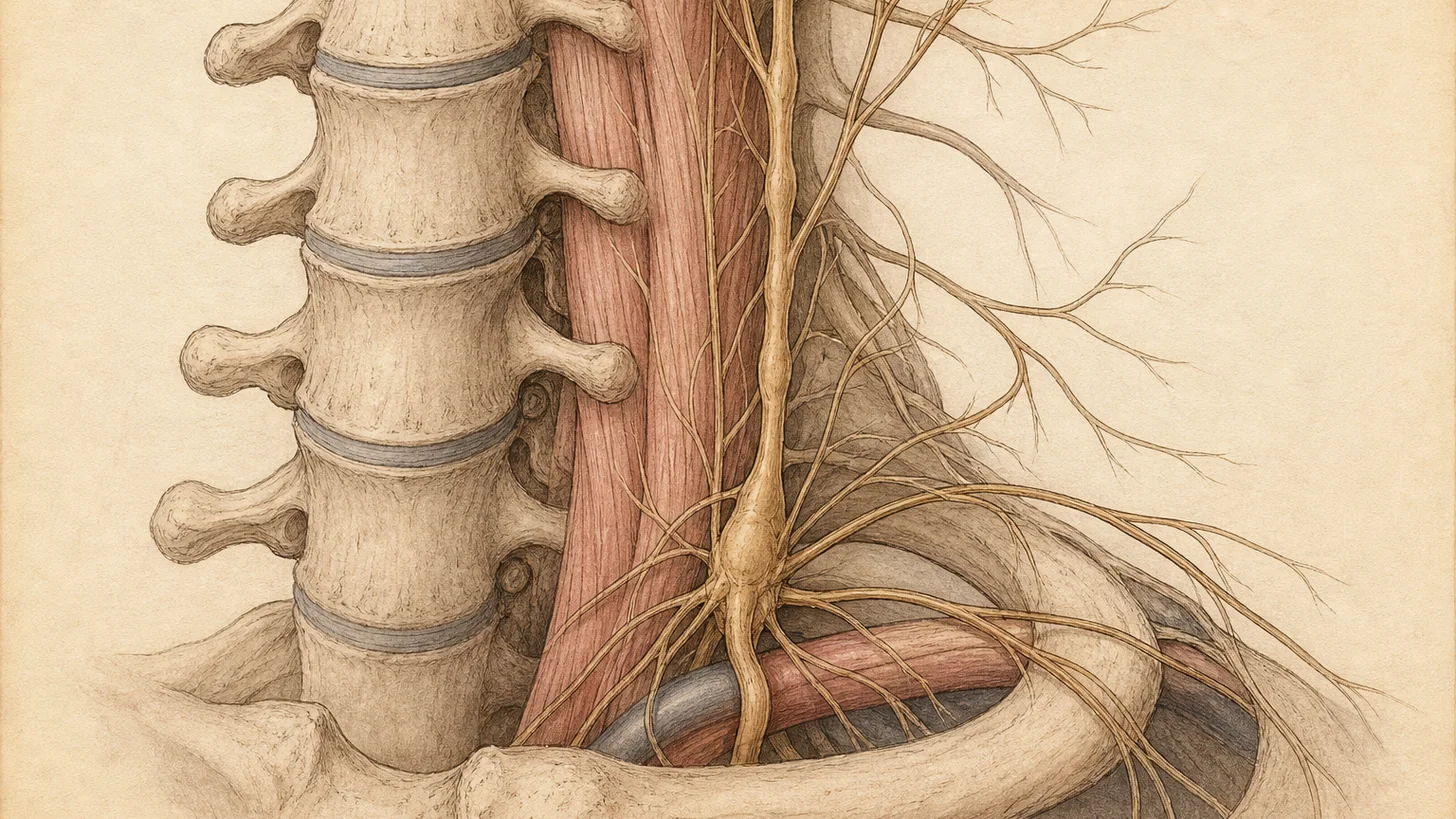
The stellate ganglion is a small cluster of sympathetic nerves in the front of the neck that carries “fight-or-flight” signals to the head, neck, and arm. A stellate ganglion block (SGB) uses local anesthetic to switch that signaling off for a while. The theory in long COVID is that the syndrome involves dysautonomia — a dysregulated autonomic nervous system — and that briefly interrupting the sympathetic side may let it reset. It is the same logic behind using SGB for post-traumatic stress, where the nervous system is also stuck in a hyper-aroused state.
Plausible, though, is not the same as proven. Here is what has actually been published.
What the studies actually show
The honest headline: there is no randomized, placebo-controlled trial of SGB for long COVID. Everything below is small, and most of it has no control group — which matters enormously, because long COVID often improves on its own over time. Any uncontrolled “before and after” will capture that natural recovery, plus the placebo response, as if it were a treatment effect.
- The best available study is a 20-patient open-label pilot. Patients with post-COVID dysautonomia and pain received right- and left-sided blocks a week apart. By four weeks, autonomic symptom scores fell about 38%, pain interference about 48%, and most reported feeling better, with no adverse events (Wang et al., 2025). Encouraging — but there was no sham group, and the authors themselves call for randomized trials.
- A single-practice chart review of 41 patients reported that 86% felt better after SGB (Pearson et al., 2023). That “86%” gets quoted constantly online. It should not be read as proof: it is retrospective, from one practice, with no comparison group.
- Case reports describe striking individual recoveries — resolution of long-COVID smell and taste distortion after a block (Chauhan et al., 2022), and improvement in fatigue, breathlessness, and other symptoms after local-anesthetic injections including the stellate ganglion (Vinyes et al., 2022). Case reports generate hypotheses; they do not establish that a treatment works.
- And it does not always work. One published case describes a patient with post-COVID nerve pain whose stellate ganglion block failed; he improved only with a different procedure (Butler, 2024). Honest accounting includes the misses.
- A 2024 review of long-COVID management lists SGB among “underutilized” options worth a referral, while acknowledging the evidence base is still thin (Dietz & Brondstater, 2024).
What the PTSD trials tell us — and why they are relevant
Long COVID and PTSD share that “nervous-system-stuck-on” feature, and SGB has been tested more rigorously in PTSD, with genuinely mixed results. A multisite randomized trial in service members found two blocks reduced PTSD symptoms more than a sham injection (Rae Olmsted et al., 2020). An earlier randomized, double-blind, sham-controlled trial found no significant difference and explicitly cautioned against routine use (Hanling et al., 2016). The lesson for long COVID: the underlying mechanism has real but inconsistent support even where it has been studied properly — a reason for measured optimism, not hype.
So is it worth trying?
For the right person, it can be reasonable to try — with the framing kept honest. We have had patients come in for an off-label block after their neurologist suggested it, particularly for autonomic symptoms like orthostatic intolerance and palpitations, or for persistent smell distortion. A stellate ganglion block is low-risk in trained hands, often gives an answer quickly (if it is going to help, you tend to know within a week or two), and does not close any doors. What it is not is a guaranteed or curative treatment, and it should not replace the standard long-COVID workup, pacing, and care your other physicians provide.
If you decide to try it, the most sensible approach is a single diagnostic block. A clear, meaningful response guides whether to do more; no change at all is useful information, and we reassess rather than simply repeating it.
Safety and cost
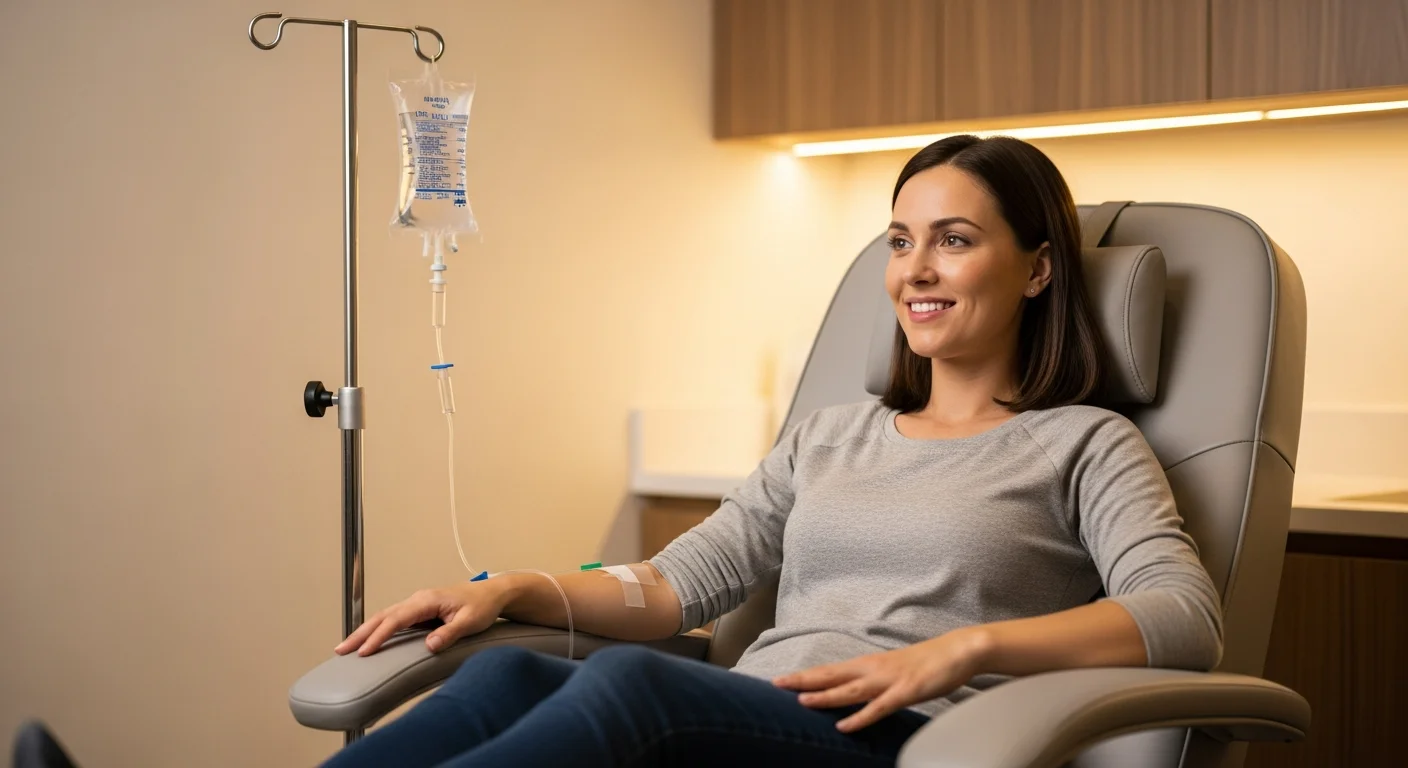
Performed by a physician under ultrasound and fluoroscopic guidance, an SGB is generally safe. The expected, temporary effects on the treated side — a droopy eyelid, smaller pupil, stuffy nose, warm hand, and sometimes hoarseness — actually confirm the block worked. Rare but serious risks (injection into a blood vessel, a briefly weakened breathing muscle, or a collapsed lung) are why image guidance and physician monitoring matter. Because long-COVID use is off-label, it is not covered by insurance; at Modal Pain Management it is a flat $1,000 self-pay block. Full details, including the covered uses, are on the stellate ganglion block page.
If your neurologist or primary doctor has raised a stellate ganglion block for long COVID, book a consultation or call (646) 290-6660, and we will give you a straight, no-pressure read on whether it is worth trying in your situation.
References
This article is reviewed against the peer-reviewed literature. Citations retrieved from PubMed.
- Wang S, Salway RJ, Nicklay M, Kuo J. Effectiveness of Dual Sympathetic Blocks for Sympathetically Mediated Symptoms in Post-acute Sequelae of SARS-CoV-2 (PASC): An Open-Label, Non-randomized Pilot Study. Cureus. 2025. doi:10.7759/cureus.81530 · PubMed
- Pearson L, Maina A, Compratt T, et al.. Stellate Ganglion Block Relieves Long COVID-19 Symptoms in 86% of Patients: A Retrospective Cohort Study. Cureus. 2023. doi:10.7759/cureus.45161 · PubMed
- Chauhan G, Upadhyay A, Khanduja S, Emerick T. Stellate Ganglion Block for Anosmia and Dysgeusia Due to Long COVID. Cureus. 2022. doi:10.7759/cureus.27779 · PubMed
- Vinyes D, Munoz-Sellart M, Garcia Caballero T. Local anesthetics as a therapeutic tool for post COVID-19 patients: A case report. Medicine (Baltimore). 2022. doi:10.1097/MD.0000000000029358 · PubMed
- Butler CS. Use of Neuromodulation to Treat Post-COVID Neuropathic Pain: A Case Report. Pain Medicine Case Reports. 2024. · PubMed
- Dietz TK, Brondstater KN. Long COVID management: a mini review of current recommendations and underutilized modalities. Frontiers in Medicine. 2024. doi:10.3389/fmed.2024.1430444 · PubMed
- Rae Olmsted KL, Bartoszek M, Mulvaney S, et al.. Effect of Stellate Ganglion Block Treatment on Posttraumatic Stress Disorder Symptoms: A Randomized Clinical Trial. JAMA Psychiatry. 2020. doi:10.1001/jamapsychiatry.2019.3474 · PubMed
- Hanling SR, Hickey A, Lesnik I, et al.. Stellate Ganglion Block for the Treatment of Posttraumatic Stress Disorder: A Randomized, Double-Blind, Controlled Trial. Regional Anesthesia and Pain Medicine. 2016. doi:10.1097/AAP.0000000000000402 · PubMed
Frequently Asked Questions
No — it is not a proven cure, and no honest physician can promise it works. The published evidence is early and uncontrolled: small open-label studies and case reports suggest some patients improve, especially with autonomic symptoms and smell distortion, but there is no randomized, placebo-controlled trial, and at least one published case reports the block failing. It is a reasonable off-label option to consider for selected patients, not a guaranteed treatment.
No. Using a stellate ganglion block for long COVID is off-label, so it is not covered by insurance and is a self-pay procedure. At Modal Pain Management it is a flat $1,000 per block, which includes the physician's fee, ultrasound and fluoroscopic guidance, and the medication. When the same block is performed for an established, covered indication such as CRPS, it is billed to insurance instead.
Usually within one to two weeks. We typically start with a single diagnostic block: if you get a clear, meaningful improvement, that guides whether to do more; if nothing changes, that is useful information, and we reassess rather than simply repeating the block. This 'try one and judge honestly' approach keeps cost and risk down while you find out whether you are a responder.
Performed by a physician under ultrasound and fluoroscopic guidance, it is generally safe. Expected, temporary effects on the treated side — a drooping eyelid, smaller pupil, stuffy nose, warm hand, and sometimes hoarseness (together called Horner's syndrome) — actually confirm the block worked and wear off in hours. Rare but serious risks, which image guidance is designed to prevent, include injection into a blood vessel, a temporarily weakened breathing muscle, or a collapsed lung.