The visit that most often should catch complex regional pain syndrome — and most often doesn’t — is the one right after a cast comes off.
The bone healed. The X-ray is unremarkable. But the limb that emerges from the cast is not just weak and stiff, which would be expected. It burns. The skin is so sensitive that a sleeve, a bedsheet, or the wind is painful. It looks wrong — redder or paler than the other side, warmer or cooler, puffy, sometimes sweating differently. And because using it hurts, it doesn’t get used, which makes the swelling and stiffness worse in a loop that feeds itself.
That combination has a name, and recognizing it in its first months matters.
Fracture is the most common trigger
CRPS is uncommon enough that many physicians see only a handful of cases, which is one reason it is missed. Population-based studies put its incidence somewhere between about 5 and 26 cases per 100,000 person-years — the Olmsted County study in Minnesota found 5.46, while a larger Dutch primary-care cohort found 26.2 [2][3]. It affects women roughly three to four times as often as men, and the upper limb about twice as often as the lower [2][3].
The trigger, though, is consistent. Fracture was the most common precipitating event in both studies — 46% of cases in Olmsted County and 44% in the Dutch cohort [2][3]. Other triggers include sprains, crush injuries, burns, surgery, and prolonged immobilization. In a minority of cases no trigger is ever identified.
This is why the post-fracture and post-cast period deserves specific attention. The most common cause of CRPS is an injury that is otherwise healing normally, seen by a clinician whose attention is reasonably on whether the bone knitted — and whose examination may not include comparing both limbs for color, temperature, swelling, and sweating.
The early warning signs, in four groups
CRPS never looks identical between two people, but its features cluster into four categories. These are the same four the diagnostic criteria use, and knowing them is what turns a vague “it still hurts” into something specific enough to act on.
Sensory — the pain is the wrong kind. Burning, stabbing, or electric rather than the deep ache of ordinary healing. Two features matter most: pain that is disproportionate to the original injury, and allodynia — pain from something that should not hurt at all, like clothing, bedding, a light touch, or a breeze. Allodynia after a healed fracture is not a normal stage of recovery.
Vasomotor — the limb is a different color or temperature. One hand or foot is noticeably warmer or cooler than the other, or the skin turns red, blotchy, pale, blue, or purple. These changes can come and go within the same day, which is part of why patients hesitate to mention them — it wasn’t happening in the waiting room.
Sudomotor and swelling — it is puffy or sweats differently. Visible swelling of the hand or foot, and sweating that is heavier or lighter than the unaffected side.
Motor and trophic — it moves badly and the tissue is changing. Stiffness and lost range of motion beyond what disuse explains, sometimes weakness, tremor, or odd posturing of the hand or foot. Over time: changes in hair growth, changes in nail growth or texture, and skin that becomes thin, shiny, or fragile.
A practical way to use this list: photograph both limbs side by side, in the same light, when the symptoms are at their worst. Vasomotor changes are intermittent, and the single most useful piece of evidence a patient can bring to an evaluation is a picture of the difference on a day the clinician isn’t there to see it.
How CRPS is actually diagnosed
There is no blood test and no scan that proves CRPS. The international standard is the Budapest criteria, and the diagnosis requires four things together [1]:
| Requirement | What it means in practice |
|---|---|
| Continuing pain disproportionate to the inciting event | The pain is worse or longer-lasting than the injury can account for. |
| Symptoms in at least 3 of the 4 categories | You report problems across sensory, vasomotor, sudomotor/swelling, and motor/trophic groups. |
| Signs in at least 2 of the 4 categories | The examiner can see or measure findings — temperature or color asymmetry, swelling, allodynia, restricted movement — at the visit. |
| No other diagnosis explains it better | Infection, nerve entrapment, vascular disease, and other mimics are considered and reasonably excluded. |
The validation study behind these criteria is worth knowing about, because it explains why the older definition caused so much confusion. Compared with the previous IASP criteria — which were highly sensitive but poorly specific, flagging far too many people — the Budapest clinical criteria kept essentially all the sensitivity (0.99) while substantially improving specificity (0.68, rising to 0.79 for the stricter research version) [1].
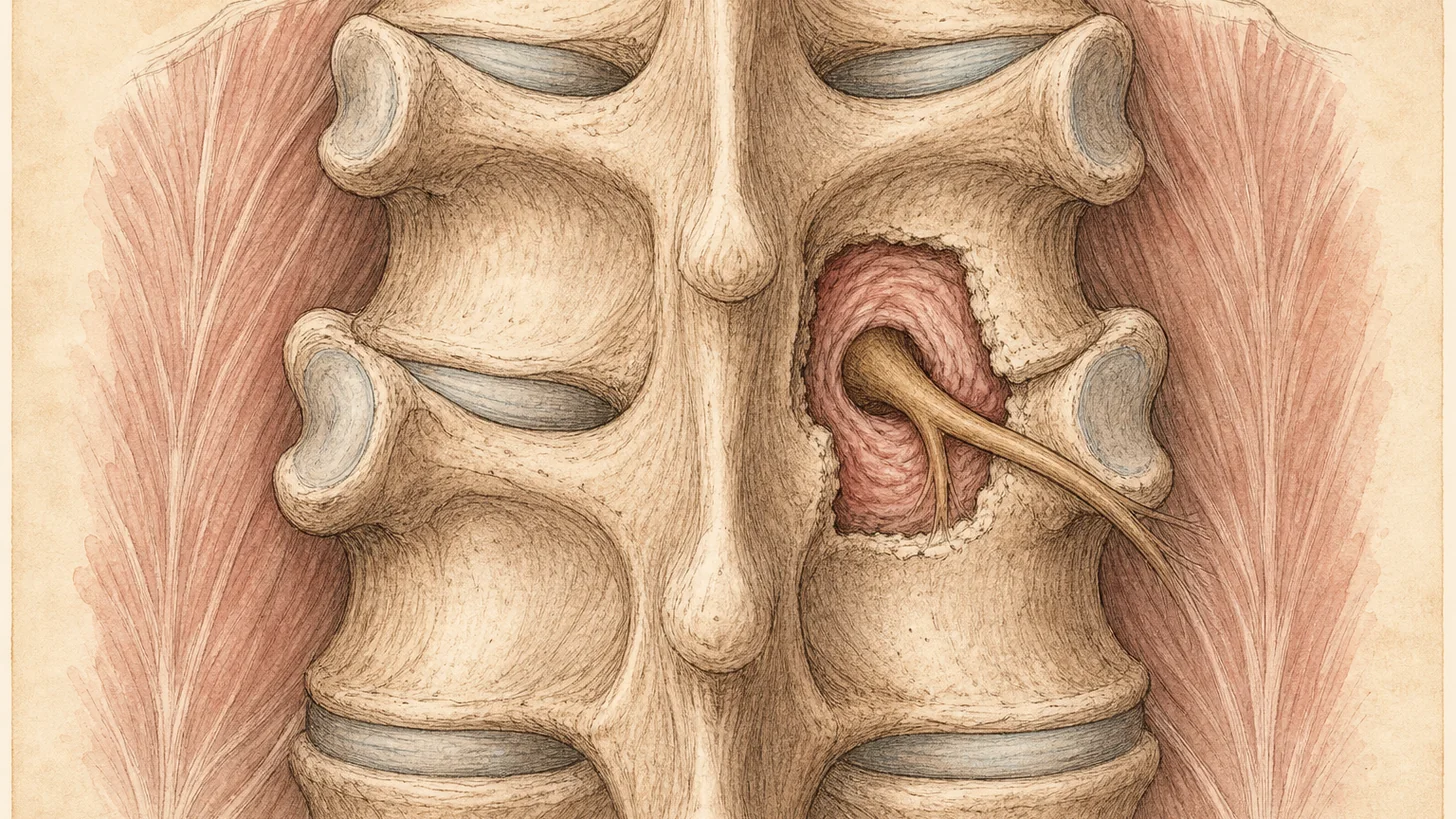
Two practical consequences. First, imaging is used to exclude other causes, not to confirm CRPS — a normal MRI is expected, not reassuring. Second, that last row is where a specialist earns their keep: several treatable conditions imitate CRPS, and a compressed peripheral nerve in particular can produce burning pain and swelling in a hand or foot while requiring an entirely different treatment.
Why the first months matter
Fear is not a treatment plan, and there is real good news in the data: in the Olmsted County cohort, roughly three-quarters of CRPS type I cases resolved, often without invasive treatment [2]. Many people get better.
But the guidelines are clear about timing. The CRPS Practical Diagnostic and Treatment Guidelines, 5th Edition emphasize prompt, coordinated, rehabilitation-centered care starting when CRPS is first suspected — not after every other possibility has been exhausted [4]. The mechanism is intuitive: prolonged disuse deepens stiffness and swelling and reinforces the nervous system’s altered map of the limb, and those changes are harder to reverse the longer they run.
So the case for early evaluation is not alarmism. It is that evaluation is low-cost and reversible, while delay is not.
What about vitamin C after a wrist fracture?
Some surgeons recommend vitamin C, usually 500 mg a day for 50 days starting at the time of the injury, to lower the chance of CRPS after a wrist fracture. The evidence is mixed. Two meta-analyses of the same three placebo-controlled trials reached different conclusions. One found a lower risk with 500 mg a day, a risk ratio of 0.54 [7]. The other found no statistically significant benefit and rated the overall evidence low quality [8]. The largest single trial, 336 patients in Edinburgh, found no difference in CRPS rates or in function at one year [9]. It is a reasonable question to raise with the surgeon managing the fracture. It is a prevention measure, not a treatment for CRPS that has already started.
What treatment actually looks like
Rehabilitation is the backbone, not the afterthought. CRPS-informed therapy is graded and patient-paced — desensitization to retrain an overprotective nervous system, gentle range of motion, edema management, and gradual loading. Aggressive push-through-the-pain rehab tends to flare CRPS, which is why generic protocols often backfire. On-site physical therapy makes it easier to time sessions to a patient’s best window.
Graded motor imagery targets the brain’s map of the limb. A staged program — recognizing left versus right images of the limb, then imagined movement, then mirror-box work — before asking the limb to do much. A small randomized controlled trial of 13 people with long-standing CRPS type I found meaningful pain reduction, with a number needed to treat of about two for a 50% reduction in neuropathic pain score [6].
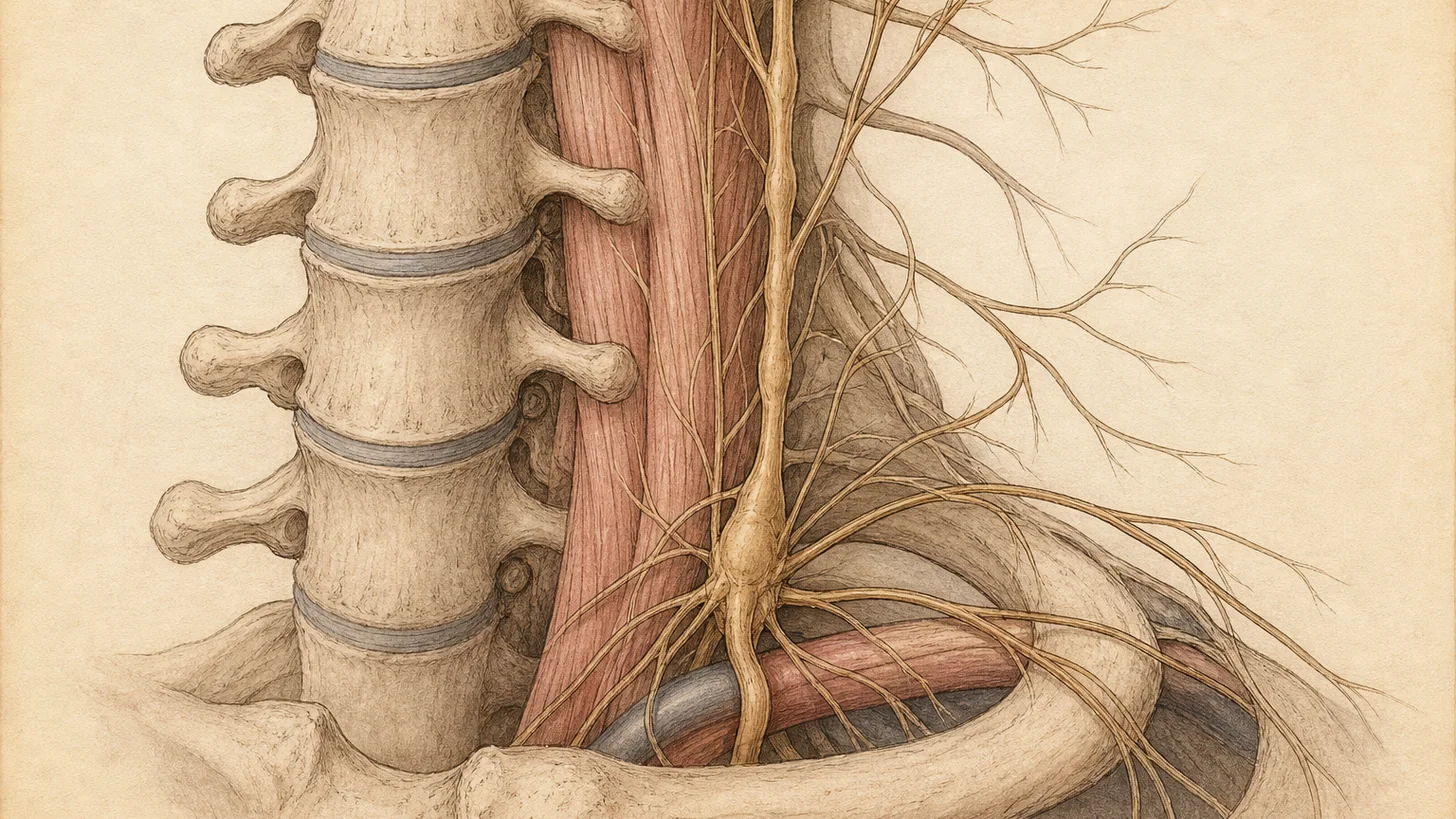
Sympathetic blocks are tests first, treatments second. For arm, hand, and shoulder CRPS the target is the stellate ganglion at the base of the neck — a stellate ganglion block. For the leg and foot, the equivalent is a lumbar sympathetic block. Both fall under image-guided nerve blocks. The question a first block answers is whether quieting the sympathetic supply changes your pain. A clear response guides a short planned series timed around therapy. No response is equally valuable — it stops us repeating a procedure that isn’t helping you.
Medications support rehabilitation rather than replace it, and long-term opioids have no established role in CRPS. Modal Pain does not prescribe opioids. Our practice is built around non-opioid, interventional care for exactly this kind of condition.
What the evidence does — and does not — support
Any honest page about CRPS has to say this plainly: a 2023 Cochrane overview of 17 systematic reviews found no high-certainty evidence supporting any single treatment for CRPS [5]. It specifically found that lidocaine sympathetic blockade probably does not reduce pain intensity more than placebo, and that for most commonly used interventions the certainty of evidence was very low.
That does not mean nothing helps — it means nobody should promise you a cure, and the sensible response is a plan built on testable steps rather than confident claims. It is also the strongest argument for the approach above: use a block as a diagnostic instrument with a defined question, put the relief window to work in rehabilitation, and reassess honestly at each step. A clinic guaranteeing CRPS relief is telling you about its marketing, not the science.
When to get evaluated
Get evaluated if, weeks after a fracture, sprain, surgery, or a period in a cast or splint, you have burning pain that seems out of proportion to the injury — especially if light touch hurts, or the limb is a different color or temperature than the other side, or it is swollen, sweating differently, or changing in skin, hair, or nail texture.
You do not need a diagnosis before you come in, and evaluation does not commit you to a procedure. What it does is get the pattern recognized early, which is what the guidelines ask for. Bring photographs of the limb on a bad day, your operative or fracture records, and a list of what has already been tried.
Modal Pain Management evaluates and treats CRPS at 369 Lexington Avenue, Floor 25, in Midtown Manhattan — see our complex regional pain syndrome page for the full treatment approach. Same-week appointments are available.
References
This article is reviewed against the peer-reviewed literature. Citations retrieved from PubMed.
- Harden NR, Bruehl S, Perez RSGM, Birklein F, Marinus J, Maihofner C, Lubenow T, Buvanendran A, Mackey S, Graciosa J, Mogilevski M, Ramsden C, Chont M, Vatine JJ. Validation of proposed diagnostic criteria (the “Budapest Criteria”) for Complex Regional Pain Syndrome. Pain. 2010;150(2):268-274. doi:10.1016/j.pain.2010.04.030 · PubMed
- Sandroni P, Benrud-Larson LM, McClelland RL, Low PA. Complex regional pain syndrome type I: incidence and prevalence in Olmsted county, a population-based study. Pain. 2003;103(1-2):199-207. doi:10.1016/s0304-3959(03)00065-4 · PubMed
- de Mos M, de Bruijn AGJ, Huygen FJPM, Dieleman JP, Stricker BHCh, Sturkenboom MCJM. The incidence of complex regional pain syndrome: a population-based study. Pain. 2006;129(1-2):12-20. doi:10.1016/j.pain.2006.09.008 · PubMed
- Harden RN, McCabe CS, Goebel A, Massey M, Suvar T, Grieve S, Bruehl S. Complex Regional Pain Syndrome: Practical Diagnostic and Treatment Guidelines, 5th Edition. Pain Medicine. 2022;23(Suppl 1):S1-S53. doi:10.1093/pm/pnac046 · PubMed
- Ferraro MC, Cashin AG, Wand BM, Smart KM, Berryman C, Marston L, Moseley GL, McAuley JH, O’Connell NE. Interventions for treating pain and disability in adults with complex regional pain syndrome — an overview of systematic reviews. Cochrane Database of Systematic Reviews. 2023;6(6):CD009416. doi:10.1002/14651858.CD009416.pub3 · PubMed
- Moseley GL. Graded motor imagery is effective for long-standing complex regional pain syndrome: a randomised controlled trial. Pain. 2004;108(1-2):192-8. doi:10.1016/j.pain.2004.01.006 · PubMed
- Aïm F, Klouche S, Frison A, Bauer T, Hardy P. Efficacy of vitamin C in preventing complex regional pain syndrome after wrist fracture: A systematic review and meta-analysis. Orthop Traumatol Surg Res. 2017;103(3):465-470. doi:10.1016/j.otsr.2016.12.021 · PubMed
- Evaniew N, McCarthy C, Kleinlugtenbelt YV, Ghert M, Bhandari M. Vitamin C to Prevent Complex Regional Pain Syndrome in Patients With Distal Radius Fractures: A Meta-Analysis of Randomized Controlled Trials. J Orthop Trauma. 2015;29(8):e235-41. doi:10.1097/BOT.0000000000000305 · PubMed
- Ekrol I, Duckworth AD, Ralston SH, Court-Brown CM, McQueen MM. The influence of vitamin C on the outcome of distal radial fractures: a double-blind, randomized controlled trial. J Bone Joint Surg Am. 2014;96(17):1451-9. doi:10.2106/JBJS.M.00268 · PubMed
Frequently Asked Questions
Usually within the first few weeks to a couple of months — often becoming obvious right after a cast, splint, or boot comes off and the limb is asked to work again. It can also declare itself later. The timing matters less than the character of the pain: burning rather than aching, provoked by light touch, and accompanied by visible changes in the limb's color, temperature, swelling, or sweating.
Normal post-immobilization recovery is stiff and achy, improves week over week, and does not make light touch painful. CRPS pain is burning or electric, is disproportionate to the original injury, tends to plateau or worsen rather than steadily improve, and comes with objective findings — one limb a different color or temperature than the other, asymmetric swelling or sweating, or changes in hair, nail, and skin texture. If a bedsheet or a shirt sleeve hurts, that is not ordinary stiffness.
No. There is no scan or laboratory test that proves CRPS. It is a clinical diagnosis made with the Budapest criteria — a structured examination of both limbs looking for symptoms in at least three of four categories and observable signs in at least two, with no better alternative explanation. Imaging is used to rule out other causes, not to confirm CRPS. This is exactly why the diagnosis gets missed at visits organized around reviewing a healed X-ray.
Because it usually did. CRPS is not a problem with bone healing — it is a problem in how the nerves, blood vessels, and pain-processing pathways in that limb are behaving after the injury. The X-ray can look perfect while the diagnosis is sitting in the physical exam. Fracture is the single most common trigger of CRPS, responsible for roughly 44 to 46 percent of cases in population-based studies.
Sometimes. In the Olmsted County population study, about three-quarters of CRPS type I cases resolved, often without invasive treatment. That is genuinely reassuring, and it is also why aggressive procedures are not the automatic first answer. It is not a reason to wait indefinitely. Disuse deepens stiffness and swelling, and current guidelines favor starting coordinated, rehabilitation-centered care as soon as CRPS is suspected, so early evaluation costs little.
For many patients, structured rehabilitation with desensitization and graded motor imagery is the core of treatment, and current guidelines are rehabilitation-centered. Sympathetic nerve blocks — a stellate ganglion block for the arm and hand, or a lumbar sympathetic block for the leg and foot — are used when a sympathetically maintained component is suspected, first as a diagnostic test and then, if the response is real, to create a window of reduced pain in which therapy is actually tolerable.
The honest answer is that the evidence is mixed and no CRPS treatment has high-certainty evidence behind it. A 2023 Cochrane overview of 17 systematic reviews concluded there is no high-certainty evidence for any therapy, and specifically found that lidocaine sympathetic blockade probably does not reduce pain more than placebo. A 2024 meta-analysis of 12 small trials of stellate ganglion blocks found a modest drop in pain. That is why a block should be treated as a test with a defined question rather than a promised cure. A clear response guides a short planned series, and no response stops us repeating something that is not helping you.
Use it, guided and graded. Prolonged immobilization is part of what drives CRPS forward — disuse deepens stiffness, swelling, and the nervous system's altered map of the limb. But aggressive push-through-the-pain therapy can flare CRPS, which is why CRPS-informed rehabilitation is different: patient-paced, built around desensitization, gentle range of motion, and graded motor imagery, often timed to the relief window of a block.
A staged rehabilitation program that retrains the brain's representation of the painful limb before asking the limb to move much: first recognizing left versus right images of the limb, then imagining movements, then mirror-box work. A small randomized controlled trial of 13 people with long-standing CRPS type I found it reduced pain meaningfully, with a number needed to treat of roughly two for a 50 percent reduction in neuropathic pain score. It was a single small trial, and the 2023 Cochrane overview rated the evidence for most CRPS treatments, rehabilitation included, as low or very low certainty.
Modal Pain Management accepts most commercial PPO plans, including Aetna, Anthem Blue Cross Blue Shield, Cigna, Empire Blue Cross Blue Shield, the Empire Plan, Oscar, Oxford, UMR and UnitedHealthcare, and does not accept Medicare, Medicaid, HMO plans, or workers' compensation. Stellate ganglion blocks for CRPS of the arm and hand are covered by the major plans when their criteria are met. We verify your specific benefits before anything is scheduled, at no cost. Call (646) 290-6660 or use our online insurance verification.