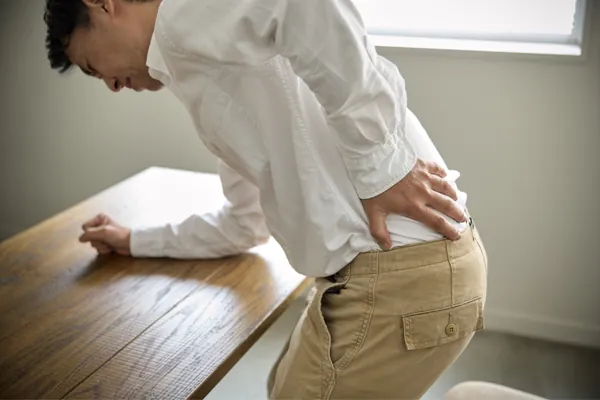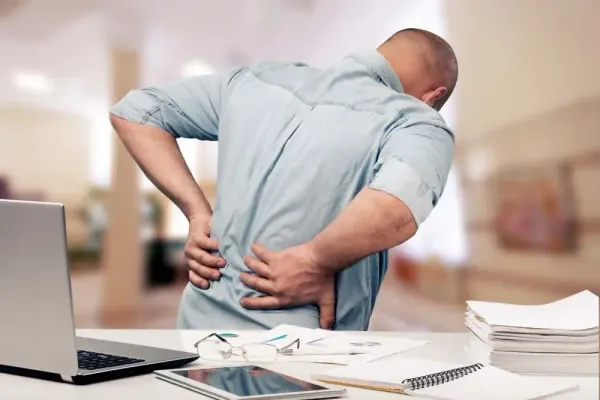
A sudden jolt of sharp pain in your lower back when you bend over or sit down can stop you in your tracks. While it’s tempting to dismiss it as a pulled muscle, sharp lower back pain can signal several different conditions — some minor, some requiring professional attention.
Diagnostic Precision: How a Pain Specialist Distinguishes the Four Causes
Generic advice about “sharp lower back pain” is frustrating because the four primary pain generators — lumbar disc, lumbar facet joint, sacroiliac (SI) joint, and muscle/ligament — present similarly to a non-specialist but require completely different treatment paths. A focused 45-minute exam can distinguish them within the first visit.
Disc-mediated pain (L4–L5 or L5–S1, most often). Worse with forward bending, sitting, and coughing/sneezing (Valsalva maneuver — increases intradiscal pressure). Often radiates past the knee in a dermatomal pattern (L5: lateral leg, top of foot; S1: posterior leg, lateral foot). Slump test reproduces the pain. Straight-leg raise positive at 30–70°. Treatment ladder: physical therapy with directional preference (often extension-biased) → transforaminal epidural steroid injection targeting the specific root if symptoms don’t improve in 4–6 weeks → microdiscectomy referral only if neurological deficit progresses.
Facet-mediated pain (lumbar zygapophyseal joints). Worse with extension (arching backward), prolonged standing, and rotation. Pain stays above the knee. Localized paraspinal tenderness 1–2 cm off midline. Quadrant test reproduces pain. Treatment ladder: diagnostic medial branch block — if ≥80% relief during the anesthetic window, the facet joint is confirmed → radiofrequency ablation of the medial branches typically delivers 6–12 months of relief.
Sacroiliac joint dysfunction. Pain just below the belt line, off-midline, doesn’t cross the dimples of Venus. Worse with single-leg stance, transitions (sit→stand, climbing stairs), unilateral loading. FABER test, Gaenslen test, thigh thrust test — three positive provocation tests strongly suggest SI joint involvement. Treatment ladder: physical therapy emphasizing pelvic/lumbar stabilization → image-guided SI joint injection — diagnostic anesthetic + therapeutic corticosteroid → cooled radiofrequency ablation of the lateral branches for chronic recurrent pain.
Muscle/ligament strain. Localized to the muscle belly or ligamentous attachment. Reproduces with palpation. Resolves substantially in 3–10 days with relative rest, anti-inflammatory medication, gentle movement. Doesn’t radiate past the buttock. Treatment ladder: conservative management is usually sufficient; trigger point injection for persistent myofascial trigger points that don’t respond to PT after 2–3 weeks.
Why this matters for your appointment: the four pain generators look the same to a primary-care physician working with a 10-minute slot. They look different to a fellowship-trained interventional pain physician with image guidance and 45 minutes for a focused exam. The diagnostic precision determines whether you get the right treatment in the first round or cycle through the wrong ones for months.
Why Sharp Lower Back Pain Shouldn’t Be Ignored
Sharp pain is your body’s alarm system indicating that something is being stressed, compressed, or irritated beyond its tolerance. When this occurs specifically with bending or sitting, it often points to specific structural issues that, if left untreated, can worsen over time.
The lower back is particularly vulnerable during these movements because bending forward increases intradiscal pressure significantly — research shows disc pressure rises by up to 150% when bending compared to standing upright. Sitting, particularly with poor posture, increases disc pressure by approximately 40% compared to standing. These mechanical forces explain why bending and sitting are the two most common triggers for lower back pain episodes.
Anatomy of the Lower Back: What’s at Risk
Understanding the structures involved helps explain why different types of pain feel different. The lumbar spine consists of five vertebrae (L1–L5) separated by shock-absorbing intervertebral discs. Each vertebral segment also contains paired facet joints that guide spinal motion, and the spinal canal houses the spinal cord and branching nerve roots that travel to the legs.
Surrounding these bony structures are multiple layers of muscles — the deep multifidus muscles that stabilize individual segments, the larger erector spinae that control trunk extension, and the core muscles (transverse abdominis and obliques) that provide circumferential support. Ligaments connect the vertebrae and limit excessive motion. Any of these structures can be the source of sharp pain when stressed during bending or sitting.
Why Does My Lower Spine Hurt When I Bend Over?
Sharp lower spine pain when bending over is one of the most common complaints we hear at Modal Pain Management. Understanding the biomechanics of spinal flexion—the forward-bending motion—helps explain why this specific movement causes such significant discomfort for many patients.
The Biomechanics of Spinal Flexion
When you bend forward, your lumbar spine (lower back) enters a position called flexion. During this movement, the anterior (front) portions of your intervertebral discs experience a dramatic increase in pressure. Research shows that intradiscal pressure—the internal pressure within the disc nucleus—can increase by 40 to 100% during forward bending, depending on the degree of flexion and whether you’re lifting additional weight.
This pressure increase isn’t inherently problematic for healthy discs. However, if your disc has a bulge, herniation, or is degenerating from age or previous injury, the increased pressure can push the disc material against nerve roots, causing sharp, shooting pain. This is why many patients report that simply bending to pick up a light object can trigger intense pain—the movement itself, rather than the load, is the culprit.
Facet Joint Loading During Flexion
Beyond the discs, your lower spine’s facet joints also experience significant stress during bending. These small joints connect the vertebrae and guide spinal motion. When you bend forward, the facet joints in your lower back actually decompress slightly, but the ligaments that support them stretch under tension.
If you have facet joint arthritis (also called facet syndrome), the cartilage that normally allows smooth gliding between these joints has deteriorated. When you bend forward and the joints shift position, bone-on-bone contact can occur, creating sharp pain or a catching sensation. This type of pain is often more pronounced when bending combined with a twisting motion.
Muscle and Ligament Strain
The muscles and ligaments of your lower back must work hard to control spinal flexion. The erector spinae muscles, which run along your spine, and the posterior ligaments must lengthen to allow forward bending while maintaining stability. If these structures are tight, weak, or fatigued, they can send pain signals during or after bending.
Poor bending mechanics—rounding your back instead of hinging at the hips—places even greater strain on these soft tissues and increases disc pressure further. This is why physical therapists emphasize proper lifting technique: a “hip hinge” with a neutral spine distributes forces more evenly and reduces pain risk.
When to Seek Professional Evaluation
If lower spine pain when bending over persists beyond two weeks, worsens with activity, or radiates into your leg, professional evaluation is necessary. At Modal Pain Management, Dr. Alex Movshis can perform imaging and physical examination to determine whether your pain originates from disc pathology, facet joints, or muscle strain. Treatment options range from physical therapy to epidural steroid injections, depending on the underlying cause.
Common Causes of Sharp Pain in the Lower Back When Bending
Muscle Strain and Back Spasms
Overstretching or tearing muscle fibers — from lifting incorrectly, twisting suddenly, or sustained poor posture — triggers protective muscle spasms that can produce sharp, intense pain with movement. The lumbar erector spinae and quadratus lumborum muscles are most commonly affected. Muscle strains typically produce localized pain that worsens with specific movements but improves with rest and gentle stretching. Trigger point injections can provide rapid relief for persistent muscle spasms that don’t respond to home care.
Herniated or Bulging Discs
Herniated or bulging discs occur when the cushioning material between vertebrae pushes outward, potentially pressing on nearby nerve roots. This compression can cause stabbing pain that intensifies with bending forward — which increases disc pressure — and may radiate into the buttocks or legs. The L4-L5 and L5-S1 discs are most commonly affected because they bear the greatest mechanical load. Epidural steroid injections can reduce inflammation around the compressed nerve root and provide significant pain relief while the disc heals.
Sciatica and Nerve Compression
Sciatica develops when the sciatic nerve is compressed, producing sharp lower back pain that shoots down through the buttock and leg. Bending and prolonged sitting often worsen sciatic symptoms because these positions increase pressure on the nerve. The pain typically follows a specific path — from the lower back through the buttock and down the back or side of the leg, sometimes reaching the foot. Nerve blocks can precisely target the affected nerve root to reduce pain and inflammation.
Facet Joint Syndrome
The facet joints are small paired joints at the back of each spinal segment that guide and limit motion. When these joints become arthritic, inflamed, or irritated, they produce sharp pain with certain movements — particularly extension (arching back) and twisting, but also with prolonged sitting that loads these joints unevenly. Facet-mediated pain is typically felt on one side of the lower back and doesn’t usually radiate below the knee. Radiofrequency ablation provides long-lasting relief for confirmed facet joint pain by interrupting the pain signals from the affected joints.
Sacroiliac Joint Dysfunction
The sacroiliac (SI) joints connect the base of the spine to the pelvis. Dysfunction in these joints produces sharp pain in the lower back and buttock area that can worsen with bending, transitioning from sitting to standing, or climbing stairs. SI joint pain is often confused with disc-related pain but typically doesn’t radiate below the knee. Joint injections can both diagnose and treat SI joint dysfunction.
Arthritis and Degenerative Spine Conditions
Spinal osteoarthritis causes gradual breakdown of the cartilage in facet joints and degeneration of the intervertebral discs. As protective cartilage wears away, bone-on-bone contact and inflammation produce pain that typically worsens with activity and eases with rest. Spinal stenosis — narrowing of the spinal canal — often develops alongside arthritis and can compress nerve roots, adding radiating leg pain to the picture.
Poor Posture and Sedentary Lifestyle
Hours of sitting with suboptimal spinal alignment gradually weakens supporting muscles and overloads spinal joints and discs. The hip flexors shorten, the glutes deactivate, and the lumbar spine loses its natural lordotic curve. This creates a cycle where prolonged sitting causes pain, pain discourages movement, and lack of movement worsens the underlying imbalance. Physical therapy addresses these postural imbalances through targeted strengthening and flexibility programs.
Sharp Lower Back Pain After Deadlifts
Deadlifts are one of the most effective strength exercises, but they also place the highest absolute loads on the lumbar spine — making them a frequent trigger for sharp lower back pain. The most common cause of sharp pain after deadlifts is rounding (flexing) the lumbar spine under load, which shifts forces from the hips and glutes onto the posterior disc wall and spinal ligaments. Other common deadlift-related back injuries include muscle strains from jerking the bar off the floor, disc herniations from repeated heavy loading with imperfect form, and facet joint irritation from hyperextending at the top of the movement.
If you experience sharp lower back pain during or after deadlifts, stop the exercise immediately. Apply ice for 15 to 20 minutes, and avoid heavy lifting for several days. Most deadlift-related muscle strains improve within two to six weeks with rest and gradual return to activity. However, if pain radiates into the legs or doesn’t improve within two weeks, you may have a disc injury that benefits from professional evaluation. Epidural steroid injections can reduce inflammation around a compressed nerve root, while physical therapy addresses the movement patterns that led to the injury. For more on safe lifting technique, see our guide to weight lifting mistakes that cause lower back pain.
Lower Back Pain on the Right Side Above the Buttocks
Sharp lower back pain that localizes to one side — particularly the right side above the buttocks — often points to specific structural causes. The most common include sacroiliac (SI) joint dysfunction, where the joint connecting the spine to the pelvis becomes inflamed or misaligned. SI joint pain typically worsens with transitioning from sitting to standing, climbing stairs, or standing on one leg. Facet joint irritation on one side of the spine produces localized pain that worsens with twisting or bending backward. A unilateral disc herniation can compress the nerve root on one side, causing pain that radiates from the lower back into the right buttock and potentially down the leg.
Piriformis syndrome is another common cause of right-sided pain above the buttocks. The piriformis muscle runs deep in the buttock, and when it becomes tight or spasmed, it can compress the sciatic nerve. This produces pain in the buttock that can mimic sciatica but originates from the muscle rather than the spine. Trigger point injections can provide rapid relief for piriformis-related pain, while joint injections can both diagnose and treat SI joint dysfunction.
If your right-sided lower back pain is accompanied by fever, changes in urination, or severe flank pain, kidney issues should be ruled out — particularly for right-sided pain, where the kidney and appendix may be involved.
When It’s Not the Spine: Kidney and Other Causes
In some cases, sharp lower back pain can originate from non-spinal structures. Kidney stones or infections typically produce pain in the flank area (to the side of the spine) that doesn’t change with spinal movement, often accompanied by urinary changes or fever. Abdominal aortic aneurysm can cause deep, constant back pain. These conditions require different evaluation and treatment.
Sharp Pain in Lower Back After Deadlifts: What Happened and What to Do
Deadlifting is one of the most effective strength-training exercises, but it’s also a common source of acute lower back pain. If you experienced sharp lower back pain after deadlifts, understanding what likely happened and how to respond immediately can prevent long-term injury.
Common Deadlift-Related Lower Back Injuries
Disc Herniation or Bulge: The deadlift demands maximal force from your lumbar spine, especially during the initial “pull” phase. If your form breaks down — your chest drops, your back rounds, or your hips rise too quickly — the posterior disc wall is placed under extreme stress. A herniated disc can occur suddenly, causing sharp, sometimes radiating pain that may extend into the buttocks or leg.
Acute Muscle Strain: The erector spinae and multifidus muscles bear significant load during deadlifts. Micro-tears in these muscles create inflammation and sharp pain, typically localized to one side of the lower back. This type of injury usually feels worse 12–24 hours after the workout (delayed-onset muscle soreness with an acute component).
Facet Joint Irritation: If your deadlift form included excessive lumbar extension (arching) or a rotational component, the facet joints can become acutely inflamed. This produces sharp, localized pain that may increase with backward bending.
Immediate Steps After Sharp Lower Back Pain During Deadlifts
Stop Lifting Immediately: Do not “push through” sharp pain. Continuing to lift with an injured lower back significantly increases the risk of worsening the injury. Complete your other exercises if they don’t aggravate the pain, but cease all heavy back loading.
Apply Ice: For the first 48 hours, apply ice to the injured area for 15–20 minutes every 2–3 hours. Ice reduces inflammation and numbs pain. After 48 hours, gentle heat may help relax muscles, but ice is superior for acute injury.
Gentle Movement: Despite the pain, complete immobility can worsen stiffness. Perform gentle stretches, walk at an easy pace, and move within your pain-free range. Avoid forward bending or heavy lifting.
Anti-Inflammatory Medication: Over-the-counter NSAIDs (ibuprofen, naproxen) can reduce inflammation and pain. Follow package directions and don’t exceed recommended duration without consulting a physician.
When to See a Doctor for Deadlift-Related Back Pain
Seek medical evaluation if:
- Sharp pain persists beyond one week despite rest and ice
- Pain radiates into your leg, foot, or groin
- You experience numbness, tingling, or weakness
- Pain is severe enough to limit daily activities like walking or sleeping
- You have bowel or bladder changes (rare but serious)
At Modal Pain Management, we can perform imaging to identify disc herniations, muscle tears, or other structural damage. If a disc herniation is confirmed, epidural steroid injections can reduce inflammation and pain while you undergo physical therapy to restore function.
Prevention for Future Deadlifts
To prevent recurrence, prioritize form over load: maintain a neutral spine with a slight arch, keep the bar close to your body, and ensure your hips and shoulders rise together. Gradually increase weight rather than jumping to heavy loads. Include proper warm-up and mobility work in your routine, and consider working with a strength coach to refine your technique.
Acute vs. Chronic Back Pain: Understanding the Timeline
Acute back pain — lasting less than six weeks — often results from a specific injury or strain and typically resolves with appropriate care. About 90% of acute lower back pain episodes improve significantly within 6 weeks.
Subacute pain lasts between 6 and 12 weeks and represents a critical window where appropriate treatment can prevent chronicity. This is often the best time to seek specialist evaluation if pain hasn’t resolved with conservative measures.
Chronic back pain persists beyond three months and may involve different underlying mechanisms — including central sensitization, where the nervous system amplifies pain signals even after the original injury has healed. Chronic pain often requires a multimodal treatment approach combining physical therapy, interventional procedures, and lifestyle modification.
When to Seek Medical Help
See a specialist if your pain lasts more than two to three weeks despite home care, radiates into your legs, is accompanied by numbness, tingling, or weakness, occurs after trauma, or is progressively worsening. These signs may indicate conditions that benefit from professional diagnosis and targeted treatment.
Seek immediate emergency care if you experience sudden loss of bladder or bowel control, progressive weakness in both legs, or numbness in the groin area — these symptoms may indicate cauda equina syndrome, a rare but serious condition requiring urgent surgical evaluation.
Lower Back Pain on One Side: Right Side vs. Left Side
Sharp pain localized to one side of the lower back — whether on the right or left — often suggests a specific underlying cause. Understanding which structures are involved can help guide treatment decisions.
Right-Sided Lower Back Pain: SI Joint and Kidney Considerations
Sacroiliac Joint (SI) Dysfunction: The sacroiliac joint connects your sacrum (base of the spine) to your pelvis. Dysfunction or inflammation of this joint frequently causes sharp pain on the right side above the buttocks. SI joint pain often worsens with prolonged sitting, climbing stairs, or standing on one leg. Patients often describe pain that radiates from the buttock toward the hip or groin.
Piriformis Syndrome: The piriformis muscle, located deep in the buttocks, can tighten or spasm and irritate the sciatic nerve. When the right piriformis is affected, you’ll experience sharp, burning pain on the right side, often with radiating symptoms down the leg. This condition is common in runners and those who sit for extended periods.
Kidney Involvement (Red Flag): While muscular and skeletal causes are more common, sharp pain in the right flank or right upper-back area can occasionally indicate kidney issues such as infection, stones, or inflammation. Unlike mechanical back pain, kidney pain is typically constant, doesn’t improve with position changes, and may be accompanied by fever, nausea, or urinary symptoms. If you suspect kidney involvement, seek immediate medical attention.
Left-Sided Lower Back Pain: Muscle Strain and Imbalance
Unilateral Muscle Strain: If you recently engaged in one-sided activities — swinging a golf club, unilaterally carrying a heavy bag, or performing asymmetrical exercises — the muscles on one side of your lower back may be strained. This produces sharp, localized pain that typically improves with rest and stretching.
Spinal Misalignment and Muscle Imbalance: Structural asymmetries or chronic muscle imbalances can cause one-sided pain. If your right hip flexors are tight and your left glute is weak, compensation patterns may cause sharp left-sided lower back pain. Addressing these imbalances through targeted physical therapy is essential for lasting relief.
Disc Pathology on One Side: A disc bulge or herniation can occur asymmetrically, causing pain predominantly on one side. If accompanied by nerve-related symptoms (radiating pain, numbness, weakness), this requires prompt evaluation to rule out significant nerve compression.
When One-Sided Pain Requires Imaging
If sharp lower back pain on one side persists beyond two weeks, causes radiating symptoms, or significantly limits function, imaging and professional evaluation are warranted. At Modal Pain Management, we use ultrasound and fluoroscopic guidance to precisely target affected structures, whether that’s the SI joint, facet joints, or muscle trigger points. Dr. Alex Movshis can determine the exact cause of your one-sided pain and recommend the most effective treatment, from physical therapy to radiofrequency ablation for chronic facet pain.
Can Sitting Too Long Cause Sharp Lower Back Pain?
Yes, prolonged sitting is a major risk factor for sharp lower back pain. In fact, many modern professionals spend 8+ hours daily in chairs, and this sustained position creates unique stresses on your lumbar spine that standing or movement does not.
Sustained Flexion and Disc Creep
When you sit, your spine naturally assumes a flexed (rounded) position, especially if your chair lacks lumbar support. This sustained flexion places continuous stress on the posterior disc wall, the ligaments supporting your spine, and the deep stabilizing muscles. Over hours, a phenomenon called “disc creep” occurs: the nucleus pulposus (center of the disc) gradually migrates posteriorly (toward the back), increasing the risk of bulging or herniation.
Sustained spinal flexion also fatigues the muscles meant to support your spine. As these muscles tire, they provide less support, increasing strain on the discs and ligaments. This is why sharp pain often develops gradually throughout the day rather than immediately upon sitting.
Psoas Tightening and Hip Flexor Shortening
Your psoas major muscle, which connects your lumbar spine to your thighbone, remains in a shortened state throughout sitting. Over hours and days, this muscle tightens, creating a constant pull on your lower spine. A tight psoas increases lumbar lordosis (curve), altering spinal biomechanics and straining facet joints.
Additionally, tight hip flexors limit your ability to fully extend your hips, forcing compensation that stresses your lower back. This explains why office workers often experience sharp lower back pain despite not engaging in heavy activity.
Reduced Intradiscal Nutrition
Intervertebral discs lack blood vessels and receive nutrition through osmotic exchange—movement promotes this exchange, while immobility reduces it. Sitting for extended periods without movement starves your discs of nutrients, reducing their resilience and increasing injury risk.
Ergonomic Solutions and Movement Breaks
To minimize sitting-related sharp lower back pain, implement these strategies:
- Lumbar Support: Use a chair with built-in lumbar support or place a small pillow in the curve of your lower back. This maintains a neutral spine and reduces disc pressure.
- Hip and Knee Angles: Adjust your chair height so hips and knees are at approximately 90 degrees. This reduces psoas tension.
- Movement Breaks: Every 30 minutes, stand, walk, and perform gentle stretches. Even 2-3 minutes of movement significantly reduces pain risk.
- Posture Awareness: Sit with your shoulders back, chest open, and chin neutral. Slouching increases disc pressure dramatically.
- Strengthening: Regular core strengthening and targeted physical therapy improve spinal stability and reduce pain from prolonged sitting.
If you experience sharp lower back pain despite implementing ergonomic improvements and movement breaks, the underlying cause may be more serious than postural strain. Professional evaluation can rule out disc pathology or other structural issues that require specialized treatment.
How to Relieve Lower Back Pain at Home
For mild to moderate pain, brief rest followed by gentle movement is generally more effective than prolonged bed rest. Apply ice for 15 to 20 minutes several times daily during the first 48 to 72 hours to reduce inflammation, then switch to heat to relax muscles and improve blood flow.
Gentle stretching and movement: Cat-cow stretches, pelvic tilts, and gentle knee-to-chest stretches can reduce muscle tension without aggravating most conditions. Avoid deep forward bends during the acute phase. Walking is one of the best activities for acute back pain — start with short distances and gradually increase.
Core strengthening: Once acute pain subsides, exercises like planks, dead bugs, and bird dogs develop the deep stabilizing muscles that protect the spine. These should be pain-free; stop any exercise that increases symptoms.
Ergonomic adjustments: If sitting triggers pain, ensure your chair supports your lumbar curve, your feet are flat on the floor, and your screen is at eye level. Take standing or walking breaks every 30 to 45 minutes.
Over-the-counter anti-inflammatory medications like ibuprofen or naproxen can provide temporary relief. Correcting posture — particularly during sitting — reduces ongoing strain.
Treatment Timeline at Modal Pain Management
When home care isn’t enough, the next step is matching the right interventional procedure to the confirmed pain generator. The treatment options below are listed with realistic recovery timelines and expected duration of relief — useful for planning around work, travel, and athletic schedules.
Lumbar epidural steroid injection (transforaminal or interlaminar approach). For disc-mediated pain with radicular symptoms (sciatica). Performed under fluoroscopy in a 15-minute outpatient visit. Onset of relief in 3–7 days; peak relief at 2–3 weeks. Duration of relief: 8–12 weeks on average; 30–40% of patients get 6+ months. Standard course is up to 3 injections per year if needed.
Medial branch block + lumbar radiofrequency ablation. For confirmed facet-mediated pain. The diagnostic block confirms the pain source; if positive, the RFA delivers durable relief. Procedure ~30 minutes, fluoroscopy-guided. Initial soreness 3–5 days. Duration of relief: 6–12 months typically; some patients get 18+ months. Can be repeated when the medial branch nerves regenerate.
Sacroiliac joint injection (image-guided, diagnostic + therapeutic). Both confirms SI joint as the pain source AND treats. ~10 minute procedure under fluoroscopy or ultrasound. Duration of relief: 6–12 weeks; series of 3 over 6 months for chronic cases. Cooled RFA of the lateral branches available for chronic recurrent pain after positive diagnostic block.
Trigger point injection for muscle/myofascial pain. Localized injection of local anesthetic ± low-dose corticosteroid into the active trigger point. ~5 minute office procedure, no imaging needed. Duration of relief: 4–12 weeks; typically combined with PT for the underlying movement pattern.
Physical therapy — paired with every interventional procedure. Image-guided injections quiet the inflammation; PT corrects the mechanics that caused it. Modal coordinates referrals to NYC PTs experienced in interventional pain populations. Standard course: 8–12 weeks of progressive exercise + manual therapy.
Spinal cord stimulator trial. For refractory chronic radicular pain that hasn’t responded to the above ladder. Trial is a 5–7 day reversible test before any permanent device decision. Reserved for the patients who genuinely need it.
Long-Term Prevention
Regular physical activity, maintaining a healthy weight, using proper lifting technique, taking frequent movement breaks during prolonged sitting, and investing in an ergonomic workspace setup are all evidence-based strategies for preventing recurrent lower back pain. Consistent core strengthening — even 10 minutes daily — is one of the most effective long-term prevention measures supported by research.
References
This article is reviewed against the peer-reviewed literature. Citations retrieved from PubMed.
- Nachemson AL. Disc pressure measurements. Spine. 1981. doi:10.1097/00007632-198101000-00020 · PubMed
- Wilke HJ, Neef P, Caimi M, Hoogland T, Claes LE. New in vivo measurements of pressures in the intervertebral disc in daily life. Spine. 1999. doi:10.1097/00007632-199904150-00005 · PubMed
- Hartvigsen J, Hancock MJ, Kongsted A, et al. What low back pain is and why we need to pay attention. The Lancet. 2018. doi:10.1016/S0140-6736(18)30480-X · PubMed
- Brinjikji W, Luetmer PH, Comstock B, et al. Systematic literature review of imaging features of spinal degeneration in asymptomatic populations. AJNR American Journal of Neuroradiology. 2015. doi:10.3174/ajnr.A4173 · PubMed
- Downie A, Williams CM, Henschke N, et al. Red flags to screen for malignancy and fracture in patients with low back pain: systematic review. BMJ. 2013. doi:10.1136/bmj.f7095 · PubMed
- Konstantinou K, Dunn KM. Sciatica: review of epidemiological studies and prevalence estimates. Spine. 2008. doi:10.1097/BRS.0b013e318183a4a2 · PubMed
- Cohen SP, Raja SN. Pathogenesis, diagnosis, and treatment of lumbar zygapophysial (facet) joint pain. Anesthesiology. 2007. doi:10.1097/00000542-200703000-00024 · PubMed
- Schwarzer AC, Aprill CN, Bogduk N. The sacroiliac joint in chronic low back pain. Spine. 1995. doi:10.1097/00007632-199501000-00007 · PubMed
- Laslett M, Aprill CN, McDonald B, Young SB. Diagnosis of sacroiliac joint pain: validity of individual provocation tests and composites of tests. Manual Therapy. 2005. doi:10.1016/j.math.2005.01.003 · PubMed
- Aasa B, Berglund L, Michaelson P, Aasa U. Individualized low-load motor control exercises and education versus a high-load lifting exercise and education to improve activity, pain intensity, and physical performance in patients with low back pain: a randomized controlled trial. The Journal of Orthopaedic and Sports Physical Therapy. 2015. doi:10.2519/jospt.2015.5021 · PubMed
- Kerr ZY, Collins CL, Comstock RD. Epidemiology of weight training-related injuries presenting to United States emergency departments, 1990 to 2007. The American Journal of Sports Medicine. 2010. doi:10.1177/0363546509351560 · PubMed
Frequently Asked Questions
The most common causes are muscle strain, disc herniation, and facet joint irritation. Bending forward increases pressure on the lumbar discs by up to 150% compared to standing upright. If the disc is already weakened or bulging, this additional pressure can compress nearby nerves and produce sharp pain. Tight hamstrings and weak core muscles also force the lower back to flex more than it should during bending.
It depends on the cause. Muscle strains typically resolve within 2 to 6 weeks with conservative care. However, sharp pain that radiates into the legs, causes numbness or tingling, or is accompanied by weakness may indicate nerve compression from a herniated disc or spinal stenosis — conditions that benefit from early specialist evaluation.
For immediate relief, apply ice for 15 to 20 minutes several times daily during the first 48 to 72 hours, then switch to heat. Gentle movement is better than bed rest. Over-the-counter anti-inflammatory medications can reduce pain and swelling. For persistent pain, treatments like epidural steroid injections, nerve blocks, or physical therapy may be recommended.
Prolonged sitting increases lumbar disc pressure by approximately 40% compared to standing. Sitting also deactivates the glute muscles and shortens the hip flexors, shifting more load to the lumbar spine. Over time, this causes disc dehydration, muscle fatigue, and joint stiffness. An ergonomic chair, frequent movement breaks, and hip flexor stretches can help.
Gentle stretching is generally more effective than complete rest for most lower back pain. Focus on hip flexor stretches, gentle hamstring stretches, and cat-cow movements. Avoid deep forward bends or any stretch that increases pain. Brief rest periods are fine, but prolonged bed rest beyond one to two days can actually worsen back pain by causing muscle deconditioning.
See a specialist if pain persists beyond two to three weeks despite home care, if pain radiates into the buttocks or legs, if you experience numbness, tingling, or weakness in the legs, if pain follows a traumatic injury, or if you have difficulty controlling your bladder or bowels — which is a medical emergency requiring immediate attention.
The most common cause is rounding the lumbar spine under load, which shifts forces from the hips and glutes onto the posterior disc wall and spinal ligaments. Other causes include jerking the bar off the floor, using excessive weight, and hyperextending at the top of the lift. If pain persists beyond two weeks or radiates into the legs, see a pain management specialist.
Right-sided lower back pain above the buttocks is commonly caused by sacroiliac joint dysfunction, facet joint irritation, a unilateral disc herniation, or piriformis syndrome. SI joint pain worsens with transitions like sitting to standing or climbing stairs. Piriformis syndrome can mimic sciatica but originates from the muscle rather than the spine. If accompanied by fever or urinary changes, kidney issues should be ruled out.
This pattern suggests disc-related pain rather than facet joint arthritis. When you bend forward, disc pressure increases, pushing the nucleus pulposus posteriorly. If your disc has a bulge or herniation, this increases nerve compression. Backward bending decompresses the disc, often providing relief. This distinction guides treatment — disc pain improves with extension-based therapy, while facet pain improves with anti-inflammatory interventions like radiofrequency ablation.
Sharp lower back pain can indicate a herniated disc, but it is not diagnostic by itself. Muscle strains, facet joint irritation, and SI joint dysfunction also cause sharp pain. However, if sharp pain is accompanied by radiating symptoms extending into the buttocks, leg, or foot, a herniated disc is more likely. Imaging (MRI or CT) can confirm disc herniation.
Acute muscle strain typically resolves within 1-2 weeks with rest, ice, and gentle stretching. If pain persists beyond two weeks, worsens with activity, or is accompanied by radiating symptoms, seek professional evaluation. Chronic back pain lasting more than 12 weeks requires a structured approach including physical therapy, ergonomic modification, and pain management interventions.
Ice is superior for acute sharp pain (first 48 hours). Apply ice for 15-20 minutes every 2-3 hours. Heat is better for chronic muscle tightness after the acute phase. Some patients benefit from alternating ice and heat. Avoid applying heat to swollen, inflamed areas.
Yes. Sharp lower back pain often develops suddenly during seemingly benign activities like tying shoelaces or sneezing because the underlying pathology (disc herniation, facet arthritis, muscle weakness) was the predisposing factor. The final movement simply exceeded the spine's load capacity.
Yes, physical therapy is highly effective for mechanical back pain caused by bending. Therapists address muscle imbalances, poor movement patterns, and core weakness. Studies show early physical therapy intervention reduces pain and disability more effectively than passive treatments alone.