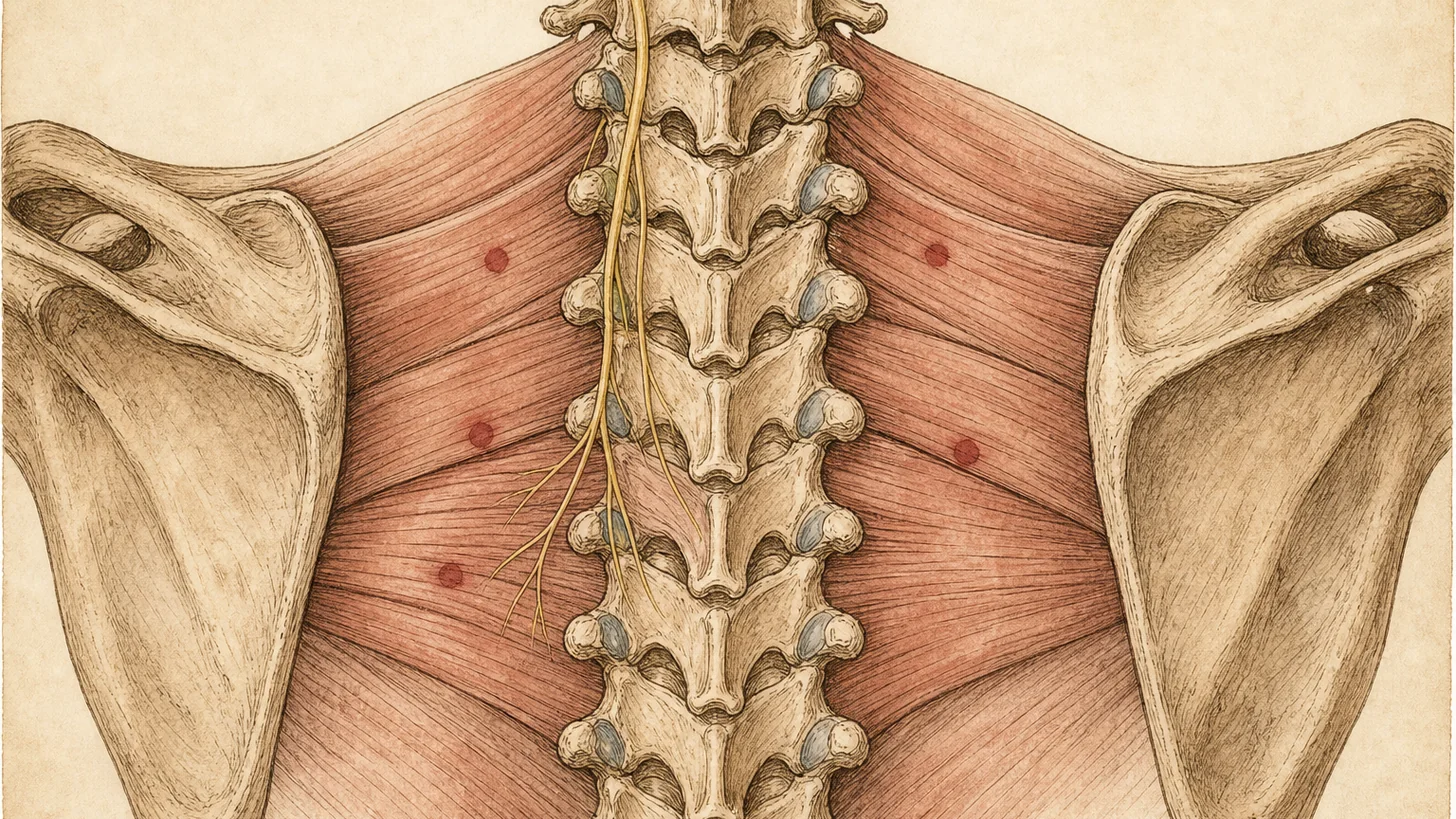
A pulled muscle in the back is one of the most common reasons adults seek pain care in the United States. It happens in a single moment — bending to pick up a child, twisting to grab a seatbelt, lifting a suitcase from an overhead bin — and within hours can leave you unable to stand up straight. The good news is that the vast majority of true muscle strains heal within four to six weeks. The harder question is knowing whether what you actually have is a strain at all, or something more serious that is wearing the disguise of one.
At Modal Pain Management in Midtown Manhattan, our founder Dr. Alex Movshis evaluates pulled back muscles every week. This guide covers exactly what a pulled back muscle is, how to tell it apart from a herniated disc or facet injury, the evidence-based recovery timeline, what accelerates healing, what to avoid, and the red-flag symptoms that mean you should be seen the same day.
What Is a Pulled Muscle in the Back?
Clinically, a pulled muscle is called a muscle strain — a stretching or partial tearing of muscle fibers, sometimes including the tendon that anchors the muscle to bone. In the back, the most commonly strained muscles are the erector spinae group (the long muscles running parallel to your spine), the quadratus lumborum (a deep muscle in the lower back), the latissimus dorsi (mid-back), and the trapezius (upper back). Strains are graded from Grade I (mild — fewer than 5 percent of fibers torn) through Grade III (complete rupture). Most pulled back muscles are Grade I or II.
The mechanism is almost always a sudden, unguarded movement under load: lifting an object that is heavier than expected, twisting while lifting, lifting with the back rather than the legs, a sudden cough or sneeze in a flexed position, or eccentric loading during exercise. Repetitive microtrauma — long hours hunched over a laptop, poor lifting technique at the gym, sleeping in a poor position — can also accumulate into an acute strain when the muscle is finally pushed past its tolerance.
Symptoms: How to Tell If You Have a Pulled Back Muscle
A typical pulled back muscle presents with a clear pattern. The pain starts suddenly during the inciting movement, is sharp and localized to a specific area of the back, is reproduced by moving in the direction that originally caused the injury, is tender when you press on it, and is often accompanied by visible muscle spasm or a “knot” you can feel. The pain usually feels worse first thing in the morning and after periods of stillness, and improves slightly with gentle movement. Bending, twisting, coughing, sneezing, and rolling over in bed can all trigger sharp flares.
What a pulled back muscle should not feel like is just as important. A muscle strain stays in the muscle. It should not shoot down your leg, numb your foot, weaken your ankle or grip, or cause loss of bladder or bowel control. Those symptoms suggest the nerve roots leaving your spinal cord are involved — usually from a herniated disc, sciatica, or facet joint irritation — and require a different diagnostic and treatment approach than a simple muscle strain.
How Long Does a Pulled Back Muscle Take to Heal?
Healing time depends on which grade of strain you have and how aggressively you manage it in the first 72 hours. Grade I strains, where you have soreness and mild stiffness but full strength and range of motion, typically resolve in 7 to 10 days. Grade II strains, with significant pain, visible spasm, and reduced range of motion, take 2 to 4 weeks to heal fully. Grade III strains, where a substantial portion of the muscle has torn, can take 6 to 12 weeks and often benefit from professional intervention to prevent chronic pain.
The first 48 hours are the most important. The inflammatory response is at its peak, and what you do during this window largely determines how quickly you return to normal. The single biggest mistake patients make is staying in bed for too long. Studies have consistently shown that bed rest beyond 48 hours delays recovery, weakens the supporting muscles, and increases the risk of the strain becoming chronic.
How to Heal a Pulled Back Muscle: Evidence-Based Protocol
The recovery protocol that produces the fastest, most reliable results combines several time-sensitive interventions. In the first 48 hours, apply ice to the painful area for 15 to 20 minutes every 2 to 3 hours while awake. Cold reduces inflammation, slows the local metabolic rate, and dampens pain signaling. After the first 48 hours, transition to heat — a heating pad, warm shower, or microwavable wrap for 15 to 20 minutes at a time. Heat increases blood flow, relaxes spasming muscles, and prepares them for gentle movement.
Take a short course of an over-the-counter NSAID like ibuprofen (400 to 600 mg every 6 hours) or naproxen (220 to 440 mg every 12 hours) if you have no contraindications. NSAIDs reduce both pain and inflammation, which addresses the underlying tissue irritation. Acetaminophen is an alternative if NSAIDs are not tolerated, though it does not address inflammation. Topical NSAIDs like diclofenac gel can be added with a low side-effect profile.
Movement matters more than rest. Within 24 to 48 hours, begin gentle walking — short distances, frequent breaks, no twisting or bending. Pelvic tilts, knee-to-chest stretches, and the cat-cow stretch can be introduced cautiously as soon as they are tolerated. Avoid the painful range of motion in early recovery, but do not avoid movement entirely. Once acute pain begins resolving, progressive physical therapy accelerates healing, restores range of motion, rebuilds strength, and reduces recurrence risk.
If the pain is severe enough that it prevents normal walking, sleeping, or working, or if it has not meaningfully improved in 5 to 7 days, professional intervention can change the trajectory. A targeted trigger point injection breaks the pain-spasm cycle by injecting a small amount of local anesthetic directly into the spasming muscle, allowing it to relax and the underlying tissue to heal. For deeper or more persistent strains, ultrasound-guided injections, oral muscle relaxants for short-term use, and structured rehabilitation can compress weeks of recovery into days.
What Not to Do With a Pulled Back Muscle
Several common reactions to a pulled back muscle actually slow recovery. The most damaging is prolonged bed rest. After the first 24 to 48 hours, every additional day in bed weakens core and back muscles, increases stiffness, and raises the risk of converting an acute injury into a chronic pain syndrome. Aggressive stretching of the painful area in the first few days can re-injure healing fibers. Deep-tissue massage in the first 72 hours can increase inflammation and bleeding into the muscle.
Returning to the inciting activity before the muscle is fully healed is one of the strongest predictors of recurrence. A muscle that has torn even slightly is biomechanically weaker than its uninjured neighbors and will preferentially re-tear if loaded the same way. Wait until you have full pain-free range of motion and have rebuilt strength before returning to lifting, exercise, or sport.
Ignoring red-flag symptoms is the most consequential mistake. Loss of bladder or bowel control, saddle anesthesia (numbness in the area that would touch a bicycle seat), progressive leg weakness, fever with back pain, or back pain after major trauma are not features of a muscle strain — they are emergencies. Cauda equina syndrome, spinal infection, and vertebral fracture all require immediate evaluation and can cause permanent neurological damage if missed.
When to See a Pain Specialist
For most people, a pulled back muscle resolves with conservative care. But several scenarios warrant a same-week visit to a board-certified pain physician. Pain that has not improved within 5 to 7 days of appropriate self-care, severe pain that prevents sleep or basic function, recurrent strains in the same area (suggesting an underlying biomechanical issue), pain that radiates below the knee or causes numbness or weakness, and any back pain that develops after age 50 without a clear inciting injury all benefit from formal evaluation.
A pain management physician can perform a focused exam to confirm the diagnosis, rule out disc, facet, or nerve involvement, and either accelerate recovery with interventional treatments or refer for imaging if a more serious cause is suspected. The advantage of a pain specialist over a primary care physician is access to same-day procedural treatments — trigger point injections, nerve blocks, and ultrasound-guided interventions — that can resolve a stubborn strain in a single visit rather than weeks of waiting to see if it improves.
Treatment Options for Persistent Back Strain
When a pulled back muscle is not responding to conservative care, several minimally invasive interventions are highly effective. Trigger point injections deliver a small amount of local anesthetic into the spasming muscle, breaking the spasm-pain cycle and allowing healing to resume. Most patients feel immediate relief and durable improvement within 24 to 48 hours. For strains involving deeper paraspinal muscles or where myofascial trigger points have developed, ultrasound-guided injections place medication with millimeter precision under direct visualization.
When the strain has unmasked an underlying issue — a chronically irritated facet joint, an inflamed sacroiliac joint, or an early disc herniation — diagnostic nerve blocks can confirm the source and guide targeted treatment. Structured physical therapy addresses the postural, ergonomic, and movement patterns that led to the strain in the first place, dramatically reducing recurrence. For patients with significant inflammation throughout the body, an anti-inflammatory IV infusion can provide systemic relief that complements local treatment.
Find Lasting Relief at Modal Pain Management
Modal Pain Management in Midtown Manhattan specializes in interventional, non-surgical treatment of acute and chronic back pain. Dr. Alex Movshis is board-certified in Pain Medicine and Anesthesiology, accepts most commercial insurance, and offers same-week appointments at our 369 Lexington Avenue clinic. If your back pain is not improving, do not wait it out — early intervention is the strongest predictor of full recovery.
Book your consultation online or call (646) 290-6660. We will get you back to normal as fast as the evidence allows.
Frequently Asked Questions
A pulled back muscle (acute lumbar or thoracic strain) typically presents as a sharp, localized pain that started suddenly during lifting, twisting, or sudden movement. The area is tender to touch, the pain worsens with movement and improves with rest, and you may feel muscle spasm or stiffness. Unlike disc or nerve injuries, the pain stays in the back — it does not shoot down the leg, cause numbness, or weaken your foot or grip. If you have any of those neurological symptoms, the problem is not just muscular.
Most uncomplicated back muscle strains improve significantly within 1 to 2 weeks and resolve fully within 4 to 6 weeks with appropriate care. Mild Grade I strains often resolve in 7 to 10 days. Moderate Grade II strains take 2 to 4 weeks. Severe Grade III strains, where the muscle is significantly torn, can take 6 to 12 weeks and may benefit from interventional treatment to accelerate recovery and prevent chronic pain.
The fastest evidence-based recovery protocol is: ice for 15 to 20 minutes every 2 to 3 hours during the first 48 hours, then transition to heat to relax muscle tension; a short course (24 to 48 hours) of relative rest while staying gently mobile; an OTC NSAID like ibuprofen or naproxen if you tolerate them; and gentle mobility within pain limits starting day 2 or 3. Bed rest beyond 48 hours actually delays healing. If pain is severe or not improving within a week, a trigger point injection can rapidly break the muscle spasm cycle and restore function.
Avoid prolonged bed rest beyond 48 hours, heavy lifting or twisting, high-intensity exercise, deep tissue massage in the first 72 hours, aggressive stretching of the painful area, and ignoring red-flag symptoms like leg weakness, numbness, loss of bladder or bowel control, or fever. Do not return to the activity that caused the strain until you have full pain-free range of motion.
See a pain management physician if pain is severe, has not meaningfully improved within 5 to 7 days, radiates below the knee, is accompanied by numbness, tingling, or weakness, follows significant trauma, or recurs frequently. Seek emergency care immediately if you experience loss of bladder or bowel control, saddle anesthesia, fever with back pain, or progressive leg weakness — these may indicate cauda equina syndrome or infection.
A true muscle strain stays in the muscle — it should not shoot down the leg. Pain radiating below the knee, numbness, tingling, or weakness in the leg or foot suggests nerve root involvement (radiculopathy or sciatica), most commonly from a herniated disc or facet joint irritation. These conditions require imaging and a different treatment approach than a simple strain.