If you are reading this, you probably did the right things. You had a hernia. You found a surgeon. You had the repair. The hernia is fixed. And now, weeks or months later, you have a different kind of pain than before — burning, electric, sometimes shooting into the inner thigh or scrotum or labia, often worse when you sit or stand for a long time, and sometimes triggered by something as light as a waistband or a seatbelt across the groin.
You went back to the surgeon. The surgeon checked for a recurrence. The exam was negative. The ultrasound or CT was negative. You were told the surgery is fine and it should fade with time. It has not faded. This post is about why that pain is real, why it is almost never a recurrent hernia, and how a 15-minute diagnostic procedure usually identifies the actual source of the problem.
Why this gets missed
The dominant clinical paradigm for groin pain after a hernia repair is “rule out recurrence.” That paradigm is rooted in the time when meshless tissue repairs had recurrence rates of 10–15% — when groin pain after repair really was usually a recurrence. Modern mesh repairs (Lichtenstein, TEP, TAPP) have recurrence rates well under 5%. The numerator changed, but the diagnostic instinct did not. A negative recurrence workup closes the loop on the wrong question.
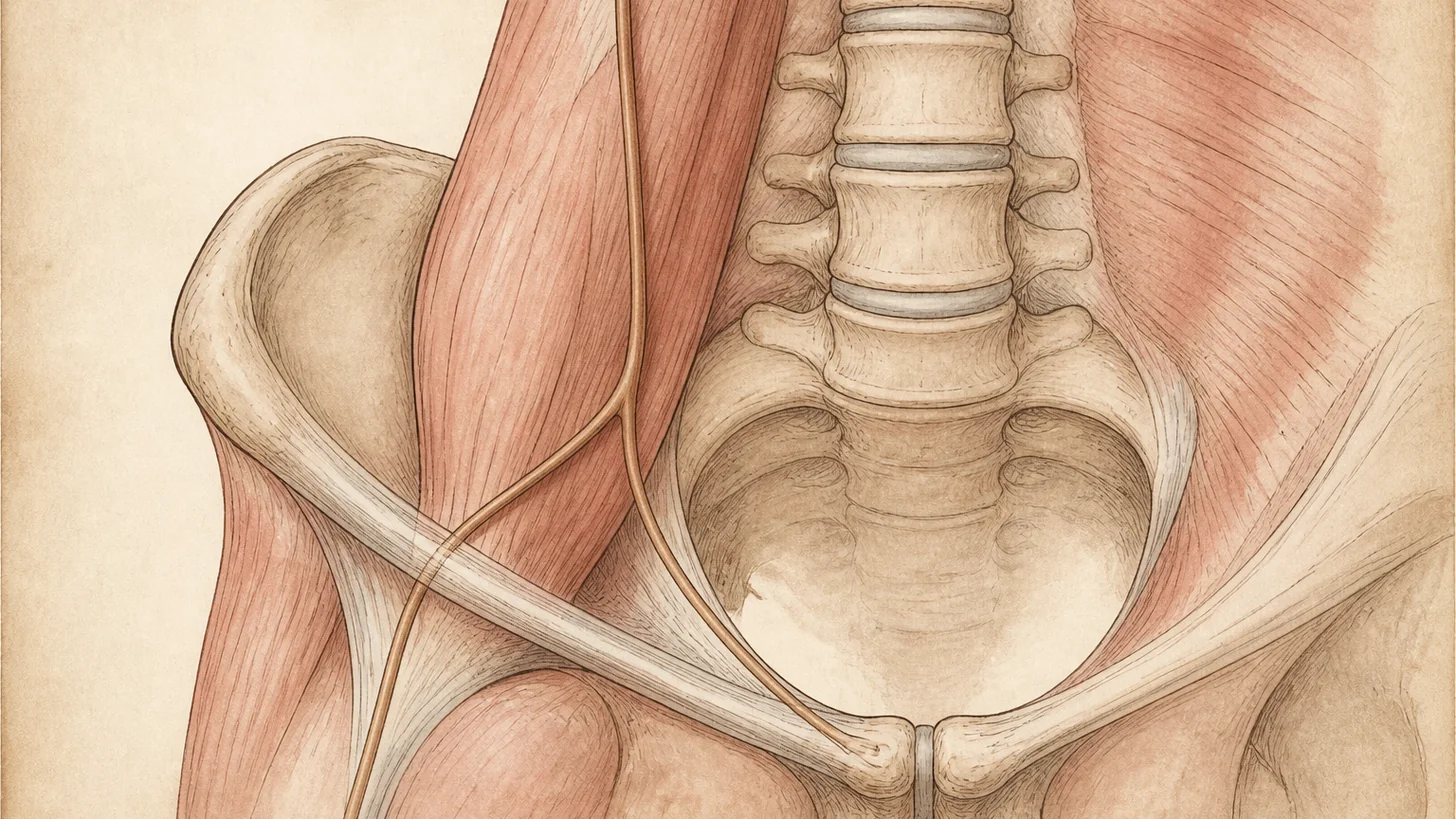
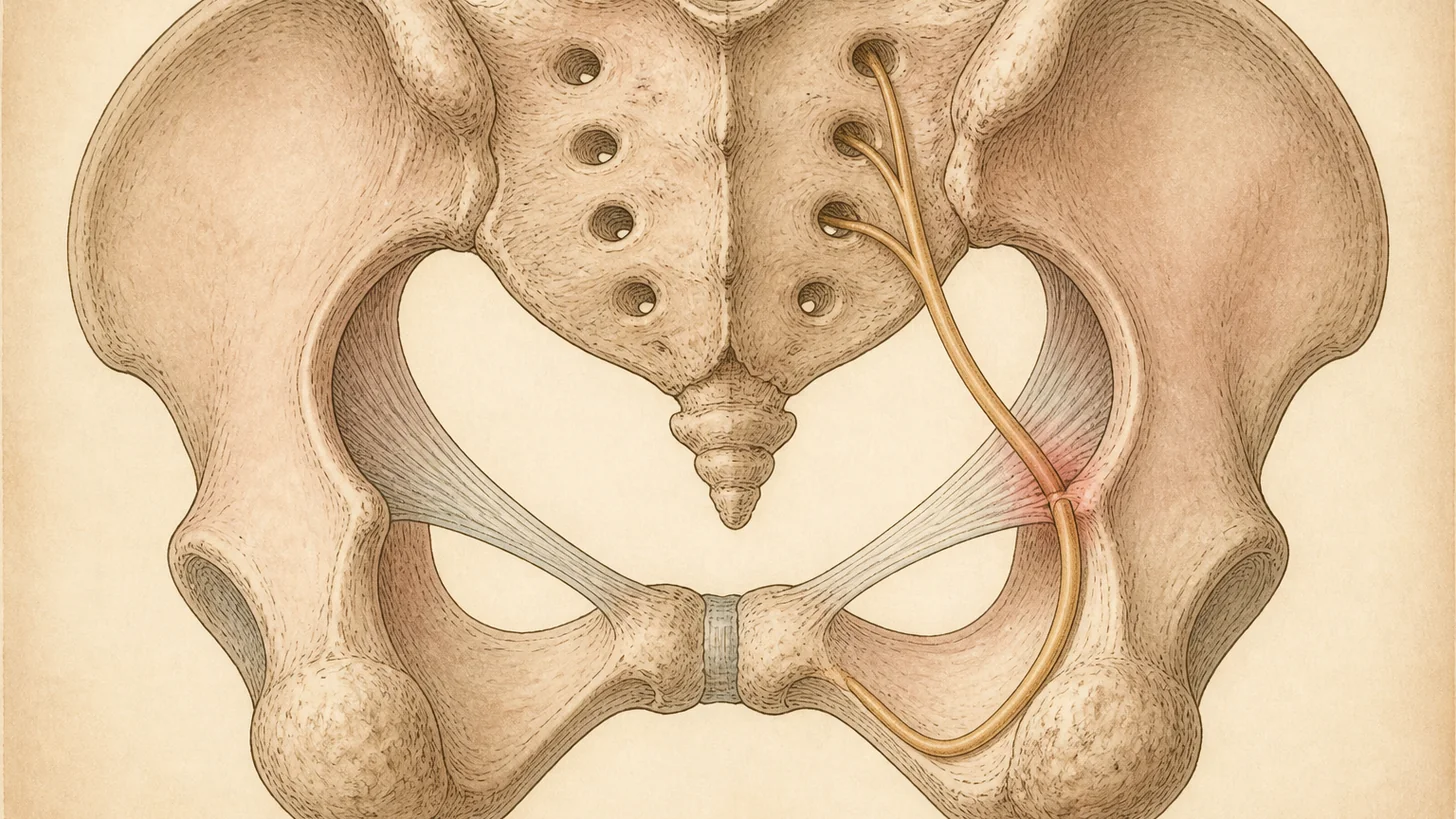
The right question is which of three nerves got caught in the operation. Three nerves pass through the inguinal canal and surrounding fascia, and every one of them is at anatomic risk during hernia repair. None of them show up on standard imaging. The ilioinguinal and iliohypogastric nerves are particularly vulnerable during open Lichtenstein repair: they cross the floor of the canal, are draped over the spermatic cord or round ligament, and can be entrapped during fascial closure or compressed against the mesh edge as it consolidates into surrounding scar. Histologic work in a mesh model shows that polypropylene mesh adjacent to a peripheral nerve produces myelin degeneration, endoneurial edema, fibrosis, and axonal loss — the structural signature of entrapment in scar [3]. The genitofemoral nerve has a different vulnerability — its femoral and genital branches run on the deep surface of the iliopubic tract, exactly where laparoscopic preperitoneal mesh sits. Surgeons cannot reliably see these nerves intraoperatively. A meta-analysis of randomized trials found chronic groin pain in roughly 9.4% of patients at 6 months and 4.8% at 1 year after open mesh repair [1], and a large surgical series reported persistent inguinodynia in about 10% of patients, attributed to one or more of the three inguinal nerves — iliohypogastric, ilioinguinal, and genitofemoral [2]. The international groin-hernia guideline places clinically significant chronic postoperative inguinal pain at 10–12% of repairs, with debilitating pain that interferes with daily activity in 0.5–6% [5]. A meaningful fraction of these cases are clearly neuropathic rather than mechanical, and severe late-onset pain appearing years after repair has been traced at re-operation to ilioinguinal nerve entrapment within the mesh [4].
What makes the miss persistent is the second layer of the workup. After a negative recurrence study, the typical next move is pelvic floor physical therapy, an MRI of the lumbar spine, a urology or gynecology consult, sometimes a course of opioid analgesics. None of those target a peripheral nerve generator. None of them produce a diagnostic answer. The patient ends up in a six-to-eighteen-month loop of negative workups before someone runs the test that actually answers the question — an image-guided peripheral nerve block.
The anatomy that matters
The ilioinguinal nerve (L1) enters the inguinal canal between the internal oblique and transversus abdominis, runs anterior to the spermatic cord or round ligament, exits the superficial inguinal ring, and supplies the skin of the inguinal crease, the base of the scrotum or labia majora, and a strip of the upper-medial thigh.
The iliohypogastric nerve (T12–L1) takes a similar path but exits one finger-breadth higher and supplies a band of skin above the inguinal ligament — the suprapubic and lateral hip region.
The genitofemoral nerve (L1–L2) is the third member of the cluster. Its genital branch enters the inguinal canal through the deep inguinal ring and supplies the cremaster muscle and the scrotal or labial skin. Its femoral branch exits through the femoral canal and supplies a patch of skin on the upper anterior thigh below the inguinal crease.
In an open Lichtenstein repair, the ilioinguinal and iliohypogastric nerves are typically dissected and protected, but they are at risk from suture entrapment during external oblique closure, from direct contact with mesh, or from delayed neuroma formation when the mesh edge ossifies into surrounding scar. In a laparoscopic TEP or TAPP repair, the mesh sits in the preperitoneal space directly over the iliopubic tract, putting the deep surface of the genitofemoral nerve at the most risk and reducing — but not eliminating — risk to ilioinguinal and iliohypogastric.
When a patient describes burning along the inguinal crease into the scrotum or labia, ilioinguinal is the leading hypothesis. When the pain is higher and lateral, in the band above the inguinal ligament, iliohypogastric. When the pain is in the inner thigh below the crease or in the scrotum with a cremasteric quality, genitofemoral. Often there is overlap — but the dominant nerve is identifiable from the cutaneous distribution alone.
How we diagnose
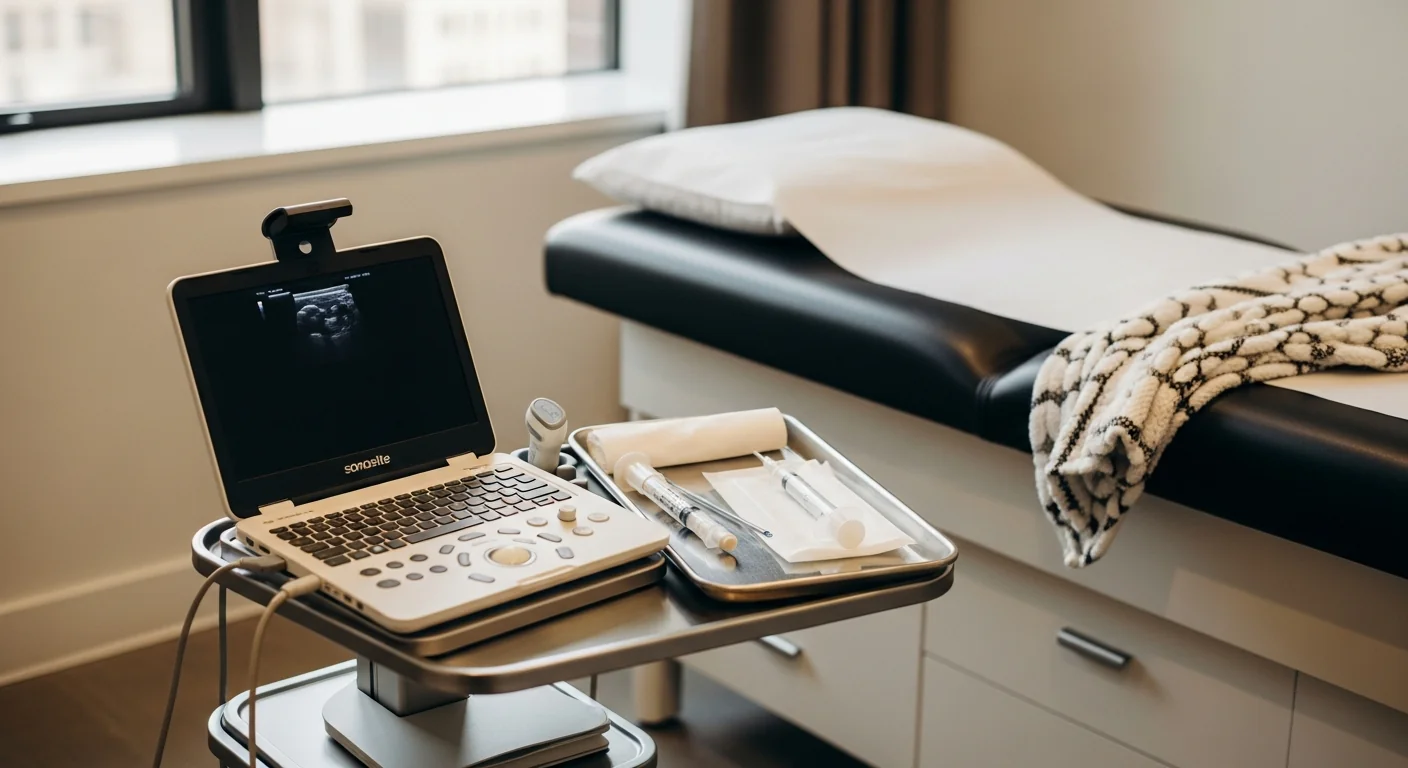
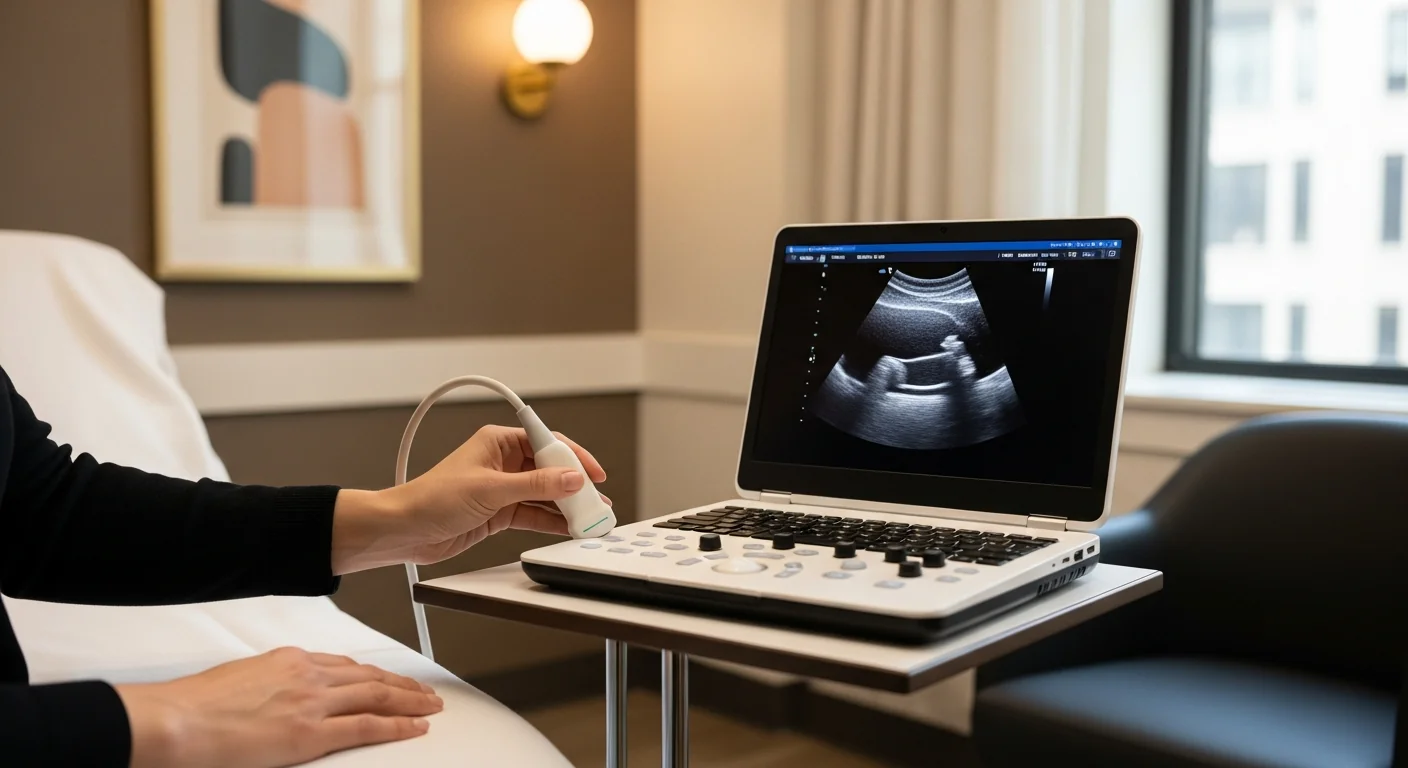
The diagnostic procedure is an ultrasound-guided peripheral nerve block of the suspected nerve. Performed in our procedure suite at 369 Lexington Avenue. Total visit time: about 30 minutes from check-in to walk-out.
The technique: with the patient supine, the inguinal anatomy is identified by ultrasound (anterior superior iliac spine landmark, the three layers of the abdominal wall musculature, the iliopubic tract). For the ilioinguinal and iliohypogastric nerves, a small-volume injection (3–5 mL of 0.5% bupivacaine plus 20 mg of triamcinolone) is delivered into the TAP plane between internal oblique and transversus abdominis at the lateral edge of the rectus sheath, just above the anterior superior iliac spine. For genitofemoral, the genital branch can be blocked at the deep inguinal ring; the femoral branch can be blocked separately just below the inguinal ligament near its origin from the L2 nerve root.
The diagnostic answer arrives in 10–15 minutes. A positive block — ≥50% pain abolition compared with the patient’s baseline within the working window — confirms the targeted nerve as the dominant pain generator. ≥75% abolition is highly specific. The patient keeps a pain diary every 30 minutes for the next four hours to track the duration of relief: that data informs the next step.
If the ilioinguinal block is negative or only partially effective, the iliohypogastric is the next target in a subsequent visit. If both are negative, the genitofemoral is run third. Multi-nerve involvement is common — many patients have a dominant ilioinguinal generator with a smaller iliohypogastric contribution.
The therapeutic effect of the block — with corticosteroid added — typically lasts 4–12 weeks. Patients who get a clear response with diminishing duration on repeats become candidates for pulsed radiofrequency ablation of the affected nerve, which delivers 6–12 months of relief and is safely repeatable.
Treatment ladder and when surgery is the right call
The full ladder for chronic post-herniorrhaphy nerve pain:
Step 1 — neuropathic-pain medication trial. Gabapentin or pregabalin first-line, titrated to effective dose. Tricyclic antidepressant (nortriptyline) or SNRI (duloxetine) as second-line. Topical 5% lidocaine patch over the affected territory is highly effective and underused. A 6–12 week structured trial separates patients whose pain will resolve medically from those who need interventional escalation.
Step 2 — image-guided diagnostic and therapeutic nerve block. The diagnostic workhorse. Local anesthetic confirms which nerve; corticosteroid added produces 4–12 weeks of therapeutic relief. Repeatable. Published series of perineural steroid injections around these nerves report analgesic benefit in roughly 55–75% of patients, though the controlled evidence base remains limited [6].
Step 3 — ultrasound-guided hydrodissection. For nerves entrapped in dense scar from mesh or fascial healing. Volume injection of saline or 5% dextrose mechanically separates the nerve from surrounding fibrosis. Often dramatic in benefit.
Step 4 — pulsed radiofrequency ablation of the affected nerve. For patients with clear positive diagnostic blocks and diminishing block duration. Pulsed (not conventional thermal) RFA is neuromodulatory rather than destructive, which matters in cosmetically and functionally sensitive territory.
Step 5 — peripheral nerve stimulation referral. For refractory cases not responding to the above ladder. Percutaneous PNS at the affected nerve has FDA clearance and published case-series support.
Step 6 — surgical neurectomy by peripheral nerve plastic surgery. When the ladder above reaches its ceiling, the durable salvage is surgical. The gold-standard operation is the Amid triple neurectomy — proximal transection of all three nerves (ilioinguinal, iliohypogastric, genitofemoral) with implantation of the proximal stumps into muscle to prevent recurrent neuroma formation. Performed by a peripheral nerve plastic surgeon (not the original general surgeon), the Amid procedure has published case-series success rates of 70–85% meaningful pain relief at 12 months. Modal Pain coordinates the referral and provides the surgical team with the documented diagnostic-block response, prior operative report from the index hernia repair, and any imaging — the documentation surgical neurectomy programs require to accept a referral.
The point of the ladder is not to delay surgery for the sake of delay. It is to make sure every patient has had a fair shot at non-destructive treatment, and to identify the specific patients for whom surgery genuinely is the right answer.
For referring physicians
When referring a patient with persistent groin pain >3 months after inguinal hernia repair, send: the operative report from the index repair (open vs. laparoscopic, mesh type, intra-operative regional anesthesia), any post-operative imaging that ruled out recurrence, the patient's response to any prior medication trial, and a brief note on the dominant cutaneous distribution of the pain (groin crease, suprapubic, scrotal/labial, inner thigh). We work up the three candidate nerves sequentially with ultrasound-guided diagnostic blocks, and we send notes back to the referring surgeon and primary after each visit. If the diagnostic ladder identifies a refractory single-nerve generator, we coordinate the peripheral nerve plastic surgery referral directly and provide the surgical team with the diagnostic documentation they require.
Ready to evaluate your post-herniorrhaphy pain
If your groin pain has persisted more than three months after a hernia repair and a recurrence has been ruled out, the next step is an image-guided diagnostic block — not another imaging study. Same-week new-patient consultations are available.
Verify your insurance covers a post-hernia pain workup Book a same-week diagnostic block
Or call (646) 290-6660. Dr. Movshis sees every patient personally — initial consultation through follow-up.
If a consultation feels premature, start with the Post-Surgical Nerve Pain Self-Assessment. Four to six minutes, and it sorts which of the three groin nerves — ilioinguinal, iliohypogastric, or genitofemoral — your pain pattern actually implicates. That distinction determines where the diagnostic block goes, so it is worth knowing before any appointment.
For the broader framework on chronic post-surgical nerve pain across surgical contexts, see the post-surgical and iatrogenic nerve pain page.
References
This article is reviewed against the peer-reviewed literature. Citations retrieved from PubMed.
- Charalambous MP, Charalambous CP. Incidence of chronic groin pain following open mesh inguinal hernia repair, and effect of elective division of the ilioinguinal nerve: meta-analysis of randomized controlled trials. Hernia. 2018;22(3):401-409. doi:10.1007/s10029-018-1753-9 · PubMed
- Zannoni M, Nisi P, Iaria M, et al. Wide nervous section to prevent post-operative inguinodynia after prosthetic hernia repair: a single center experience. Hernia. 2014;19(4):565-70. doi:10.1007/s10029-014-1248-2 · PubMed
- Demirer S, Kepenekci I, Evirgen O, et al. The effect of polypropylene mesh on ilioinguinal nerve in open mesh repair of groin hernia. Journal of Surgical Research. 2006;131(2):175-81. doi:10.1016/j.jss.2005.10.024 · PubMed
- Delikoukos S, Fafoulakis F, Christodoulidis G, et al. Re-operation due to severe late-onset persisting groin pain following anterior inguinal hernia repair with mesh. Hernia. 2008;12(6):593-5. doi:10.1007/s10029-008-0392-y · PubMed
- HerniaSurge Group. International guidelines for groin hernia management. Hernia. 2018;22(1):1-165. doi:10.1007/s10029-017-1668-x · PubMed
- Khan JS, Rai A, Sundara Rajan R, Jackson TD, Bhatia A. A scoping review of perineural steroids for the treatment of chronic postoperative inguinal pain. Hernia. 2016;20(3):367-76. doi:10.1007/s10029-016-1487-5 · PubMed
Frequently Asked Questions
Acute pain in the first 6 weeks after surgery is expected. Pain that is still significant — particularly burning or electric pain — at 12 weeks past surgery meets the formal definition of chronic post-surgical pain and is far more likely nerve entrapment than recurrence. A normal ultrasound or CT of the surgical site is supportive evidence: structural recurrence shows up on imaging, nerve entrapment usually does not.
Recurrent hernia is a structural bulge that protrudes with Valsalva, coughing, or straining, and that is reducible by gentle pressure. The pain is mechanical and dull. Nerve entrapment is burning, electric, or lancinating pain in the cutaneous distribution of the ilioinguinal, iliohypogastric, or genitofemoral nerve. There is no bulge. The pain is reproduced by Tinel testing at the affected nerve, not by Valsalva. An imaging-negative groin pain at 3+ months post-repair is almost always nerve entrapment.
It depends on the surgical approach. Open Lichtenstein repair classically injures the ilioinguinal nerve at the external oblique aponeurosis, often by suture entrapment, direct ligation, or mesh contact. Laparoscopic TEP and TAPP repairs more commonly injure the genitofemoral nerve where the mesh sits over the iliopubic tract. The iliohypogastric nerve can be co-injured with either approach. The diagnostic block sorts out which one in a single 15-minute visit.
The Amid triple neurectomy is the gold-standard salvage operation for refractory post-herniorrhaphy inguinodynia. A peripheral nerve plastic surgeon transects the ilioinguinal, iliohypogastric, and genitofemoral nerves proximal to the operative field and implants the proximal stumps into muscle to prevent recurrent neuroma formation. Published case series show 70–85% meaningful pain relief at 12 months. Modal Pain coordinates the referral and provides the diagnostic block documentation that surgical programs require.
Both, in the same visit. A pure diagnostic block uses local anesthetic only and produces 4–24 hours of relief — by design, to answer the question 'is this nerve the source?' A therapeutic block adds corticosteroid and typically produces 4–12 weeks of relief on top of the diagnostic information. Most patients respond to repeat therapeutic blocks; those who do not get diminishing duration are candidates for pulsed radiofrequency ablation, which delivers 6–12 months of relief at a time.
Most commercial PPO insurance plans cover image-guided ilioinguinal, iliohypogastric, and genitofemoral nerve blocks for chronic post-surgical neuropathic pain, typically with prior authorization. Modal Pain Management verifies your benefits before the first visit. We accept most major commercial PPO plans and do not participate with Medicare or Medicaid. <a href="/verify-insurance/">Check your plan</a> or call (646) 290-6660.
If the question is whether the hernia has recurred, see the surgeon. If the surgeon has confirmed no recurrence (imaging-negative, no bulge on Valsalva), the next step is a pain medicine evaluation focused on the three candidate nerves, not another structural workup. Returning to the same surgeon for revision surgery in the original field rarely resolves a peripheral nerve injury and carries real risk of additional iatrogenic injury.