If you are reading this, you may have been through a lot already. The hysterectomy happened — for fibroids, for endometriosis, for adenomyosis, for an oncologic indication, for whatever the original reason was. The surgery itself went well. The follow-up scans looked fine. But months or years later you have pain that is unmistakable in quality — burning, electric, sharp, sometimes shooting into the groin or the inner thigh or the vulva — and that does not match what you were warned about. You have been told it is adhesions. You have been told it is endometriosis come back. You have been told it is pelvic floor dysfunction. You have been on pelvic-floor physical therapy for months without meaningful change. Maybe you have had a diagnostic laparoscopy that found nothing.
The pain has a different source than any of those. This post is about what that source usually is, why it gets misdiagnosed for years, and how a 15-minute diagnostic procedure typically identifies the nerve generator in the room.
Why this gets missed
Three reasons compound:
First, chronic pelvic pain in a working-age woman defaults to the gynecologic differential. The training of gynecologists and the structure of the typical post-hysterectomy follow-up visit center on recurrence of the original disease (endometriosis, adenomyosis, or oncologic concern) and on adhesions. A normal transvaginal ultrasound, a normal MRI of the pelvis, and a normal CA-125 close the loop on those questions but say nothing about peripheral nerve injury. The result is a diagnosis of “chronic pelvic pain of unclear etiology” or a presumed endometriosis without histologic confirmation. The patient ends up on hormonal suppression and pelvic-floor physical therapy. Neither addresses a peripheral nerve generator.
Second, post-hysterectomy peripheral nerve injury is published but not widely taught. Cardosi’s 2002 Obstetrics & Gynecology paper documented postoperative neuropathies in 1.9% of major pelvic surgeries, and the rate climbs substantially for procedures involving lateral trocar placement or vaginal cuff suspension. Brandsborg et al. found that 17–32% of hysterectomy patients report chronic pain at one year post-operation, and a meaningful fraction of those have neuropathic features. The numerator is real. The systematic peripheral nerve workup is not part of the routine gynecologic follow-up.
Third, the right diagnostic test is performed outside the gynecology workflow. Image-guided peripheral nerve blocks are done in interventional pain medicine practices. Pudendal nerve blocks are done by a small subset of pain medicine practices and select urogynecology programs. The patient who needs these tests is rarely referred for them — the referral often comes from a primary care physician, a fellow patient who had similar pain, or the patient herself after independent research.
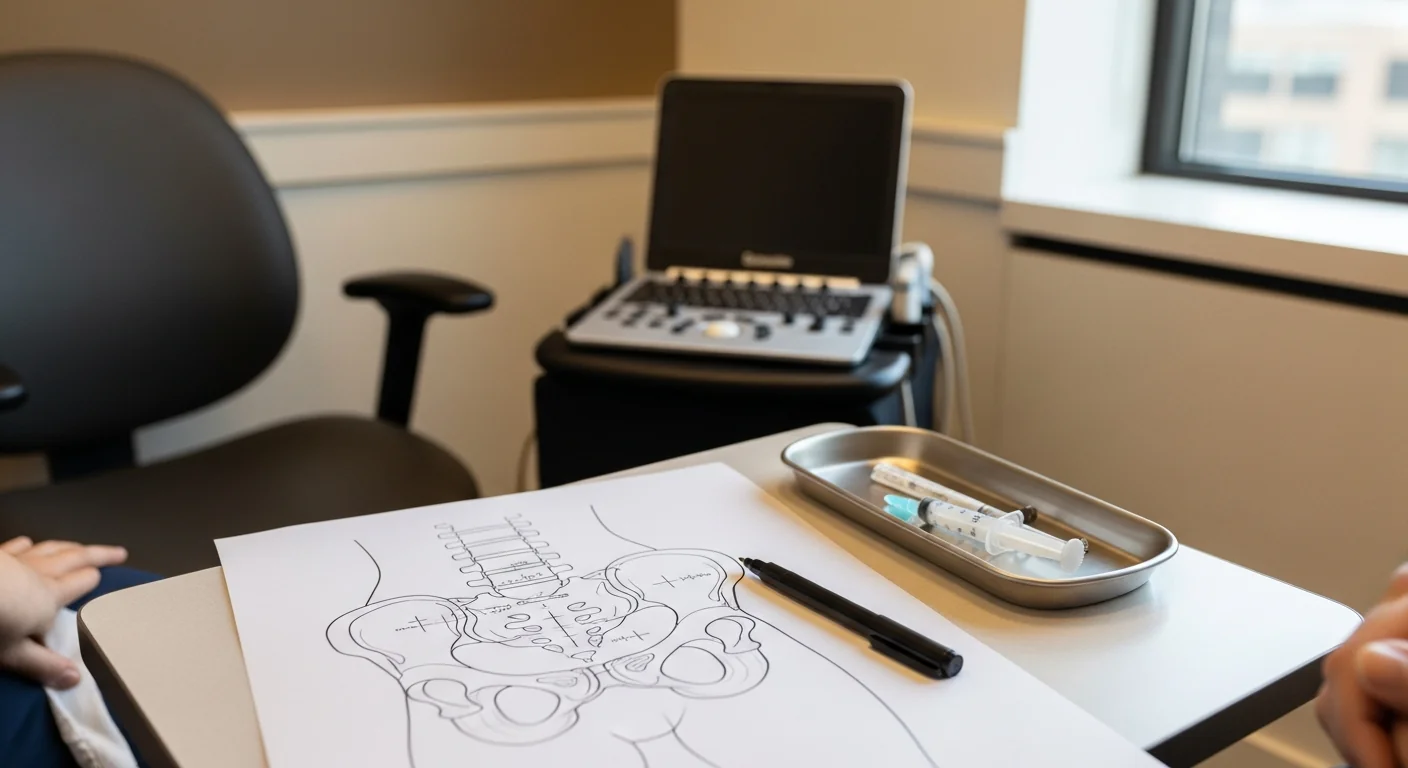
The diagnostic workflow that solves this: surgical-approach history (which approach was used, which trocars, what was the lithotomy time, was the vaginal cuff suspended), cutaneous map (which cutaneous territory is painful — ilioinguinal vs. genitofemoral vs. pudendal vs. LFCN distributions are all distinct), Tinel testing at candidate entrapment points, and an image-guided block at the most likely target. One visit, diagnostic answer in 30 minutes.
The anatomy that matters
Six nerves traverse the hysterectomy surgical field. Each has a characteristic distribution and a characteristic mechanism of injury.
Ilioinguinal nerve (L1) — Crosses the inguinal canal, supplies the inguinal crease, the base of the labia majora, and a strip of upper medial thigh. Injured at the lateral edges of a Pfannenstiel incision when the rectus sheath is closed lateral to the rectus muscle. Tinel-positive 5–8 cm lateral to midline along the upper incision edge.
Iliohypogastric nerve (T12–L1) — Crosses one finger-breadth above the ilioinguinal, supplies a band of skin above the inguinal ligament. Often co-injured with the ilioinguinal at Pfannenstiel incisions. Pain in the suprapubic and lateral hip region.
Genitofemoral nerve (L1–L2) — Two branches. The genital branch enters the inguinal canal and supplies the labial/scrotal skin. The femoral branch exits below the inguinal ligament and supplies a patch of upper anterior thigh. Most commonly injured during laparoscopic or robotic hysterectomy by lateral trocar placement over the iliopubic tract, or by deep pelvic dissection during oncologic procedures.
Obturator nerve (L2–L4) — Exits the pelvis through the obturator foramen and supplies the medial thigh skin plus the adductor muscles. Injured during pelvic lymphadenectomy or during deep paravaginal dissection. Pain is medial-thigh; possible adductor weakness on exam.
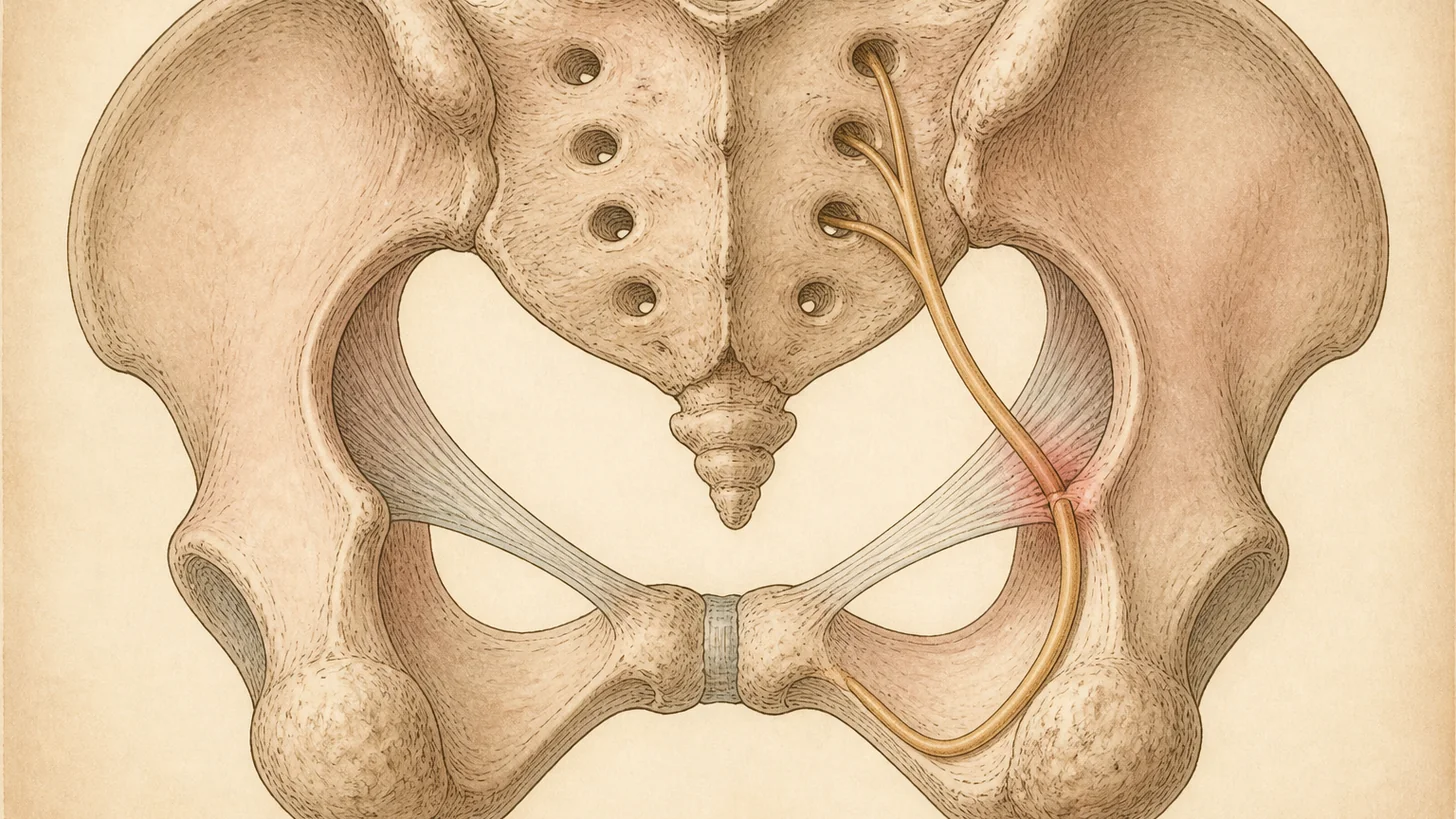
Pudendal nerve (S2–S4) — Travels through Alcock’s canal, supplies the perineum (vulva, perineal body, anus). Stretched or entrapped during vaginal-cuff suspension procedures (sacrospinous ligament fixation, uterosacral ligament suspension), by vaginal-cuff scarring, or by mesh complication. Pain is deep perineal, vulvar, or rectal — characteristically worse with sitting and better with standing or lying down.
Lateral femoral cutaneous nerve (LFCN, L2–L3) — Passes under the inguinal ligament and supplies the anterolateral thigh skin. Compressed during prolonged lithotomy positioning (>2 hours). Pain is the classic meralgia paresthetica distribution: a defined burning patch on the anterolateral thigh that does not cross the knee, with no motor weakness.
A patient who can outline her painful territory with one finger usually maps to one of these six. The map drives the diagnostic block target.
How we diagnose
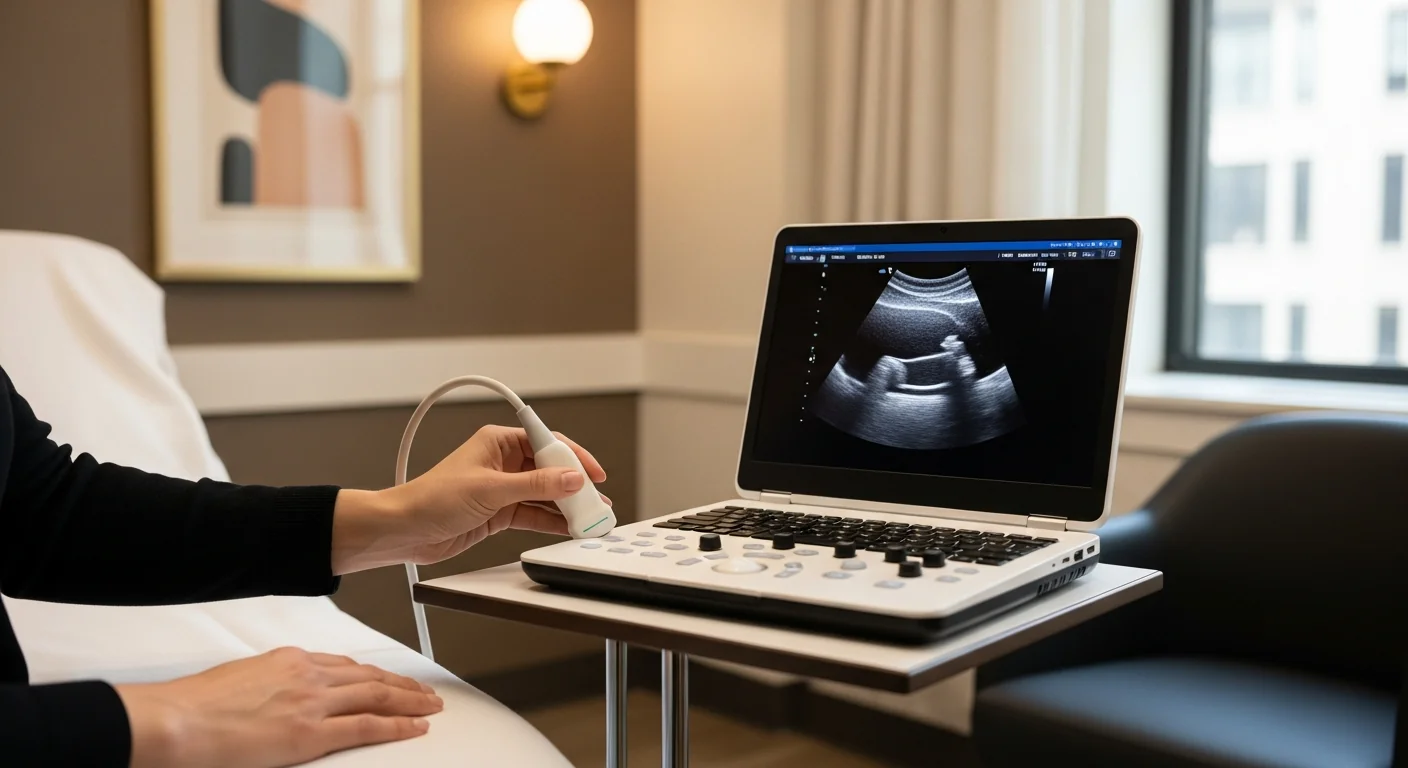
The diagnostic procedure is an ultrasound-guided peripheral nerve block of the suspected target, performed in our procedure suite at 369 Lexington Avenue. Total visit time: 30–45 minutes from check-in to walk-out.
Technique varies by target:
- Ilioinguinal / iliohypogastric: ultrasound-guided TAP-plane block at the lateral edge of the rectus sheath, at the Tinel-positive level. 4–5 mL of 0.5% bupivacaine plus 20–40 mg of triamcinolone.
- Genitofemoral (genital branch): ultrasound-guided block at the deep inguinal ring. 3–4 mL of 0.5% bupivacaine plus low-dose corticosteroid.
- Genitofemoral (femoral branch): ultrasound-guided block just below the inguinal ligament where it exits the femoral sheath.
- Obturator: ultrasound-guided interfascial injection between the pectineus and obturator externus, 3 cm distal to the inguinal ligament. 5 mL of 0.5% bupivacaine.
- Lateral femoral cutaneous: ultrasound-guided injection immediately deep to the inguinal ligament, just medial to the ASIS. 3 mL of bupivacaine plus steroid.
- Pudendal: fluoroscopic block at the ischial spine. Performed in a separate dedicated visit because the technique, positioning, and fluoroscopic suite differ from ultrasound-only somatic blocks. We do not perform the transvaginal-approach pudendal block at Modal Pain; patients who require that specific technique are referred to a urogynecology program with pudendal expertise.
The diagnostic effect of any block arrives within 10–15 minutes. ≥50% pain abolition during the working window is a positive block; ≥75% is highly specific. The patient keeps a pain diary every 30 minutes for the next four hours and at intervals over the next several days to track the therapeutic duration.
When the initial block is negative, the workup pivots to the next most likely nerve based on the cutaneous map. Multi-nerve involvement is common — many patients have a dominant ilioinguinal generator with a secondary genitofemoral contribution, or a dominant pudendal generator with a secondary LFCN component from lithotomy positioning.
Treatment ladder and when surgery is the right call
Step 1 — neuropathic-pain medication. Gabapentin or pregabalin titrated to effective dose. Tricyclic antidepressant (nortriptyline) or SNRI (duloxetine) as second-line. Topical 5% lidocaine patch over the affected territory is highly effective for focal cutaneous pain and underused.
Step 2 — ultrasound-guided diagnostic and therapeutic nerve block. The workhorse described above. Local anesthetic confirms the target; corticosteroid added gives 4–12 weeks of therapeutic relief.
Step 3 — ultrasound-guided hydrodissection. For nerves entrapped in dense fascial scar — particularly common after Pfannenstiel-incision injury where the nerve is bound to the lateral edge of the rectus sheath. Volume injection of saline or 5% dextrose mechanically separates the nerve from surrounding fibrosis.
Step 4 — pulsed radiofrequency ablation. For patients with clear positive diagnostic blocks and diminishing duration on repeat therapeutic blocks. Pulsed (not conventional thermal) RFA is essential here — these nerves innervate sexually and cosmetically sensitive territory and the lesion must be neuromodulatory rather than destructive. 6–12 months of relief per treatment, safely repeatable.
Step 5 — peripheral nerve stimulation (PNS) referral. Percutaneous PNS at the affected nerve is FDA-cleared with published case-series support for refractory post-surgical pelvic neuralgia.
Step 6 — surgical referral by specialty category. When the conservative ladder reaches its ceiling, the durable salvage is operative. The referral specialty depends on the nerve:
- Somatic nerves (ilioinguinal, iliohypogastric, genitofemoral, LFCN, obturator): peripheral nerve plastic surgery for neurectomy or selective decompression. For refractory ilioinguinal/iliohypogastric pain, the Amid neurectomy approach (originally developed for post-hernia inguinodynia) is adapted to the Pfannenstiel context. For LFCN, Dellon-style external neurolysis. For obturator, surgical decompression is rarely needed but available.
- Pudendal nerve: coordinated referral to urogynecology with peripheral nerve experience for pudendal nerve decompression via the transgluteal or transvaginal approach. The published case series support modest success rates in selected refractory patients; appropriate patient selection and pre-operative diagnostic block response are essential.
Modal Pain coordinates these referrals directly when indicated and provides the surgical team with the documented diagnostic-block response, the operative report from the index hysterectomy, the pelvic floor PT history, and any prior imaging. We do not publicly name individual surgeons; the referral network is selected case-by-case based on the patient’s nerve target, geography, and insurance.
For referring physicians
When referring a patient with persistent pelvic, groin, or vulvar pain >3 months after hysterectomy, send: the operative report from the index hysterectomy (approach — open / laparoscopic / robotic / vaginal — including trocar map and lithotomy time), the pelvic floor PT course history, any prior imaging (transvaginal ultrasound, MRI of the pelvis), the patient's medication trial history, and a note on the dominant cutaneous distribution (Pfannenstiel-scar Tinel-positive: ilioinguinal/iliohypogastric; anterior-thigh or labial: genitofemoral; perineal-with-sitting-aggravation: pudendal; anterolateral thigh: LFCN). We map the cutaneous territory, run an ultrasound-guided diagnostic block at the dominant target, and send notes back to the referring gynecology practice after each visit. For patients with confirmed pudendal involvement we coordinate the urogynecology handoff directly.
Ready to evaluate your post-hysterectomy pain
If chronic pelvic, groin, or vulvar pain has persisted more than three months after a hysterectomy and the gynecologic workup has not produced an answer, the next step is an image-guided diagnostic block — not another laparoscopy. Same-week new-patient consultations are available at 369 Lexington Avenue in Midtown Manhattan.
Verify your insurance covers a post-hysterectomy pain workup Book a same-week diagnostic block
Or call (646) 290-6660. Dr. Movshis sees every patient personally — initial consultation through follow-up.
Not ready to book? Run the Post-Surgical Nerve Pain Self-Assessment first. It takes four to six minutes and tells you which nerve your distribution points to — ilioinguinal, genitofemoral, pudendal, or LFCN. Bring the result to whichever physician you see next, here or elsewhere.
For the broader framework on chronic post-surgical nerve pain across surgical contexts, see the post-surgical and iatrogenic nerve pain pillar.
References
This article is reviewed against the peer-reviewed literature. Citations retrieved from PubMed.
- Brandsborg B, Nikolajsen L, Hansen CT, Kehlet H, Jensen TS. Risk factors for chronic pain after hysterectomy: a nationwide questionnaire and database study. Anesthesiology. 2007. doi:10.1097/01.anes.0000265161.39932.e8 · PubMed
- Cardosi RJ, Cox CS, Hoffman MS. Postoperative neuropathies after major pelvic surgery. Obstetrics and Gynecology. 2002. doi:10.1016/s0029-7844(02)02052-5 · PubMed
- Whiteside JL, Barber MD, Walters MD, Falcone T. Anatomy of ilioinguinal and iliohypogastric nerves in relation to trocar placement and low transverse incisions. American Journal of Obstetrics and Gynecology. 2003. doi:10.1016/s0002-9378(03)00934-7 · PubMed
- Loos MJ, Scheltinga MR, Mulders LG, Roumen RM. The Pfannenstiel incision as a source of chronic pain. Obstetrics and Gynecology. 2008. doi:10.1097/AOG.0b013e31816a4efa · PubMed
- Labat JJ, Riant T, Robert R, Amarenco G, Lefaucheur JP, Rigaud J. Diagnostic criteria for pudendal neuralgia by pudendal nerve entrapment (Nantes criteria). Neurourology and Urodynamics. 2008. doi:10.1002/nau.20505 · PubMed
- Schug SA, Lavand'homme P, Barke A, et al. The IASP classification of chronic pain for ICD-11: chronic postsurgical or posttraumatic pain. Pain. 2019. doi:10.1097/j.pain.0000000000001413 · PubMed
- Cass SP. Ultrasound-Guided Nerve Hydrodissection: What is it? A Review of the Literature. Current Sports Medicine Reports. 2016. doi:10.1249/JSR.0000000000000226 · PubMed
- Deer T, Pope J, Benyamin R, et al. Prospective, Multicenter, Randomized, Double-Blinded, Partial Crossover Study to Assess the Safety and Efficacy of the Novel Neuromodulation System in the Treatment of Patients With Chronic Pain of Peripheral Nerve Origin. Neuromodulation. 2016. doi:10.1111/ner.12381 · PubMed
Frequently Asked Questions
Yes. Most chronic post-hysterectomy nerve pain begins within the first 2–12 weeks after surgery, but delayed-onset pain months or even years later is well-documented in the gynecology and pain medicine literature. A common trigger sequence: scar formation around an irritated nerve continues to mature over 6–24 months, and a downstream event — a second abdominal surgery, a weight change, a new postural pattern, a pelvic floor PT course that loads the wrong tissue plane — flips a chronically irritated nerve from asymptomatic into symptomatic. The mechanism is the same regardless of timing.
No, and the distinction is important because treatment is different. Adhesion pain is dull, deep, dragging, and crampy — worse with bowel motion, eating, or specific positional changes. Nerve pain is burning, electric, lancinating, or stabbing — often with allodynia (light touch to the affected skin hurts), positive Tinel sign at a discrete point along the surgical scar, and a defined cutaneous territory the patient can map with one finger. The diagnostic block — image-guided injection of local anesthetic onto the suspected nerve — abolishes nerve pain in 10–15 minutes and does not change adhesion pain. The test sorts them out cleanly.
Recurrent endometriosis after hysterectomy occurs primarily when ovaries were retained and produces cyclical pain with menstrual-like patterns even after hysterectomy. Diagnosis is confirmed by imaging (transvaginal ultrasound, MRI of the pelvis) showing endometriotic implants, by elevated CA-125 in some cases, and by laparoscopy with histology. Most chronic post-hysterectomy pain that is non-cyclical, has neuropathic quality (burning, allodynic), and has a positive Tinel sign on a specific cutaneous territory is nerve entrapment, not endometriosis recurrence — and gets misdiagnosed as endometriosis-recurrence for years before the nerve workup is run. Both can coexist; both have specific treatment paths.
It depends on the approach. Open or laparoscopic abdominal hysterectomy through a Pfannenstiel incision most often injures the ilioinguinal and iliohypogastric nerves at the lateral incision edges. Laparoscopic and robotic hysterectomy more often injures the genitofemoral nerve via lateral trocar placement or deep pelvic dissection. Radical hysterectomy with pelvic lymphadenectomy can injure the obturator nerve. Vaginal hysterectomy or hysterectomy with vaginal-cuff suspension (sacrospinous, uterosacral) puts the pudendal nerve at risk. Any approach using prolonged lithotomy positioning can produce lateral femoral cutaneous nerve compression (meralgia paresthetica). A focused history of the surgical approach and a cutaneous-distribution map identifies the most likely candidate.
Same-day at the consultation visit. We map the painful territory on a body diagram, run Tinel tests at the candidate entrapment points, and (when indicated) perform an ultrasound-guided diagnostic nerve block at the dominant target. The block delivers a small volume of local anesthetic — typically 3–5 mL of bupivacaine — and the diagnostic answer arrives in 10–15 minutes. ≥50% pain abolition during the working window is a positive diagnostic block. Adding corticosteroid makes the same procedure therapeutic for 4–12 weeks. For pudendal nerve involvement specifically, the block is performed under fluoroscopic guidance at the ischial spine — a separate dedicated procedure visit because the technique, positioning, and fluoroscopic suite differ from ultrasound-only somatic blocks.
Most patients with confirmed post-hysterectomy nerve entrapment do not. The treatment ladder runs: medication trial, image-guided diagnostic and therapeutic blocks, hydrodissection for fascial-scar entrapment, pulsed RFA for chronic refractory disease, and peripheral nerve stimulation for the small minority not responding to those. Surgical neurectomy by a peripheral nerve plastic surgeon is reserved for severely refractory cases with imaging-confirmed neuroma. For pudendal entrapment specifically, surgical decompression is coordinated with urogynecology when conservative care fails. Modal Pain coordinates surgical referrals directly when indicated and provides the surgical team with the diagnostic-block documentation they require.
Most commercial PPO plans cover image-guided peripheral nerve blocks for chronic post-surgical pain, typically with prior authorization. Pulsed RFA requires documented positive response to one or more diagnostic blocks before approval. Modal Pain Management verifies your benefits before the first visit. We accept most major commercial PPO plans and do not participate with Medicare or Medicaid. <a href="/verify-insurance/">Check your plan</a> or call (646) 290-6660.