At Modal Pain Management in Midtown Manhattan, Dr. Alex Movshis performs medial branch blocks as the diagnostic gateway to long-term facet joint pain treatment. A medial branch block is a precision diagnostic injection that uses a small volume of local anesthetic to temporarily silence the medial branch nerve — the small nerve that carries pain signals from a specific spinal facet joint. By measuring how much your familiar pain decreases during the anesthetic window, the procedure tests whether the facet joint at that spinal level is a likely source of your pain. A positive response can make you a candidate for radiofrequency ablation (RFA). In people who respond to RFA, relief usually lasts 7 to 9 months (Smuck 2012) and longer in some series (MacVicar 2013), though not every trial has found a benefit (Juch 2017). Located at 369 Lexington Avenue Floor 25 in NYC 10017, we perform medial branch blocks under live fluoroscopic guidance, with two blocks for every patient: lidocaine first, then bupivacaine, and at least 80% relief required both times.
What a Medial Branch Block Is — and What It Isn’t
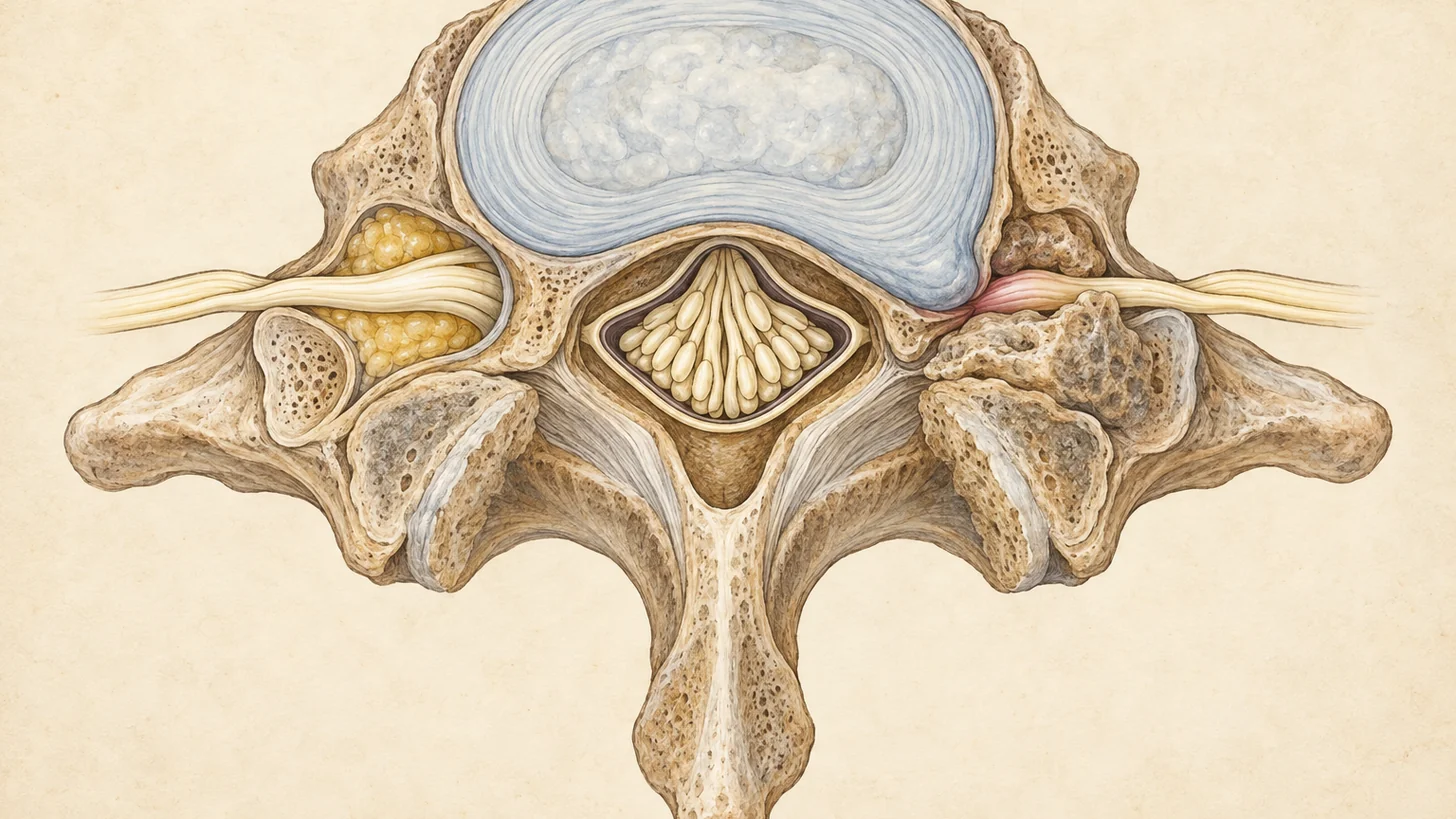
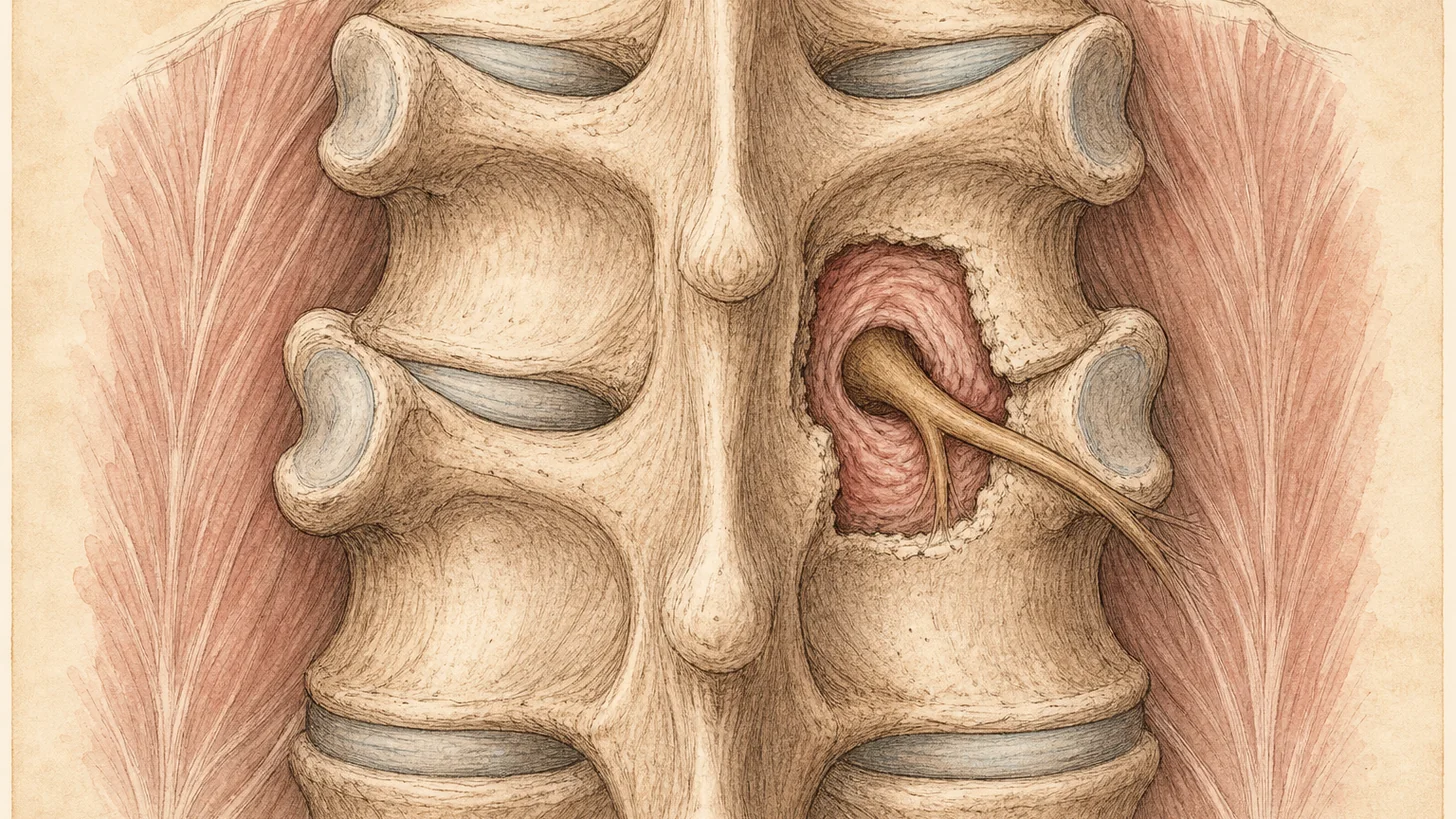
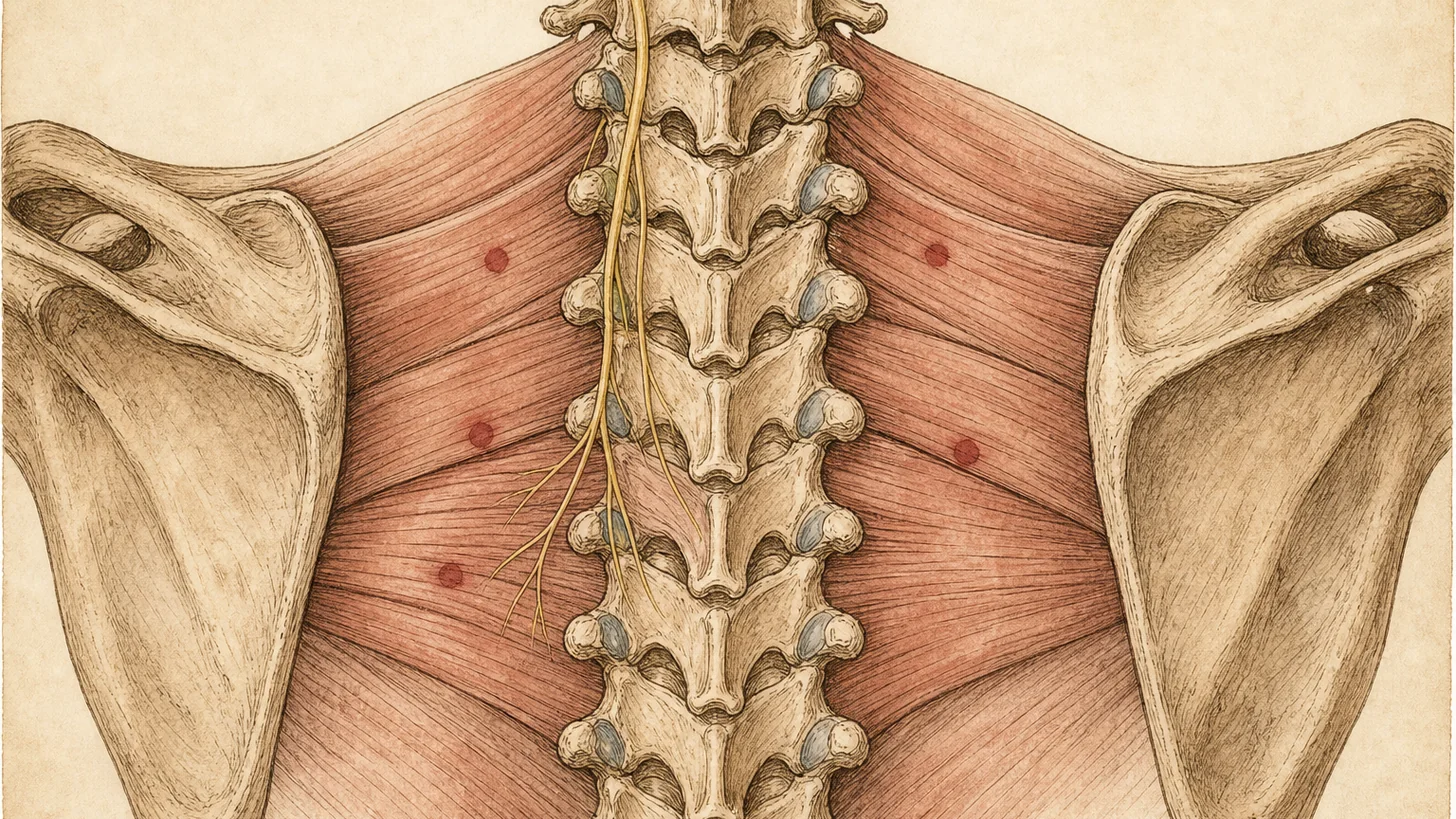
A medial branch block is fundamentally a diagnostic test, not a therapeutic injection. The medial branch nerve is the branch of the dorsal ramus that carries pain fibers from each spinal facet joint and also supplies the small multifidus muscle beside the spine. Each facet joint is innervated by two medial branch nerves — one from the spinal level above and one from the same level — which is why a typical block targets two nerves to evaluate a single joint. By injecting a tiny volume of local anesthetic (about 0.5 mL per nerve) directly onto these nerves under live X-ray guidance, the procedure creates a temporary, anatomically-precise interruption of pain signaling from one specific facet joint. If your familiar pain drops by at least 80% during the anesthetic window, on both blocks, the test is positive: the facet joint at that level is the likely source. If pain does not decrease, the test is negative and the workup moves to other potential pain generators. Unlike a therapeutic injection, the medial branch block is engineered to be short-lived — its diagnostic value comes precisely from its short duration.
Why Medial Branch Blocks Matter for Facet Joint Pain
Facet joint pain, sometimes called facet joint syndrome, is a common and easily missed source of chronic back and neck pain. It is not the same as facet arthropathy, the wear seen on a scan (what facet arthropathy on an MRI report means). In a CT study of a community population, 89% of people aged 60 to 69 had lumbar facet joint arthritis, and arthritis on the scan showed no association with back pain (Kalichman et al., 2008), so imaging alone cannot confirm whether those changes are causing pain. Many patients with facet-mediated pain have been told their MRI is “normal” or shows only “age-appropriate changes” because the dominant pathology is functional rather than structural. The clinical signature of facet joint pain — axial (centered) low back or neck pain that worsens with extension, rotation, prolonged standing, or transitioning from sitting to standing, and that does not radiate below the knee or elbow — is suggestive but not diagnostic on its own. There is no reference-standard test for facet pain, but the 2020 multisociety guideline names the medial branch block as the screening test of choice before radiofrequency ablation (Cohen 2020), and insurers generally require a positive block before they approve the ablation.
Conditions Treated and Anatomic Levels
Medial branch blocks are most commonly performed in the lumbar spine (L3, L4, and L5 medial branches innervating the L4-L5 and L5-S1 facet joints) and the cervical spine (C3, C4, C5, C6, and C7 medial branches and the third occipital nerve, which innervates the C2-C3 facet joint and is a common source of cervicogenic headache). Thoracic medial branch blocks are performed less frequently but are appropriate for suspected mid-back facet pain. Conditions evaluated and treated through this pathway include facet joint osteoarthritis, post-traumatic facet pain (often after motor vehicle collisions or falls), facet pain from spondylolisthesis, cervicogenic headache traced to the upper cervical facets, and chronic axial back pain that has not responded to a course of conservative care including physical therapy, oral medications, and activity modification. Patients with a primarily radicular pattern — pain radiating into the leg below the knee or down the arm into the hand — are evaluated for nerve root pathology instead, since their pain is unlikely to be facet-mediated.
The Diagnostic Process: Why Two Blocks?
The dual-block paradigm — performing two separate diagnostic medial branch blocks before approving radiofrequency ablation — is advocated by the International Pain and Spine Intervention Society (formerly the Spine Intervention Society) and required by Medicare and many commercial insurers, while the 2020 multisociety guideline accepts a single block (Cohen et al., 2020). The reason for a second block is statistical. Single facet blocks are falsely positive in an estimated 17% to 41% of patients (Cohen et al., 2020), meaning that a meaningful share of patients who report relief from a single block do not actually have facet-mediated pain (the relief came from spread of anesthetic to nearby structures, sedation, placebo, or temporal coincidence). In a randomized comparison, ablation succeeded in 64% of patients selected with two blocks versus 39% of those selected with one, though requiring two blocks also screened out patients who might have benefited (Cohen et al., 2010). At Modal Pain Management, every patient has both blocks, 2–6 weeks apart: lidocaine for the first and longer-acting bupivacaine for the second. Each must relieve at least 80% of the familiar pain, and the relief should last about as long as that anesthetic does, a comparison shown to identify true responders in a double-blind study (Barnsley et al., 1993). That is the standard the Medicare policy for New York requires (CMS L35936), and we apply it whatever your insurance plan.
What to Expect During the Procedure
You will be positioned prone on a fluoroscopy table — face down for lumbar blocks, face down with your forehead supported for cervical blocks. The skin overlying the target spinal level is sterilized with chlorhexidine and a sterile drape is applied. A small amount of lidocaine is injected to numb the skin and superficial soft tissues — this is the only injection most patients describe as uncomfortable. Under live fluoroscopic guidance, Dr. Movshis advances a fine 22- or 25-gauge needle to the bony landmark where the medial branch nerve runs at the target level — in the lower back, the junction between the transverse process and superior articular process. Needle position is confirmed with a small volume of contrast dye, which on live X-ray shows the characteristic “blush” pattern that confirms the needle tip is in the correct space and not in a vessel. Once position is confirmed, 0.5 mL of local anesthetic is slowly injected. The needle is withdrawn, the process is repeated for the second medial branch nerve at the same level, and a small bandage is applied. Total procedure time is typically 20–30 minutes for a single-joint workup. No IV sedation is used in most cases, allowing patients to participate in real-time feedback about needle position and to drive themselves home.
After the Block: The Diary Decides
The block is a test, and it is read in the hours after it. While the anesthetic works, you rate your familiar pain every 30–60 minutes, after deliberately doing the movements that normally provoke it. At Modal Pain Management a block counts as positive when the familiar pain drops by at least 80%. A second, confirming block with bupivacaine follows 2 to 6 weeks later and has to clear the same bar before radiofrequency ablation, which heats the same nerves. (The 2020 multisociety guideline accepts a single block with 50% relief, Cohen 2020.) In people who respond, ablation relief usually lasts 7 to 9 months (Smuck 2012). A block that does not help redirects the workup to the sacroiliac joint, a nerve root, the disc or the muscles, and spares you an ablation that would probably not have worked. The interactive pain diary, recovery instructions, and what to do when the result is unclear are on the medial branch block aftercare page.
How Medial Branch Block Differs from Other Spine Injections
Patients are often confused about how medial branch blocks compare to other interventional procedures, and the distinction matters because each procedure answers a different clinical question. A medial branch block uses local anesthetic only, targets the small sensory nerve to a single facet joint, is diagnostic in intent, and produces a few hours of relief. An epidural injection treats irritated nerve roots, is therapeutic in intent, and is most appropriate for radicular pain (sciatica, cervical radiculopathy) rather than axial facet pain. An intra-articular facet joint injection places medication inside the joint capsule itself and is sometimes used both diagnostically and therapeutically, but the 2020 multisociety guideline prefers medial branch blocks for choosing ablation candidates (Cohen 2020). Radiofrequency ablation is the long-term therapeutic followup to a positive medial branch block — same target nerve, very different effect on its function. Choosing the right procedure depends on what your pain pattern, examination, and imaging suggest, which is why a structured consultation precedes any interventional procedure at our practice.
Insurance, Authorization, and Practical Logistics
Most commercial PPO insurance plans cover medial branch blocks as part of a structured workup for chronic axial back or neck pain. Coverage typically requires prior authorization, which means your plan needs documentation that you have completed a course of conservative care (usually physical therapy and oral medications) and that your clinical picture is consistent with facet-mediated pain. Modal Pain Management handles the prior authorization process on your behalf — the typical timeline is 7–14 business days from your initial consultation to authorization, and we usually schedule the procedure within the following week. Most commercial PPO plans are accepted, including Aetna, Anthem Blue Cross Blue Shield, Cigna, Empire Blue Cross Blue Shield, the Empire Plan, Oscar, Oxford, UMR and UnitedHealthcare. We do not accept Medicare, Medicaid, HMO plans, or workers’ compensation. Out-of-pocket cost depends on your individual deductible and coinsurance — we verify your benefits and provide a written estimate before your first visit so there are no surprises. Visit our insurance verification page to check your plan, or call (646) 290-6660 for a benefits check.
Why Patients Choose Modal Pain Management for Medial Branch Blocks
Dr. Alex Movshis is dual board-certified by the American Board of Anesthesiology in Anesthesiology and Pain Medicine, completed his pain medicine fellowship at the Icahn School of Medicine at Mount Sinai, and performs medial branch blocks under live fluoroscopic guidance, as the 2020 multisociety guideline recommends. Our Midtown NYC office at 369 Lexington Avenue Floor 25 is one block from Grand Central Terminal, making it accessible from anywhere in the New York metro area, and we offer same-week consultation appointments for new patients. We require two diagnostic blocks, each with at least 80% relief, before every ablation, to protect patients from false-positive workups, and we stage the diagnostic and therapeutic procedures (medial branch block followed by radiofrequency ablation) as a coordinated pathway rather than a series of disconnected appointments. If you have been living with chronic axial back or neck pain, have completed a course of conservative care, and want a clearer answer about whether your facet joints are the source — and a clear plan for what comes next — a medial branch block is the right next step.
References
- Barnsley L, Lord S, Bogduk N. Comparative local anaesthetic blocks in the diagnosis of cervical zygapophysial joint pain. Pain. 1993;55(1):99–106. doi:10.1016/0304-3959(93)90189-V · PubMed
- Centers for Medicare & Medicaid Services. Local Coverage Determination L35936: Facet Joint Interventions for Pain Management. Medicare Coverage Database
- Kalichman L, Li L, Kim DH, et al. Facet joint osteoarthritis and low back pain in the community-based population. Spine (Phila Pa 1976). 2008;33(23):2560–5. doi:10.1097/BRS.0b013e318184ef95 · PubMed
- Cohen SP, Williams KA, Kurihara C, et al. Multicenter, randomized, comparative cost-effectiveness study comparing 0, 1, and 2 diagnostic medial branch (facet joint nerve) block treatment paradigms before lumbar facet radiofrequency denervation. Anesthesiology. 2010;113(2):395–405. doi:10.1097/ALN.0b013e3181e33ae5 · PubMed
- Cohen SP, Bhaskar A, Bhatia A, et al. Consensus practice guidelines on interventions for lumbar facet joint pain from a multispecialty, international working group. Reg Anesth Pain Med. 2020;45(6):424–467. doi:10.1136/rapm-2019-101243 · PubMed
- MacVicar J, Borowczyk JM, MacVicar AM, Loughnan BM, Bogduk N. Lumbar medial branch radiofrequency neurotomy in New Zealand. Pain Med. 2013;14(5):639–45. doi:10.1111/pme.12000 · PubMed
- Juch JNS, Maas ET, Ostelo RWJG, et al. Effect of Radiofrequency Denervation on Pain Intensity Among Patients With Chronic Low Back Pain: The Mint Randomized Clinical Trials. JAMA. 2017;318(1):68–81. doi:10.1001/jama.2017.7918 · PubMed
- Manchikanti L, Malla Y, Wargo BW, Cash KA, Pampati V, Fellows B. Complications of fluoroscopically directed facet joint nerve blocks: a prospective evaluation of 7,500 episodes with 43,000 nerve blocks. Pain Physician. 2012;15(2):E143–50. PubMed
- Smuck M, Crisostomo RA, Trivedi K, Agrawal D. Success of initial and repeated medial branch neurotomy for zygapophysial joint pain: a systematic review. PM R. 2012;4(9):686–92. doi:10.1016/j.pmrj.2012.06.007 · PubMed