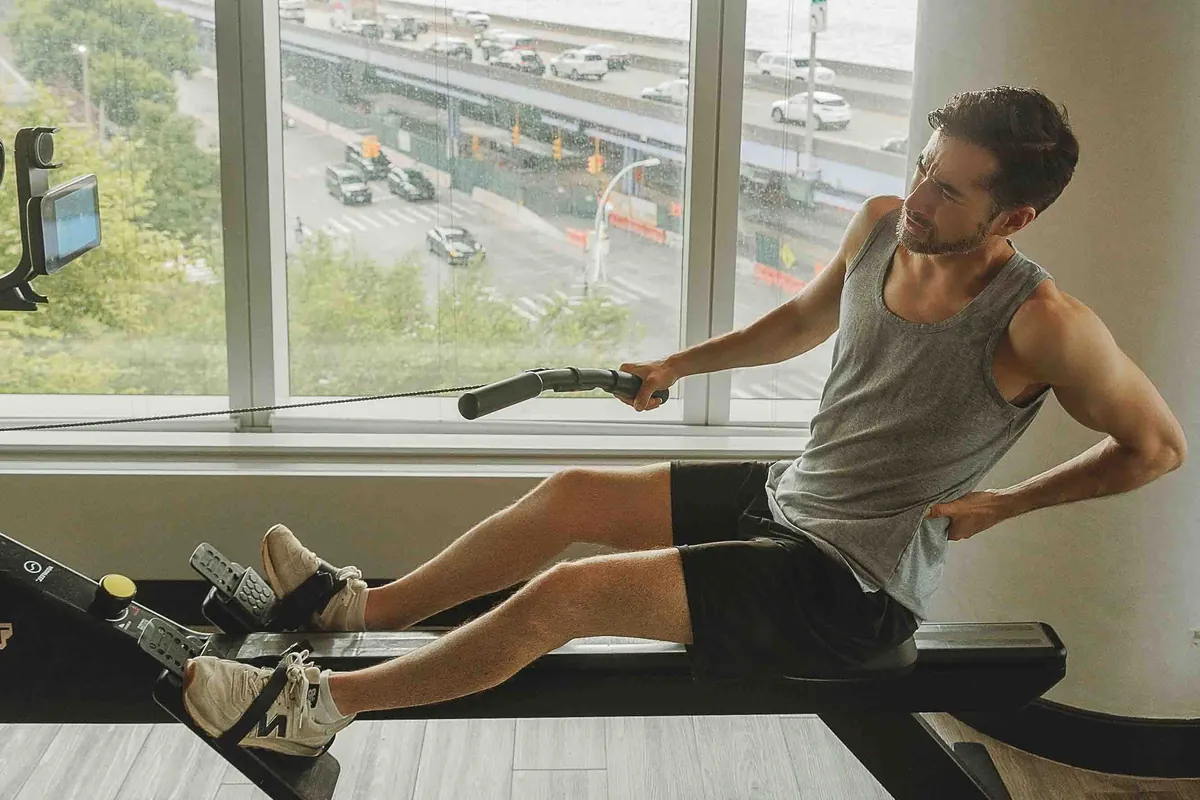
Meralgia paresthetica is one of the most commonly missed entrapment neuropathies in adults — and one of the most easily treatable once correctly identified. At Modal Pain Management in Midtown Manhattan, Dr. Alex Movshis uses a structured physical examination, ultrasound-guided diagnostic injection, and a stepwise non-surgical treatment ladder to deliver fast, durable relief from the burning, tingling outer thigh pain that defines this condition. Most patients who walk in with months of unexplained burning thigh pain — frequently chased as “sciatica,” “a pinched nerve in the back,” or “arthritis” without lasting relief — leave the consultation visit with a clear diagnosis and a concrete plan.
This page covers what meralgia paresthetica actually is, how it is reliably distinguished from the other causes of outer thigh pain, how Dr. Movshis diagnoses it, the evidence-based image-guided non-surgical treatment ladder Modal Pain Management uses, when surgical referral is appropriate, and what to expect at your first visit.
Burning Outer Thigh Pain Is Probably Not Your Back
The dominant clinical narrative around burning, tingling, or numb outer thigh pain for the past several decades has been: it must be a “pinched nerve in the back,” get an MRI, get an epidural, and if that does not work, get surgery. That narrative is wrong for a substantial fraction of patients — many of them have meralgia paresthetica, an entrapment of the lateral femoral cutaneous nerve (LFCN) at the inguinal ligament, and the back has nothing to do with their pain.
The misdiagnosis is consequential. Patients with meralgia paresthetica frequently spend months — sometimes years — being treated for L2 or L3 radiculopathy, hip arthritis, or “sciatica” without lasting relief, accumulating unnecessary lumbar MRIs, epidural steroid injections that target the wrong tissue, and occasionally even spine surgery referrals. The correct diagnosis can usually be made in a single 45-minute consultation visit by physical exam and confirmed in 10–15 minutes by an ultrasound-guided diagnostic LFCN nerve block.
The framework Modal Pain Management uses is straightforward: when a patient presents with burning, tingling, numbness, or hypersensitivity over the front and outer thigh — without weakness, without back pain, and without symptoms below the knee — meralgia paresthetica moves to the top of the differential. Dr. Movshis examines the LFCN distribution, performs the Tinel and pelvic compression tests, and offers an ultrasound-guided diagnostic nerve block at the visit or within 1–2 weeks. Most patients have meaningful relief within hours.
Why It Hurts There: The Anatomy of Meralgia Paresthetica
The lateral femoral cutaneous nerve is a purely sensory branch of the L2 and L3 nerve roots. It emerges from the lumbar plexus, runs obliquely across the iliacus muscle in the retroperitoneum, and exits the pelvis by passing under or through the inguinal ligament medial to the anterior superior iliac spine (ASIS). After exiting the pelvis, it divides into anterior and posterior branches that supply sensation to the front and outside of the thigh, from the hip to about the level of the knee.
The LFCN is famously variable in its anatomy. Cadaveric studies have catalogued at least five distinct exit patterns at the inguinal ligament — most commonly through a tunnel just medial to the ASIS, but sometimes more medially over the iliacus muscle, sometimes under the inguinal ligament rather than through it, and sometimes splitting into two branches before exiting. This anatomic variability is one reason blind landmark injection at the LFCN has historically performed poorly and one reason ultrasound guidance is a meaningful upgrade — the operator can directly visualize the nerve and its actual exit point in the patient in front of them.
The mechanism of injury is mechanical. The nerve is vulnerable at the inguinal ligament because that is where it changes direction sharply and where it can be compressed against bone. Anything that increases the angle of the nerve at the inguinal ligament, increases pressure across that point, or stretches the nerve over the ligament can produce the syndrome: weight gain (adipose tissue at the lower abdomen tents the inguinal ligament downward), tight belts and low-rise jeans (direct compression), tool belts and body armor (occupational compression), pregnancy (the gravid uterus angulates the nerve), prolonged hip extension postures (cycling, prolonged standing), seat-belt injury or fall onto the ASIS (direct trauma), and surgical injury at the iliac crest, anterior hip, or lower abdomen.
Understanding this anatomy explains why image-guided treatment matters. The LFCN runs through a small, anatomically variable space crowded with fascial layers, blood vessels, and the inguinal ligament itself. Treatment delivered into the wrong tissue does not work. Ultrasound guidance pushes injection accuracy to >95% versus the historically poor accuracy of blind landmark injection at this nerve.
Meralgia Paresthetica vs. The Other Causes of Outer Thigh Pain
The single most important step in evaluating outer thigh symptoms is determining which structure is generating the pain. The differential diagnosis is wide, and the wrong diagnosis leads to the wrong treatment.
Meralgia paresthetica produces burning, tingling, numbness, and hypersensitivity over the front and outer thigh, in the LFCN distribution, with no weakness, no reflex changes, no back pain, and no symptoms below the knee. Tinel sign at the ASIS is positive. Diagnostic ultrasound-guided LFCN block produces rapid relief. This is the diagnosis most often missed when these symptoms are chased as “sciatica.”
Lumbar radiculopathy from L2 or L3 nerve root compression can also produce anterior and lateral thigh pain — but radiculopathy classically produces concurrent back pain, motor weakness (hip flexion or knee extension weakness), reflex changes, and a positive femoral nerve stretch test. MRI demonstrates the disc herniation or foraminal stenosis at the appropriate level. Epidural steroid injection at the affected level is the targeted treatment, not LFCN block.
Femoral neuropathy produces quadriceps weakness with knee buckling, loss of the patellar reflex, and sensory changes over the medial thigh and medial leg, in addition to anterior thigh symptoms. Causes include diabetes, retroperitoneal hematoma, iliopsoas mass, anterior approach hip arthroplasty, and hip flexor injury. EMG and nerve conduction studies confirm.
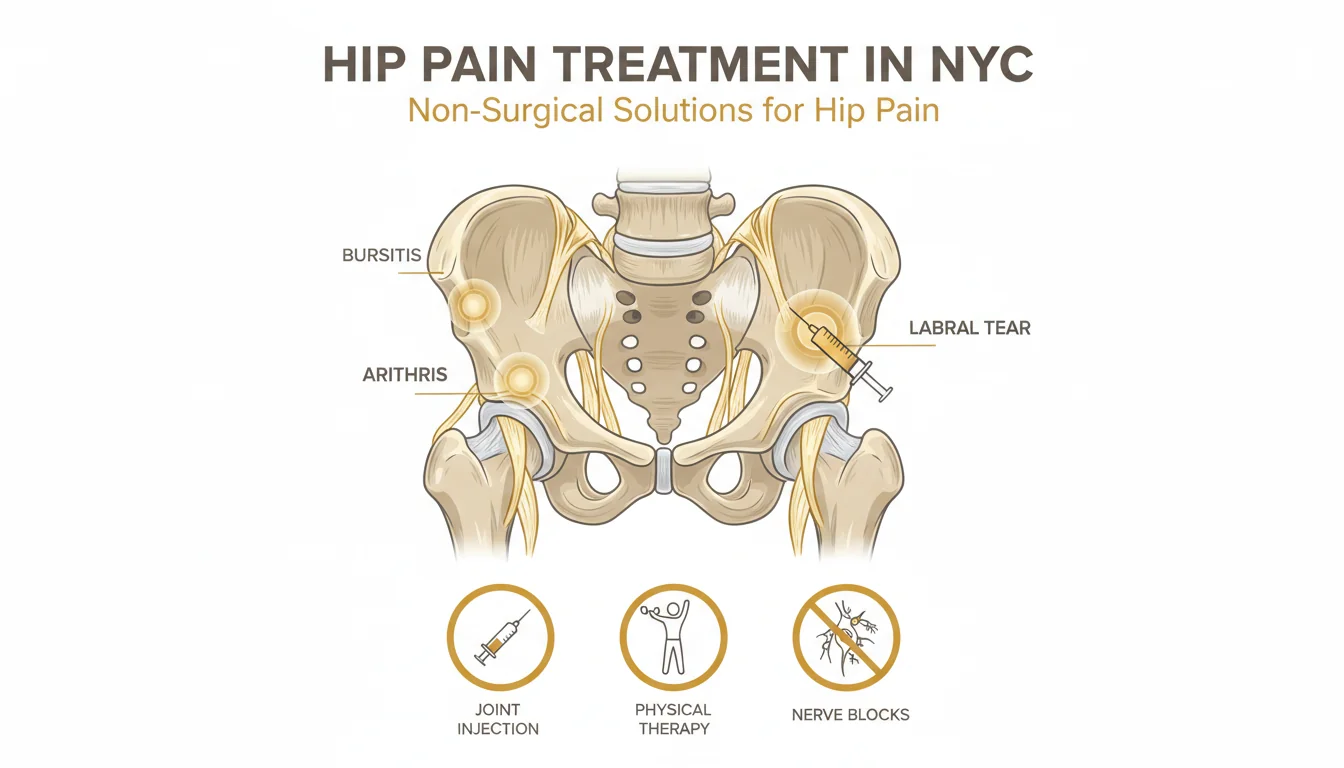
Hip osteoarthritis produces deep anterior groin pain with restricted internal rotation on exam and X-ray findings of joint space narrowing — a different anatomic location than the outer-thigh dysesthesia of meralgia paresthetica, though some patients with hip OA also describe lateral thigh radiation. A diagnostic intra-articular hip block or ultrasound-guided LFCN block can disambiguate.
Hip labral tear and femoroacetabular impingement (FAI) produces deep anterior groin pain with mechanical symptoms (clicking, catching, locking), reproduced by the FADIR test. Most common in active patients in their 20s–40s. Different anatomic distribution from meralgia paresthetica.
Greater trochanteric pain syndrome (hip bursitis / GTPS) produces lateral hip pain over the bony prominence on the outside of the upper thigh, worse lying on the affected side at night, with tenderness on direct palpation of the trochanter. The pain is typically mechanical and load-related, not burning or tingling, and is localized over the bone rather than spread over the front and outer thigh. Frequently misattributed to meralgia paresthetica and vice versa.
Sacroiliac (SI) joint dysfunction produces deep buttock pain that may radiate into the posterior thigh, with positive provocative tests (FABER, distraction, compression, thigh thrust). Different anatomic location.
Piriformis syndrome produces buttock pain with sciatica-pattern radiation down the back of the leg, reproduced by the FAIR test. Symptoms are in the sciatic nerve distribution (posterior thigh, calf, foot) — not the LFCN distribution.
Trochanteric or iliotibial band syndrome produces lateral hip and lateral thigh pain that is mechanical and load-related, not neuropathic.
Diabetic amyotrophy and diabetic peripheral neuropathy can produce burning thigh pain in patients with poorly controlled diabetes — usually accompanied by symptoms in other distributions and confirmed by nerve conduction studies.
Retroperitoneal mass (lymphoma, sarcoma, abscess) can compress the LFCN proximally and present as meralgia paresthetica — rare, but a reason to maintain a low threshold for pelvic imaging in patients with atypical features, weight loss, fever, or a history of malignancy.
This differential is exactly the work the consultation visit at Modal Pain Management is built to do. Most patients walk out with a clear primary diagnosis, an explanation of why other diagnoses were considered and ruled out, and a written next step.
How Meralgia Paresthetica Is Diagnosed
The diagnostic workup at Modal Pain Management is structured to be both fast and accurate. Most patients reach a clear answer in a single visit.
History. The most useful information is the symptom pattern (burning, tingling, numbness, hypersensitivity in the front and outer thigh — not in the back, not in the calf or foot, no weakness), the location (LFCN distribution), the temporal pattern (worse with standing and tight clothing, better with sitting and hip flexion), the modifying factors (recent weight gain, pregnancy, new tight clothing, occupational belts, prolonged hip extension postures, recent abdominal/pelvic/hip surgery), the duration (acute vs. chronic), and the response to prior treatment (typically poor response to back-focused interventions because the back is not the problem).
Physical examination. Sensory examination of the LFCN territory looks for decreased pinprick sensation, allodynia, or hyperesthesia. The Tinel sign at the anterior superior iliac spine (tapping over the LFCN exit point reproduces the burning thigh symptoms) is highly suggestive. The pelvic compression test (sustained lateral compression of the iliac wing relieves LFCN tension and reduces symptoms within 30–45 seconds) is supportive. Motor examination demonstrates preserved strength in hip flexion, knee extension, ankle dorsiflexion, and ankle plantarflexion. Reflex examination demonstrates preserved patellar and Achilles reflexes. The lumbar examination is normal — straight-leg raise is negative, femoral nerve stretch is negative, and lumbar range of motion does not reproduce thigh symptoms. A normal lumbar examination in a patient with classic LFCN-distribution symptoms is highly specific for meralgia paresthetica.
Bedside ultrasound at the consultation visit. High-resolution ultrasound at the inguinal ligament directly visualizes the LFCN, identifies its exit point in the individual patient (it is anatomically variable), screens for mass effect or scar, and sets up the diagnostic injection if the clinical picture supports it.
Ultrasound-guided diagnostic LFCN nerve block. This is the gold-standard confirmatory test. Local anesthetic delivered precisely around the LFCN under ultrasound guidance produces rapid relief of the burning thigh symptoms within 10–15 minutes if meralgia paresthetica is the correct diagnosis. Failure of relief points to a different diagnosis and refocuses the workup. When local anesthetic plus corticosteroid is delivered together (combined diagnostic and therapeutic block), the diagnostic answer comes within 15 minutes and 6–12 weeks of pain control follow.
Electrodiagnostic studies. EMG and nerve conduction studies of the LFCN are technically possible but not routinely required in classic cases. They are useful when the diagnosis is uncertain, when concurrent lumbar radiculopathy must be excluded, or when an atypical neuropathic process is suspected.
MRI of the lumbar spine. Reserved for cases where back pain, leg weakness, atypical reflex changes, or other features raise concern for a lumbar radiculopathy mimicker. Most patients with classic meralgia paresthetica do not need a lumbar MRI — sending every patient with thigh symptoms for spine imaging is part of the diagnostic over-treatment that contributes to misdiagnosis.
Hip MRI or pelvic CT. Indicated when retroperitoneal mass or hip pathology is suspected, when a patient has a history of malignancy and develops new LFCN-distribution symptoms, or when iatrogenic nerve injury after recent surgery requires anatomic detail.
The Image-Guided Non-Surgical Treatment Ladder
Modal Pain Management uses a structured, evidence-based, image-guided ladder for meralgia paresthetica. The ladder progresses from removing the source of compression to image-guided diagnostic and therapeutic injection to advanced neuromodulation, reserving surgery for the small minority of patients who do not respond to the structured non-surgical pathway.
Step 1 — Identify and remove the compressive insult. This is by far the highest-yield single intervention and the one most often skipped. Tight belts, low-rise tight jeans and shapewear, tool belts, body armor, ammunition belts, restrictive postpartum compression garments, seat-belt routing across the ASIS, and prolonged hip-extension postures (aggressive cycling positions, prolonged standing in heavy gear) are all reversible drivers. Weight loss — even 10–15 pounds — frequently produces meaningful symptomatic improvement when central adiposity is the underlying mechanical driver. Pregnancy-related cases typically resolve postpartum without further intervention. Iatrogenic and post-traumatic cases often require time and the rest of the ladder.
Step 2 — Conservative pharmacotherapy and physical therapy. NSAIDs are useful when an inflammatory component is present. Gabapentin or pregabalin, dosed to effect, addresses the neuropathic pain component and is first-line systemic medication. Topical lidocaine 5% patches applied to the LFCN territory reduce allodynia and surface burning without systemic side effects. Structured physical therapy emphasizes iliopsoas and hip flexor stretching to unload the inguinal ligament, posture correction to reduce prolonged hip extension, and gentle desensitization techniques for allodynia. Most patients with mild-to-moderate symptoms improve substantially with Steps 1 and 2.
Step 3 — Ultrasound-guided diagnostic and therapeutic LFCN nerve block. When Steps 1 and 2 are insufficient, image-guided injection is the next step and the gold-standard confirmatory test in one. Ultrasound guidance directly visualizes the LFCN at its exit point in the individual patient (the nerve is anatomically variable), confirms accurate needle placement, and delivers a small volume of local anesthetic plus corticosteroid precisely around the nerve. Diagnostic information returns within 10–15 minutes (rapid relief of the burning thigh symptoms confirms the diagnosis), and therapeutic effect from the corticosteroid component lasts 6–12 weeks on average. Image-guidance accuracy at the LFCN is >95% under ultrasound versus historically poor results from blind landmark injection. Most patients reach durable improvement with one to three injections spaced 6–12 weeks apart, typically combined with continued attention to the modifiable Step 1 factors.
Step 4 — Ultrasound-guided LFCN hydrodissection. For patients with persistent symptoms despite anesthetic and steroid block — typically those with fascial scarring around the nerve from prior surgery, trauma, or chronic compression — hydrodissection mechanically frees the LFCN from surrounding tissue using a larger volume of saline plus dilute local anesthetic and corticosteroid, delivered along and around the nerve under continuous ultrasound visualization. Hydrodissection has emerging evidence for entrapment neuropathies generally and for the LFCN specifically when adhesions or fibrosis are the dominant problem.
Step 5 — Pulsed radiofrequency ablation (PRF) of the LFCN. For chronic, recurrent, or refractory meralgia paresthetica that responded transiently to diagnostic block but does not hold durable relief, image-guided pulsed radiofrequency is a neuromodulatory (not destructive) treatment that delivers high-frequency electromagnetic pulses to the LFCN, modulating pain transmission without thermal nerve damage. Published data (Phillips, Choi, and colleagues) show 6–12 months of meaningful pain relief in 60–80% of patients, and the procedure can be repeated. PRF is preferred over thermal RFA at this nerve because the LFCN is a sensory nerve in a sensory-only distribution — sensory loss from thermal ablation is generally well tolerated, but PRF offers durable relief without the risk of a permanent dense numb patch.
Step 6 — Peripheral nerve stimulation (PNS) referral or surgical decompression / neurolysis / neurectomy referral. A small minority of patients with severe, refractory meralgia paresthetica that fails the structured non-surgical ladder benefit from peripheral nerve stimulation (a small implantable device that delivers gentle electrical stimulation to the LFCN, modulating pain transmission) or from surgical decompression of the LFCN at the inguinal ligament, neurolysis, or in selected cases neurectomy (which trades chronic neuropathic pain for permanent numbness in the LFCN territory — usually well tolerated for a sensory-only nerve). Modal Pain Management coordinates referral to NYC-based peripheral nerve surgeons and neurosurgeons when this step is appropriate. The point of the structured ladder is not to delay surgery for the sake of delaying it — it is to make sure every patient has had a fair shot at the high-quality non-surgical options before going to the operating room, and to identify the small minority of patients for whom surgery genuinely is the right answer.
Self-Care: What Actually Works (And What Doesn’t)
The home-care advice patients with meralgia paresthetica receive is often vague and often wrong. The actual evidence-supported self-care for this condition is concrete and surprisingly high-yield.
What works. Removing tight clothing — low-rise jeans, tight belts, shapewear, restrictive postpartum garments — frequently produces noticeable improvement within days to weeks. Removing or repositioning occupational belts, tool belts, body armor, and seat belt routing across the ASIS. Modest weight loss (10–15 pounds) when central adiposity is the underlying driver — this is the single highest-yield modifiable factor for the obesity-related variant. Iliopsoas and hip flexor stretching to reduce inguinal ligament tension. Topical lidocaine 5% patches over the LFCN territory for surface burning and allodynia. Sleeping with a pillow under the knees to reduce hip extension. Avoiding prolonged hip-extension postures (aggressive aerodynamic cycling positions, prolonged standing in heavy gear). Gentle walking on level ground rather than prolonged standing.
What does not work. Lumbar epidural steroid injection — the back is not the problem in true meralgia paresthetica, and epidural steroid does not reach the LFCN at the inguinal ligament. Aggressive lumbar physical therapy aimed at “decompressing the disc” — same reason. Spinal manipulation. Inversion tables. Most over-the-counter braces and supports — many of them increase rather than decrease compression at the inguinal ligament. Walking with a tight belt or carrying a heavy waist-pack — directly aggravates the entrapment.
What is mixed. Walking and general aerobic exercise — almost always good for cardiovascular and metabolic health and supportive of weight loss, but very long walks or prolonged standing can transiently aggravate symptoms in some patients. The right dose is a comfortable-pace walk on level ground, in supportive shoes, without a tight belt or restrictive clothing, broken into shorter segments if needed.
When Outer Thigh Pain Is an Emergency
Most outer thigh symptoms are not emergencies — meralgia paresthetica itself is uncomfortable but not dangerous. A small set of presentations requires urgent or emergent evaluation rather than scheduled outpatient workup, because they suggest a different and potentially serious diagnosis.
Seek urgent or emergency evaluation if outer thigh symptoms are accompanied by: sudden severe pain after significant trauma (rules out fracture, hematoma, and direct nerve transection); weakness in the leg, knee buckling, or foot drop (points away from meralgia paresthetica and toward lumbar radiculopathy, femoral neuropathy, or another problem); new bowel or bladder dysfunction or saddle anesthesia (cauda equina syndrome — surgical emergency); fever, chills, or signs of systemic infection (rules out infectious cause, including iliopsoas abscess); rapidly enlarging palpable abdominal or pelvic mass; significant unexplained weight loss; new symptoms in a patient with active malignancy (rules out retroperitoneal compression from tumor); symptoms that began acutely after recent abdominal, pelvic, or hip surgery (raises concern for iatrogenic injury, hematoma, or intraoperative compression); or signs of vascular insufficiency in the leg (cold, pale, pulseless — vascular emergency, not nerve).
For ordinary meralgia paresthetica without these features, outpatient evaluation at Modal Pain Management is the appropriate pathway and can typically be scheduled the same week.
Why Modal Pain Management
Most patients with meralgia paresthetica spend months or years being treated for the wrong diagnosis. The pattern is consistent and frustrating: burning outer thigh pain gets labeled as “sciatica” or “a pinched nerve,” produces a lumbar MRI that shows incidental degenerative changes, generates an epidural steroid injection at the wrong level, fails to improve, and either gets escalated to spine surgery referral or quietly drifts into chronic untreated neuropathic pain.
Modal Pain Management’s approach is different. The consultation visit is built around the differential diagnosis of thigh and groin pain. Dr. Movshis examines the LFCN distribution, performs the relevant provocative tests (Tinel at the ASIS, pelvic compression), and offers an ultrasound-guided diagnostic LFCN nerve block at the visit or within 1–2 weeks. The diagnostic answer is typically clear within 10–15 minutes of the injection and therapeutic relief within hours. Most patients walk out of their first follow-up visit knowing exactly what is wrong, why prior treatments did not work, and what the structured non-surgical pathway looks like.
Modal Pain Management is located at 369 Lexington Avenue, Floor 25, in Midtown Manhattan — accessible from anywhere in NYC by subway (Grand Central, 4/5/6/7 and S shuttle, two blocks east) or train. Same-week consultation appointments are typically available. Most major insurance is accepted; verify your insurance benefits before your first visit at no cost or obligation. Phone: (646) 290-6660.