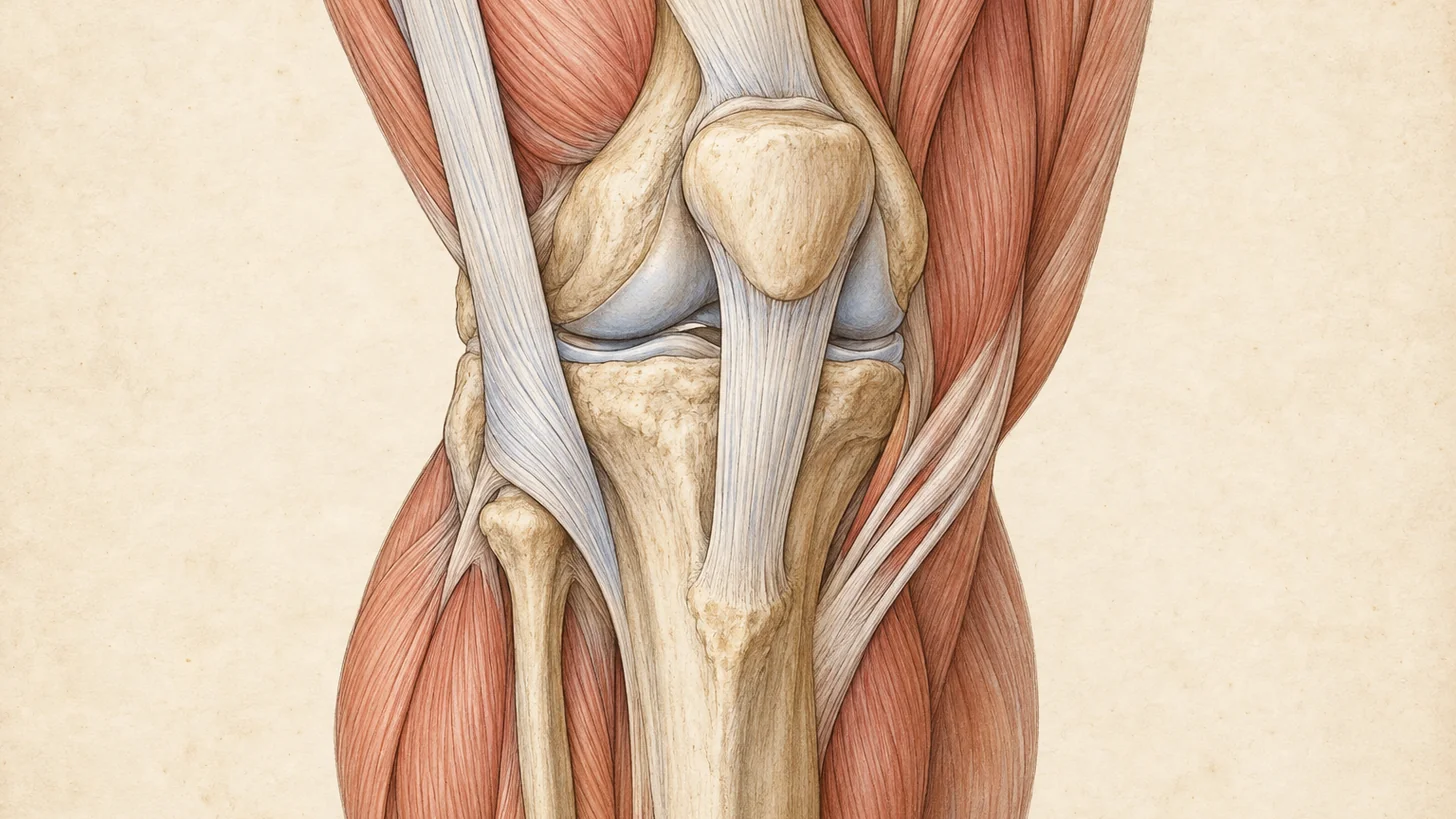
Sports and soft tissue injuries in New York runners, lifters and weekend players range from a calf strain picked up on a hill to a tendon that has been sore for a year. At Modal Pain Management, 369 Lexington Avenue, Dr. Alex Movshis evaluates these injuries, uses ultrasound-guided injections when they help, and coordinates the rehabilitation that does most of the work. When an injury needs a surgeon, he says so early and refers.
Common Sports Injuries We Treat
Muscle strains and tears. A strain is damage to muscle fibers, usually during a sprint, a kick or a heavy lift. Sports medicine now classifies these injuries by where the muscle is torn and how much of it, based on the exam and imaging, rather than by a simple mild-to-severe scale (Mueller-Wohlfahrt 2013, Pollock 2014). In professional soccer, muscle injuries made up 31% of all time-loss injuries, and 92% of them hit four muscle groups: the hamstrings, adductors, quadriceps and calves (Ekstrand 2011). Muscle heals through a mix of regeneration and scar, and early, gradual loading helps that repair line up with the muscle fibers (Järvinen 2005). The muscle tear treatment page covers grading and treatment.
Tendinopathy. An overloaded tendon becomes thickened and disorganized rather than simply inflamed, which is why loading programs, not rest alone, are the core treatment. The pages for tennis elbow, high hamstring tendinopathy and plantar fasciitis go through the evidence for each. It differs by tendon. For tennis elbow, placebo-controlled trials have found PRP no better than placebo (Antunes Júnior 2026). For chronic plantar fasciitis, pooled trials favor PRP over cortisone at three and six months (Zuo 2025).
Knee and foot pain in runners. Pain around the kneecap, on one spot of the patellar tendon, or on the outside of the knee at a predictable mile each point to a different problem. Start with knee pain after running, and see IT band syndrome for outside-knee pain. Burning between the toes is often Morton’s neuroma.
Sprains and shoulder injuries. Ankle and knee sprains, and rotator cuff problems in overhead athletes, are checked for instability or a tear that needs a surgeon before rehab starts. Shoulder pain has its own page, shoulder pain.
When to See a Sports Medicine Specialist
For the first days after a soft tissue injury, advice has moved away from complete rest. The PEACE and LOVE framework asks you to protect the area briefly, elevate and compress it, skip anti-inflammatories in the first days, and then load it gradually as pain allows (Dubois 2020). It builds on an earlier call to replace rest with optimal loading (Bleakley 2012).
Get evaluated if:
- pain has not improved after one to two weeks of sensible load reduction
- swelling limits motion, or the joint feels unstable
- you have real weakness, not just pain
- the pain comes back every time you return to sport
- the same area has been injured before
A sudden pop with bruising and weakness, a joint that locks or gives way, or pain on one spot of bone that lingers at rest needs a prompt exam and imaging. For a hot, swollen joint with fever, call 911 or go to the nearest emergency room.
Diagnosis and Assessment
The first visit is a history of how the injury happened and what aggravates it, and an exam of strength, range of motion and the movements that reproduce the pain. Ultrasound is in the office suite. It shows muscle tears, tendon changes and fluid, can watch a structure while it moves, and guides injections, which is why a sports medicine position statement endorsed it for these uses (Finnoff 2015). MRI is ordered when a complete tear, a bone stress injury or a problem inside a joint is likely.
Treatment Options
Rehabilitation does most of the work: a progressive loading program matched to the tissue and the sport, through our physical therapy. Injections are added when pain blocks that program.
- Joint and soft tissue injections. Cortisone can calm an irritated bursa, tendon sheath or joint for a few weeks. In tendon problems the early benefit tends to fade or reverse by 6 to 12 months, so it is used sparingly there (Coombes 2010).
- Trigger point injections for tight, tender bands in a muscle that limit rehab.
- Nerve blocks to sort out and treat pain from an irritated nerve.
- Platelet-rich plasma (PRP), self-pay, for selected problems. It beat cortisone in trials of plantar fasciitis and gluteal tendinopathy (Zuo 2025, Fitzpatrick 2018), although a placebo-controlled trial in gluteal tendinopathy found it no better than saline (Atchia 2025). In acute hamstring muscle injuries, a randomized trial of 90 professional athletes found PRP gave no faster return to play than intensive rehabilitation alone (Hamilton 2015).
Return to Activity
Return to sport follows milestones rather than the calendar: pain-free daily activity, strength close to the other side, and sport-specific drills without a flare the next day. Re-injury is common. In professional soccer, 16% of muscle injuries were re-injuries, and they kept players out longer than the first injury did (Ekstrand 2011). Runners with heel pain will find return-to-run criteria and the pre-race injection question on our plantar fasciitis page.
Injury Prevention
In runners, a previous injury and a jump in training load are the most consistent risk factors for knee injuries (Senthil 2026). Build mileage and weight gradually, keep strength work going through a training block, and treat a previously injured muscle or tendon as the one most likely to go again. Prevention work is part of the last phase of rehab, so the plan does not stop when the pain does.
References
- Mueller-Wohlfahrt HW, Haensel L, Mithoefer K, et al. Terminology and classification of muscle injuries in sport: the Munich consensus statement. Br J Sports Med. 2013;47(6):342–50. doi:10.1136/bjsports-2012-091448 · PubMed
- Pollock N, James SL, Lee JC, Chakraverty R. British athletics muscle injury classification: a new grading system. Br J Sports Med. 2014;48(18):1347–51. doi:10.1136/bjsports-2013-093302 · PubMed
- Järvinen TA, Järvinen TL, Kääriäinen M, Kalimo H, Järvinen M. Muscle injuries: biology and treatment. Am J Sports Med. 2005;33(5):745–64. doi:10.1177/0363546505274714 · PubMed
- Ekstrand J, Hägglund M, Waldén M. Epidemiology of muscle injuries in professional football (soccer). Am J Sports Med. 2011;39(6):1226–32. doi:10.1177/0363546510395879 · PubMed
- Bleakley CM, Glasgow P, MacAuley DC. PRICE needs updating, should we call the POLICE? Br J Sports Med. 2012;46(4):220–1. doi:10.1136/bjsports-2011-090297 · PubMed
- Dubois B, Esculier JF. Soft-tissue injuries simply need PEACE and LOVE. Br J Sports Med. 2020;54(2):72–73. doi:10.1136/bjsports-2019-101253 · PubMed
- Finnoff JT, Hall MM, Adams E, et al. American Medical Society for Sports Medicine (AMSSM) position statement: interventional musculoskeletal ultrasound in sports medicine. PM R. 2015;7(2):151–68.e12. doi:10.1016/j.pmrj.2015.01.003 · PubMed
- Hamilton B, Tol JL, Almusa E, et al. Platelet-rich plasma does not enhance return to play in hamstring injuries: a randomised controlled trial. Br J Sports Med. 2015;49(14):943–50. doi:10.1136/bjsports-2015-094603 · PubMed
- Zuo A, Gao C, Jia Q, et al. Platelet-Rich Plasma Versus Corticosteroids in the Treatment of Plantar Fasciitis: A Systematic Review and Meta-analysis. Am J Phys Med Rehabil. 2025;104(7):613–621. doi:10.1097/PHM.0000000000002677 · PubMed
- Fitzpatrick J, Bulsara MK, O’Donnell J, McCrory PR, Zheng MH. The Effectiveness of Platelet-Rich Plasma Injections in Gluteal Tendinopathy: A Randomized, Double-Blind Controlled Trial Comparing a Single Platelet-Rich Plasma Injection With a Single Corticosteroid Injection. Am J Sports Med. 2018;46(4):933–939. doi:10.1177/0363546517745525 · PubMed
- Atchia I, Ali M, Oderuth E, Holleyman R, Malviya A. Efficacy of Platelet-Rich Plasma Versus Placebo for the Treatment of Greater Trochanteric Pain Syndrome: A Double-Blinded Randomized Controlled Trial. J Bone Joint Surg Am. 2025;107(5):444–451. doi:10.2106/JBJS.24.00763 · PubMed
- Coombes BK, Bisset L, Vicenzino B. Efficacy and safety of corticosteroid injections and other injections for management of tendinopathy: a systematic review of randomised controlled trials. Lancet. 2010;376(9754):1751–67. doi:10.1016/S0140-6736(10)61160-9 · PubMed
- Antunes Júnior CR, Santos RSS, Barreto ESR, et al. Platelet-Rich Plasma Does Not Improve Pain or Function in Patients With Lateral Epicondylitis as Compared With Placebo: A Meta-analysis of Randomized Clinical Trials. Am J Sports Med. 2026;54(5):1247–1257. doi:10.1177/03635465251383039 · PubMed
- Senthil K, Whitaker S, Nazarov M, et al. Common Risk Factors for Knee Injuries in Runners: A Systematic Review. Orthop J Sports Med. 2026;14(5):23259671261444314. doi:10.1177/23259671261444314 · PubMed