Skip to content

Pain Management in Manhattan

Pain management in Manhattan at 369 Lexington Ave, near Grand Central. Image-guided injections, nerve blocks, RFA and Botox with Dr. Alex Movshis.

Book an Appointment

Our clinic is at 369 Lexington Avenue, Floor 25, between 40th and 41st Streets near Grand Central, and sees patients from across Manhattan. Dr. Alex Movshis is an interventional pain physician, board-certified in anesthesiology and pain medicine, who completed his interventional pain medicine fellowship at the Icahn School of Medicine at Mount Sinai. He works out which structure is most likely producing the pain and treats it with procedures, using fluoroscopy for spinal procedures and ultrasound for many nerve, joint and soft-tissue injections. It is a solo practice, so you see him at every visit.

What We Offer

The practice offers non-surgical pain care: epidural steroid injections, nerve blocks, radiofrequency ablation, joint and trigger point injections, Botox for chronic migraine and cervical dystonia, and PRP. Physical therapy and rehabilitation are coordinated with the procedures. A separate, physician-supervised IV therapy menu is also available.

Getting Here From Around Manhattan

This is one office serving the whole borough. Grand Central Terminal, with the 4, 5, 6, 7 and S trains and Metro-North, is a few minutes’ walk north. The M101, M102 and M103 buses run south on Lexington Avenue and north on Third Avenue, and the M42 crosses town on 42nd Street. Street parking is scarce, and there are paid garages in the surrounding blocks.

From Grand Central. Leave the terminal on the Lexington Avenue side and walk south on Lexington, past 42nd and 41st Streets. The walk takes a few minutes.

From Midtown and Midtown East. The office sits at the southern end of Midtown East, just below Grand Central. From the office blocks between Grand Central and the East 50s it is a short walk or a stop or two on the Lexington Avenue line.

From Turtle Bay. The 6 train runs under Lexington Avenue from 51st Street to Grand Central in one stop. Southbound M101, M102 and M103 buses also run down Lexington.

From Murray Hill. The office sits at the neighborhood’s northern edge. From most of Murray Hill, roughly 34th to 42nd Streets east of Madison Avenue, it is a walk. From the southern end, the 6 train runs from 33rd Street to Grand Central in one stop.

From Kips Bay. Take the 6 train from 28th Street or 33rd Street to Grand Central (two stops or one), then walk about a block south on Lexington.

From Gramercy. Lexington Avenue starts at Gramercy Park, and the office is on the same avenue about a mile north. From the 23rd Street station, the 6 train reaches Grand Central in three stops.

From the West Side. The B, D, F and M trains stop at 42nd Street–Bryant Park. The 7 train and the 42nd Street Shuttle run crosstown to Grand Central.

Hours and Scheduling

Appointments run Monday through Friday from 9 AM to 7 PM, with same-week availability for most conditions. Most procedures take 20 to 40 minutes, and most people go back to light activity the same day or the next.

Pain Management Services Available in Manhattan

Headaches & Migraines

Treatment for tension headaches, migraines, and other headache disorders.

Learn More About Headaches & Migraines

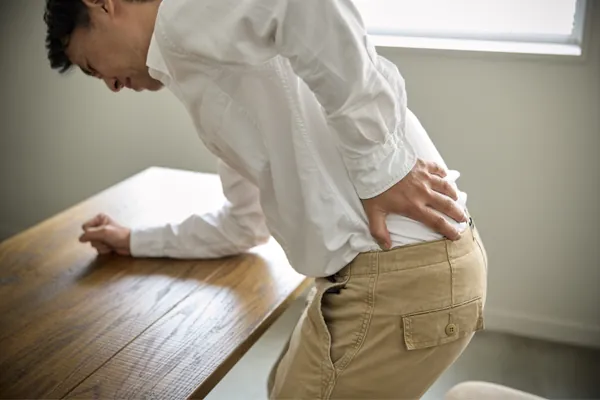
Back Pain

Low and mid-back pain come from a short list of structures, each with its own procedure. The exam sorts them on the first visit.

Learn More About Back Pain

Neck Pain

Four neck problems can produce the same ache and need different procedures. A careful exam at the first visit sorts out which one is most likely.

Learn More About Neck Pain

Cervical Dystonia (Spasmodic Torticollis)

Diagnosis and EMG-guided botulinum toxin treatment for cervical dystonia — the head pull, tilt, tremor, and neck pain that get treated as a stiff neck for years.

Learn More About Cervical Dystonia (Spasmodic Torticollis)

Sciatica

Sciatica names where it hurts, not why. The exam sorts a disc, a narrowed canal, the piriformis or a look-alike, because each is treated differently.

Learn More About Sciatica

Shoulder Pain

Five shoulder problems can look alike from the outside and need different procedures. A careful history and exam of the shoulder and the neck sorts them out.

Learn More About Shoulder Pain

Sports Medicine & Soft Tissue Injuries

Diagnosis, guided injections and rehab for sports injuries and soft tissue pain in runners, lifters and other active people.

Learn More About Sports Medicine & Soft Tissue Injuries

Joint Pain

Effective joint pain management for arthritis and degenerative joint conditions.

Learn More About Joint Pain

Facial & Cranial Nerve Pain

Diagnostic and interventional care for trigeminal neuralgia, post-herpetic neuralgia, occipital neuralgia, and atypical facial pain — image-guided, evidence-graded.

Learn More About Facial & Cranial Nerve Pain

Muscle Spasms & Myofascial Pain

Treatment for muscle spasms, tight muscle knots, and myofascial pain.

Learn More About Muscle Spasms & Myofascial Pain

Post-Surgical and Iatrogenic Nerve Pain

Diagnostic and interventional care for chronic nerve pain after hernia repair, C-section, mastectomy, thoracotomy, hip surgery, and other procedures — image-guided diagnostic blocks and coordinated surgical referral.

Learn More About Post-Surgical and Iatrogenic Nerve Pain

Medical Weight Loss for Pain Patients

Physician-supervised GLP-1 weight loss for patients whose knee, hip or back pain is made worse by excess weight.

Learn More About Medical Weight Loss for Pain Patients

Peripheral Nerve Entrapment

Diagnostic and interventional care for peripheral nerve entrapments most commonly missed by conventional imaging — image-guided diagnostic blocks as the key test, with structured surgical referral when needed.

Learn More About Peripheral Nerve Entrapment

Jaw Pain & TMJ Disorders

Treatment for jaw pain, TMJ disorders, and masseter muscle pain.

Learn More About Jaw Pain & TMJ Disorders

Post-Mastectomy Pain Syndrome

Intercostobrachial neuralgia and chronic chest-wall pain after mastectomy — diagnostic blocks, image-guided care, and coordinated surgical referral from a board-certified pain physician.

Learn More About Post-Mastectomy Pain Syndrome

Post-Thoracotomy Pain Syndrome

Chronic chest-wall pain after thoracotomy or VATS — diagnostic intercostal blocks, image-guided care, and coordinated referral from a board-certified pain physician.

Learn More About Post-Thoracotomy Pain Syndrome

Frozen Shoulder (Adhesive Capsulitis)

Diagnosis and ultrasound-guided treatment of frozen shoulder — the capsule that thickens and contracts until the arm will not go behind your back, and the night pain that comes with it.

Learn More About Frozen Shoulder (Adhesive Capsulitis)

Knee Bursitis

Image-guided diagnosis and treatment of prepatellar, infrapatellar, pes anserine, and other knee bursitis.

Learn More About Knee Bursitis

Herniated Disc

Non-surgical, image-guided herniated disc care — epidural steroid injections and nerve blocks coordinated with physical therapy.

Learn More About Herniated Disc

Piriformis Syndrome

Diagnosis and image-guided treatment of piriformis syndrome and deep gluteal sciatic nerve entrapment.

Learn More About Piriformis Syndrome

Cervical Stenosis

A narrowed neck can pinch a nerve root or press on the spinal cord. The exam tells the two apart, and they are treated very differently.

Learn More About Cervical Stenosis

Spinal Stenosis

Image-guided, non-opioid care for lumbar spinal stenosis and the shrinking walking distance of neurogenic claudication.

Learn More About Spinal Stenosis

Tennis Elbow (Lateral Epicondylitis)

Diagnosis and treatment of tennis elbow (lateral epicondylitis), from strengthening to cortisone and PRP, and when to refer for tenotomy, with what the trials actually show.

Learn More About Tennis Elbow (Lateral Epicondylitis)

Plantar Fasciitis

The plantar fasciitis injection decision, made under ultrasound in Midtown Manhattan: when PRP beats cortisone, when neither is the right call, the heel-pain mimics a pain physician checks first, and what runners should do in the weeks before a marathon.

Learn More About Plantar Fasciitis

Radiculopathy

Precise diagnosis and image-guided, non-opioid treatment for cervical and lumbar pinched nerves.

Learn More About Radiculopathy

Complex Regional Pain Syndrome (CRPS)

Budapest-criteria diagnosis and image-guided sympathetic nerve blocks coordinated with graded rehabilitation for CRPS.

Learn More About Complex Regional Pain Syndrome (CRPS)

Hip Bursitis (Greater Trochanteric Pain Syndrome)

Modern, image-guided diagnosis and treatment of hip bursitis and greater trochanteric pain syndrome (GTPS) — including the gluteus medius and minimus tendinopathy that drives most cases.

Learn More About Hip Bursitis (Greater Trochanteric Pain Syndrome)

Shoulder Bursitis (Subacromial Bursitis & Rotator Cuff Tendinopathy)

Modern, image-guided diagnosis and treatment of shoulder bursitis, subacromial bursitis, and the rotator cuff tendinopathy that drives most cases.

Learn More About Shoulder Bursitis (Subacromial Bursitis & Rotator Cuff Tendinopathy)

SI Joint Pain (Sacroiliac Joint Dysfunction)

Image-guided diagnosis and treatment of sacroiliac joint pain, one of the most commonly missed causes of low back, buttock, and groin pain.

Learn More About SI Joint Pain (Sacroiliac Joint Dysfunction)

Hip Osteoarthritis (Hip Arthritis)

Image-guided diagnosis and non-surgical treatment of hip osteoarthritis, with honest evidence for each option and a clear path to surgery when it is the right answer.

Learn More About Hip Osteoarthritis (Hip Arthritis)

Hip Labral Tear & Femoroacetabular Impingement (FAI)

Image-guided diagnosis and non-surgical treatment of hip labral tear and femoroacetabular impingement — the structured alternative to early hip arthroscopy.

Learn More About Hip Labral Tear & Femoroacetabular Impingement (FAI)

Meralgia Paresthetica

Modern, image-guided diagnosis and non-surgical treatment of meralgia paresthetica — the most commonly missed entrapment neuropathy in adults.

Learn More About Meralgia Paresthetica

Knee Arthritis (Knee Osteoarthritis)

Most painful arthritic knees are treated without surgery. What each option does, for how long, and how strong the evidence behind it is.

Learn More About Knee Arthritis (Knee Osteoarthritis)

Morton's Neuroma

Burning between the third and fourth toes is usually a scarred nerve, not a tumor. The exam usually makes the diagnosis, ultrasound settles doubtful cases, and treatment starts with the shoe.

Learn More About Morton's Neuroma

IT Band Syndrome (Iliotibial Band Syndrome)

Outside-of-knee pain that arrives at the same point in every run. The compression mechanism behind IT band syndrome, how it is told apart from a meniscus or nerve problem, and an evidence-graded plan for runners, including the weeks before a race.

Learn More About IT Band Syndrome (Iliotibial Band Syndrome)

Proximal Hamstring Tendinopathy (High Hamstring Pain)

Deep sit-bone pain that hates hard chairs, hills, and speed work. How proximal hamstring tendinopathy is diagnosed, why stretching it backfires, and what the injection evidence really shows.

Learn More About Proximal Hamstring Tendinopathy (High Hamstring Pain)

Carpal Tunnel Syndrome

Numb fingers that wake you at night are usually the median nerve squeezed at the wrist. The exam makes most diagnoses, a nerve study settles the doubtful ones, and an injection both treats it and tells a surgeon what release is likely to do.

Learn More About Carpal Tunnel Syndrome

Cubital Tunnel Syndrome (Ulnar Nerve Entrapment)

Numbness in the ring and little fingers that gets worse with the elbow bent is usually the ulnar nerve at the elbow. Most mild cases settle with position changes. When the nerve is losing strength, the workup is done here and the referral goes to a hand surgeon.

Learn More About Cubital Tunnel Syndrome (Ulnar Nerve Entrapment)

Tarsal Tunnel Syndrome (Tibial Nerve Entrapment)

Burning, tingling or numbness across the sole that builds through a day on your feet, with a tender spot behind the inner ankle, is often the tibial nerve at the tarsal tunnel. The exam carries most of the diagnosis, and the workup is about ruling out the back and the nerves of both feet.

Learn More About Tarsal Tunnel Syndrome (Tibial Nerve Entrapment)

Peroneal Nerve Entrapment (Common Fibular Neuropathy)

A foot that slaps or catches the toes, with numbness on top of the foot, is often the common peroneal nerve pinched where it wraps around the outer knee. Most cases recover once the pressure is off. The workup is about finding the level, the cause, and how much the nerve has lost.

Learn More About Peroneal Nerve Entrapment (Common Fibular Neuropathy)

Why Choose Modal Pain Management NYC?

Mount Sinai Fellowship-Trained

Board-certified with fellowship training in interventional pain medicine at the Icahn School of Medicine at Mount Sinai.

In-Office Ultrasound & Fluoroscopy

Image-guided injections performed in-suite — no hospital referral, no waiting weeks for outside imaging.

Same-Site PT, Chiro & IV Therapy

Coordinated non-surgical care under one roof at 369 Lexington Avenue — physical therapy, chiropractic, and IV therapy all on site.

Non-Opioid by Design

Treatment plans built around interventional, regenerative, and rehabilitative care — not pills.

Ready to Get Out of Pain?

Schedule a consultation with Dr. Movshis — same-week appointments are routinely available.

5.0 90 Google Reviews Dual ABA Board-Certified Anesthesiology & Pain Medicine 369 Lexington Ave, Floor 25 Midtown Manhattan, NYC 10017